Photo: Unsplash
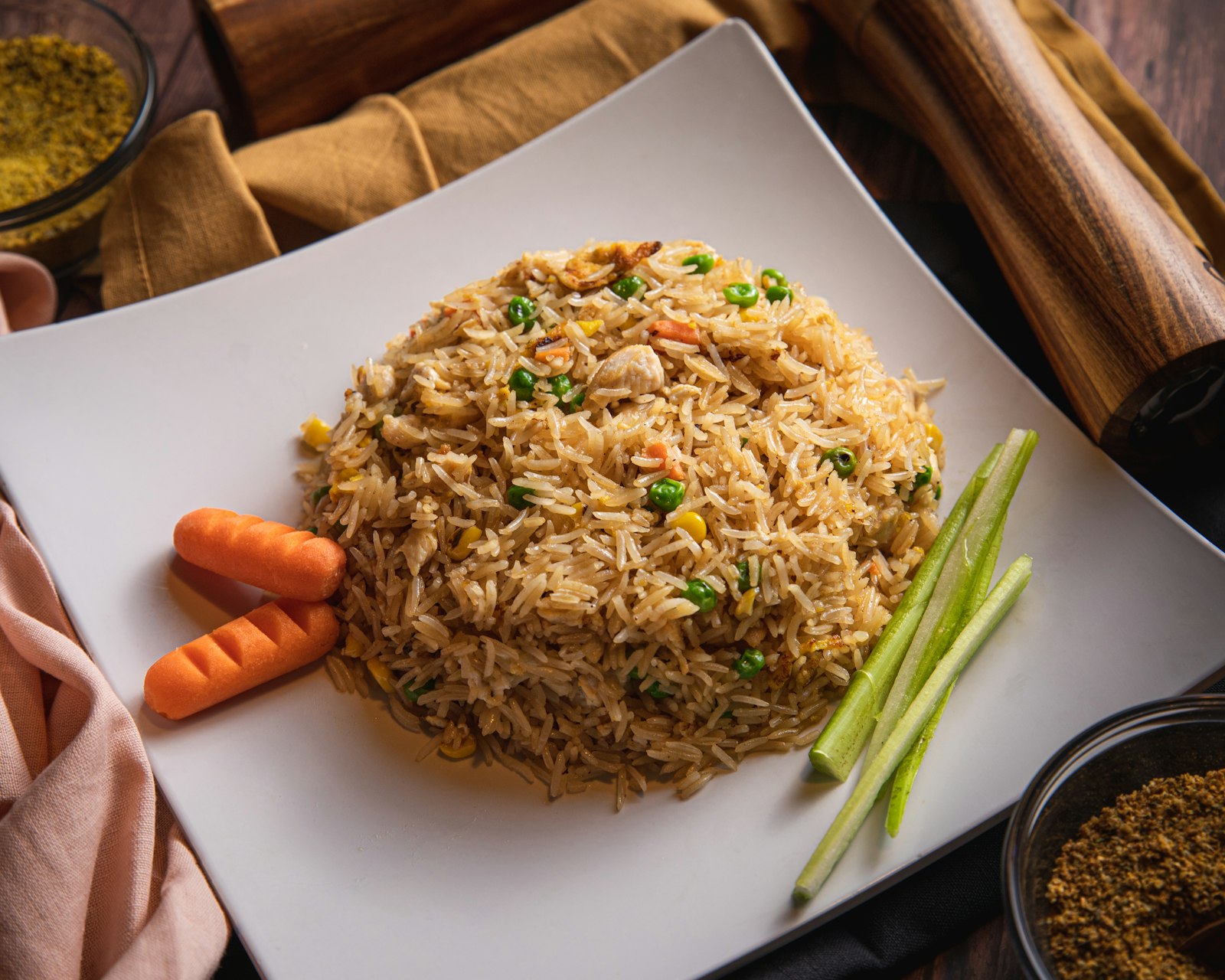
Fried rice is a fast, flexible weeknight meal, and a toddler-friendly version just means dialing back the salt and soy sauce and making sure vegetables are cut small and cooked soft. Day-old rice works best since it fries up without turning mushy.
It is also one of the better ways to use up small amounts of leftover vegetables and rice that might otherwise go to waste, which makes it a practical end-of-week dinner as much as a planned recipe. Because everything cooks in one pan in under ten minutes, it is a good option on nights when a bigger meal feels like too much effort for everyone involved.
Ingredients
- 2 cups cooked rice, preferably a day old
- 1/2 cup mixed peas, corn, and diced carrot, steamed until soft
- 1 egg, scrambled
- 1 tablespoon neutral oil (like vegetable or avocado oil)
- A small splash of low-sodium soy sauce (optional, for older toddlers)
Instructions
- Heat oil in a large pan or wok over medium heat.
- Scramble the egg in the pan, then push to one side.
- Add the rice and steamed vegetables, breaking up any clumps of rice.
- Stir-fry for 4-5 minutes, mixing everything together.
- Add a small splash of low-sodium soy sauce if using, and stir to combine.
- Cool slightly and check temperature before serving.
Why day-old rice works better
Freshly cooked rice tends to be too moist and clumps together when fried, while rice that's been refrigerated overnight dries out slightly, giving separate, fry-friendly grains.
Adjusting sodium for younger toddlers
For toddlers under about 15-18 months, it's reasonable to skip the soy sauce entirely — the vegetables and egg still provide plenty of flavor, and keeping sodium low is generally recommended at this age.
Choking safety with peas, corn, and carrots
Whole peas, whole corn kernels, and raw or firm carrot are all common choking hazards for babies and young toddlers, so preparation matters more than the ingredient list suggests. Peas should be mashed or squashed slightly between your fingers for younger toddlers, since a whole round pea can be a choking risk even when cooked soft. Corn kernels have a tough outer skin that does not always break down with cooking, so for children under about 2, consider cutting kernels in half or using a finely chopped or pureed corn instead of whole kernels. Carrot should always be cooked until it can be mashed easily with a fork and diced small, never served in raw, hard coins or sticks to a toddler still developing molars.
No day-old rice on hand? Here's a shortcut
If you didn't plan ahead, spread freshly cooked rice out on a baking sheet in a thin layer and let it cool in the fridge, uncovered, for 20-30 minutes. This mimics the drying-out effect of overnight refrigeration much faster, letting the surface starch firm up so the grains separate better in the pan. It won't be quite as good as truly day-old rice, but it's a solid, reliable fix in a pinch on a busy night when you didn't plan ahead earlier in the week.
Building flavor without salt
Since sodium should stay low for young toddlers, a lot of the flavor in this dish comes from technique rather than seasoning. Sauteing a little finely minced garlic or ginger in the oil before adding the egg builds a savory base without any added salt. A squeeze of fresh lime or a small spoonful of unsweetened rice vinegar stirred in at the end brightens the dish in a way that can make the soy sauce feel less necessary. Toasting the rice a bit longer in the pan, until a few grains turn lightly golden, also deepens the flavor naturally.
A small amount of finely chopped scallion (green part only, which is milder than the white) stirred in at the very end adds color and a mild oniony note that many toddlers tolerate well, even ones who are hesitant about stronger flavors. Toasted sesame oil, used in place of a small portion of the regular cooking oil, adds a distinct nutty flavor as well, though it counts as a sesame exposure, so introduce it separately first if your toddler has not had sesame before.
Recipe variations
- Brown rice version: use day-old cooked brown rice instead of white for more fiber; it fries up slightly chewier but works well with the same method.
- Cauliflower rice blend: mixing in some riced cauliflower alongside regular rice adds vegetables without changing the dish much for a toddler used to the texture.
- Curry-spiced version: a small pinch of mild curry powder added with the garlic gives older toddlers and adults a different flavor profile without adding heat.
- Shrimp fried rice: small, well-cooked, finely chopped shrimp stirred in with the vegetables adds a different protein and cooks in just a couple of minutes.
- Pineapple fried rice: small diced pineapple added toward the end brings natural sweetness that many toddlers enjoy, though introduce it separately first if it is a new food.
Rotating in different vegetables and proteins
This recipe is a great way to use up whatever vegetables are on hand — finely diced bell pepper, steamed broccoli chopped small, or shredded zucchini all work well stirred in with the peas and carrot. For extra protein, finely diced cooked chicken, small cooked shrimp, or crumbled soft tofu can be added along with the vegetables. Keep any new addition cut small and well-cooked, and introduce unfamiliar ingredients on their own first if your toddler hasn't had them before.
Frozen mixed vegetable blends are a genuinely useful shortcut here, since they come pre-cut and just need a few minutes of steaming or microwaving before going into the pan. Keeping a bag on hand means this recipe can go from "nothing planned for dinner" to a finished meal in about fifteen minutes, without needing to chop fresh vegetables every time. Just check that the pieces are small enough for your child's age before serving, since bagged blends are not always cut with toddlers in mind.
Allergen notes
This recipe contains egg, and if you add soy sauce, soy as well. If sesame oil or sesame seeds are part of your version, that adds a third common allergen to keep in mind. Introduce each of these on their own first if your toddler has not had them before, rather than serving a combination dish as a first exposure. For an egg-free version, simply omit the scrambled egg or replace it with small cubes of soft tofu, which adds protein without the allergen.
Serving fried rice by age
For toddlers newer to table food, chop everything a bit finer than you would for an older child, mash peas lightly, and serve smaller portions with close supervision, since a mixed dish like this has several textures happening at once. Around 18 months to 2 years, most toddlers can manage the standard preparation described here as long as pieces stay small. By preschool age, this dish generally needs no special modification and can be served the same way as the rest of the family's portion, minus any added chili or strong seasoning that younger siblings might still be adjusting to at the table.
Common mistakes to avoid
- Using freshly cooked, warm rice: this is the number one reason homemade fried rice turns gummy instead of fluffy; day-old or properly cooled rice makes a real difference.
- Overcrowding the pan: a pan that is too full steams the rice rather than frying it; use a wide pan or wok and work in batches if needed.
- Not cutting vegetables small enough: larger pieces of carrot or broccoli can be harder for a toddler to manage safely; keep dice sizes small and consistent.
- Adding too much sauce: a heavy hand with soy sauce not only raises sodium but can also make the rice soggy; a small splash goes further than it seems like it should.
- Serving straight from the pan without checking temperature: stir-fried dishes can have hot spots; stir and let it cool for a minute before serving to a young child.
A real-life scenario: clearing out the fridge
A typical Thursday night: half a bag of frozen peas, a couple of carrots starting to look tired, one egg, and rice from Tuesday's dinner still in the fridge. That is genuinely enough for this whole recipe, and it is one of the few dinners that comes together faster than ordering takeout. This is part of why fried rice tends to become a recurring meal in households with toddlers: it rarely requires a special grocery trip, and it is a reliable way to use up small amounts of odds and ends before they go to waste.
Nutrition notes
This dish combines a carbohydrate (rice), a protein (egg, and any additional protein you add), and vegetables in one pan, which makes it a reasonably balanced meal on its own. Using brown rice instead of white adds fiber, and adding a protein beyond egg, chicken, shrimp, or tofu, boosts the overall protein content if fried rice is a regular dinner rather than an occasional side dish. Because the sodium is kept deliberately low in this version, it also pairs well as a base you can build on with other toddler-friendly seasonings over time as your child's palate develops.
Storage and reheating
Leftovers keep in the fridge for up to 3 days in an airtight container. Reheat in a pan with a small splash of water to loosen the rice back up, stirring frequently, rather than microwaving straight from cold, which can leave some spots overheated while others stay cool. Fried rice also freezes reasonably well for up to a month — thaw in the fridge overnight before reheating for the best texture.
Rice safety: why cooling matters
Cooked rice needs a bit more care than most leftovers because it can harbor bacteria (Bacillus cereus) that survive cooking and can multiply if rice sits at room temperature too long. This is actually the whole reason day-old rice works so well for fried rice, but it also means the cooling step matters for safety, not just texture. Cool cooked rice within about an hour or two of cooking, rather than leaving a pot out on the counter for an extended stretch, and refrigerate it promptly in a shallow, wide, uncovered container so it cools through quickly and evenly rather than staying warm in the center of a deep pot. Reheat leftover rice dishes until they are steaming hot all the way through, and avoid reheating the same batch of rice more than once, discarding what is not eaten after that. For more detail on safe handling of cooked rice and other grains, the FDA's food handling guidance covers general safe cooling and storage practices that apply here.
Frequently asked questions
Is soy sauce okay for toddlers?
Soy sauce is high in sodium, so it is best used sparingly, if at all, for younger toddlers — many families skip it entirely under 18 months or so and rely on the natural flavor of the vegetables and egg instead.
Can I add meat to this recipe?
Yes — finely diced, well-cooked chicken, shrimp, or tofu are common additions. Just make sure any protein is cut small and fully cooked before adding it in.
Why is day-old rice recommended?
Freshly cooked rice holds more moisture and tends to clump and turn mushy when stir-fried, while rice that has cooled and been refrigerated overnight fries up with separate, better-textured grains.
Are peas and corn choking hazards for toddlers?
They can be for younger toddlers. Mash peas lightly and cut or mash corn kernels for children under about 2, and always cook vegetables until soft rather than serving them firm or raw.
Can I make this recipe without egg?
Yes — simply omit the egg or replace it with small cubes of soft tofu for added protein without that particular allergen.