Photo: Unsplash
Ear infections are one of the most common reasons for a pediatrician visit in the toddler years — most kids will have had at least one by age three. Since toddlers often can't clearly say "my ear hurts," it helps to know the other signs to watch for.
Why toddlers get ear infections so often
The eustachian tubes — small channels connecting the middle ear to the throat — are shorter and more horizontal in young children than in adults, which makes it easier for fluid and bacteria from a cold or congestion to get trapped in the middle ear rather than draining normally.
Common signs to watch for
- Tugging or pulling at one or both ears
- Increased fussiness, especially when lying down
- Trouble sleeping or waking up crying at night
- Fever, sometimes low-grade and sometimes higher
- Fluid draining from the ear
- Reduced appetite, particularly with bottle or breastfeeding, since sucking can change ear pressure
Do all ear infections need antibiotics?
Not always. Many pediatricians now use a "watch and wait" approach for mild cases in toddlers over 2, since a meaningful number of ear infections clear up on their own within a few days. Pain relief (as directed by your pediatrician) is often recommended in the meantime, with a follow-up if symptoms don't improve or get worse.
Why toddlers get so many more ear infections than adults
The eustachian tube — the small passage that connects the middle ear to the back of the throat and drains fluid — is shorter, narrower, and sits more horizontally in young children than in adults. That makes it easier for fluid to get trapped and harder for it to drain, especially after a cold has caused congestion and swelling nearby. As a child's head and face grow, that tube gradually lengthens and angles more steeply downward, which is a big part of why ear infections become much less frequent after the toddler and preschool years.
Middle ear infection or swimmer's ear? They're not the same
What most people call an "ear infection" in toddlers is usually a middle ear infection (otitis media), which sits behind the eardrum and often follows a cold. Swimmer's ear (otitis externa) is a different condition affecting the outer ear canal, often linked to water sitting in the ear after swimming or bathing, and tends to cause pain when the outer ear is touched or tugged, along with visible redness or swelling of the canal itself. The two are treated differently, so it's worth mentioning to your pediatrician whether your child has been swimming recently or has a cold, since that context helps narrow down which one is more likely.
Comfort measures while you wait for improvement
Whether or not antibiotics are part of the plan, a few things tend to help a toddler feel better in the meantime: keeping them more upright rather than lying flat, which can ease ear pressure; a warm (not hot) washcloth held gently against the outer ear; and pain relief as directed by your pediatrician, dosed by weight and timed consistently rather than only when the pain seems worst. Extra rest and fluids support recovery generally, even though they won't resolve the infection on their own.
Could repeat infections affect hearing or speech?
Fluid that lingers in the middle ear, even after the infection itself has cleared, can cause temporary muffled hearing, and if that persists over months it can occasionally coincide with slower speech or language progress simply because a child is hearing sounds less clearly during an important developmental window. This is usually temporary and resolves once the fluid clears, but it's part of why pediatricians pay closer attention to children with frequent infections or fluid that doesn't clear — and why a hearing check sometimes gets added to the conversation if infections keep recurring.
What actually happens at the pediatrician's office
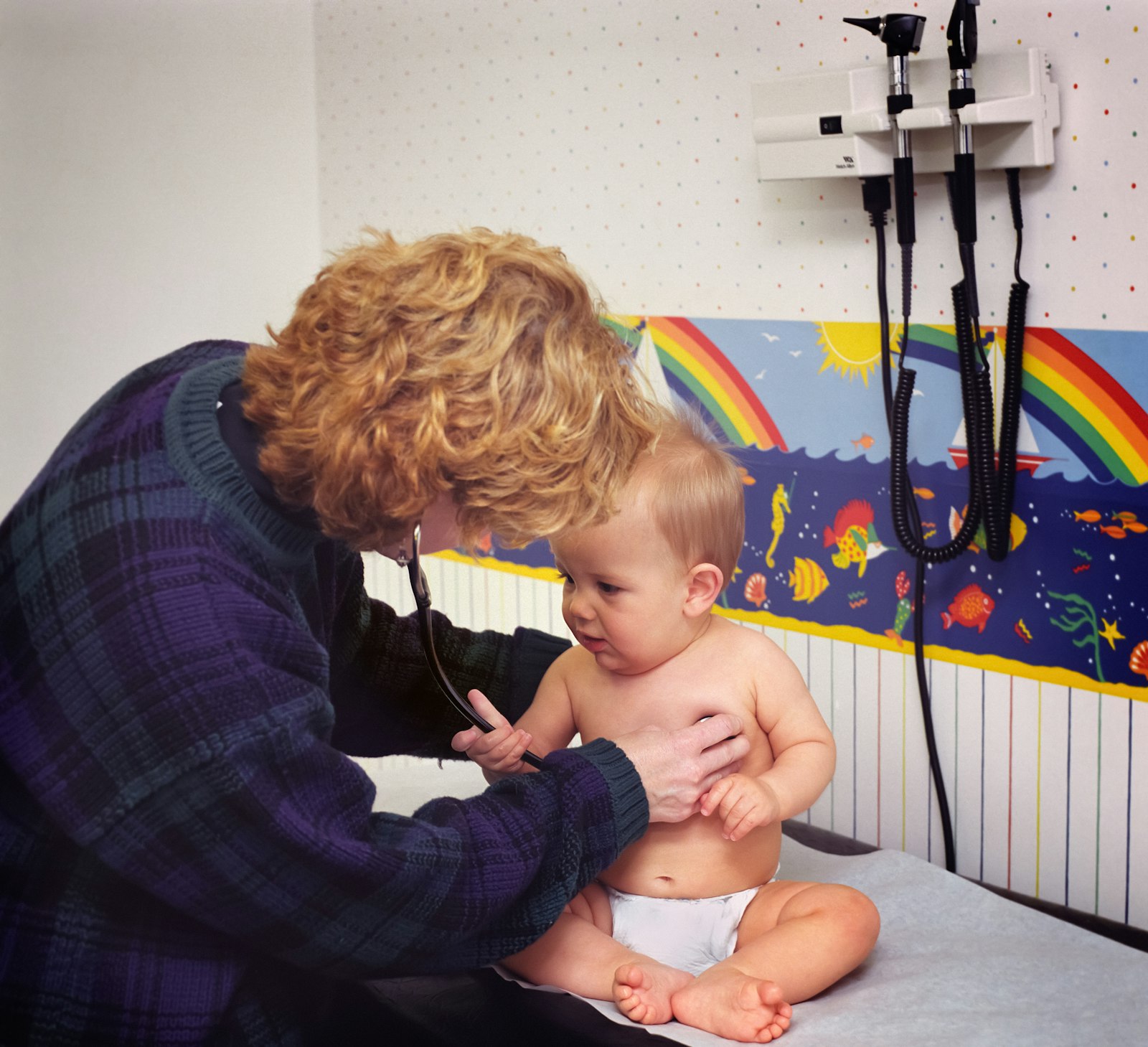
Diagnosing an ear infection usually takes only a couple of minutes. A pediatrician uses an otoscope, a small lighted instrument, to look at the eardrum directly, checking for redness, bulging, or visible fluid behind it. Some offices also use a pneumatic otoscope, which puffs a small amount of air to see how well the eardrum moves, since a healthy eardrum flexes and an infected or fluid-filled one tends to move less. This exam is quick and, while not exactly pleasant for a squirmy toddler, isn't painful. A tympanometry test, which measures eardrum movement more precisely, is sometimes used for children with frequent infections or lingering fluid, particularly if hearing is a concern.
It's normal for a toddler to fuss or cry during the exam itself, mostly from restraint rather than pain, since the otoscope doesn't touch the eardrum. Bringing a comfort item, distracting with a favorite song, or letting a toddler sit on a parent's lap rather than the exam table can make the whole visit go more smoothly for everyone involved.
Telling an ear infection apart from teething or a cold
Because ear-tugging and fussiness show up in several different situations, parents often wonder whether they're looking at an ear infection, teething, or simply a cold that hasn't fully resolved. Teething discomfort tends to come with drooling, gum swelling, and chewing on objects, and rarely causes fever above a very low grade; it also doesn't typically come with fluid draining from the ear. A cold on its own usually causes congestion and a mild cough without the focused ear pain, fussiness while lying flat, or fever spike that often signals a true ear infection developing on top of the cold. When in doubt, a same-day or next-day pediatrician visit clears up the uncertainty quickly, since the otoscope exam is definitive in a way that guessing from symptoms alone isn't.
Home remedies to skip
A few old home remedies for ear pain are worth actively avoiding. Ear candling, which involves placing a hollow lit candle in the ear canal, has no proven benefit and carries a real risk of burns or wax being pushed further into the canal; major medical organizations advise against it. Putting oil, garlic, or other homemade drops into the ear canal is also not recommended, particularly if there's any chance the eardrum has ruptured (which can happen with a severe infection and sometimes actually relieves pressure and pain on its own). If a child has visible drainage from the ear, that's specifically a moment to call the pediatrician rather than try a home remedy, since it can mean the eardrum has already perforated.
Does breastfeeding lower the risk?
Research has found breastfeeding is associated with somewhat fewer ear infections in infancy, likely due to a combination of immune-supporting antibodies in breast milk and the more upright feeding position compared to bottle propping. This doesn't mean formula-fed babies are destined for frequent infections, since plenty of other factors, genetics, daycare exposure, and secondhand smoke exposure among them, play a bigger overall role. Feeding a bottle at a slight incline rather than while a baby lies fully flat is a simple habit that applies regardless of feeding method and may help reduce fluid backing up into the middle ear.
Pacifier use has also come up in research on ear infections, with some studies suggesting a modest increase in risk associated with frequent pacifier use past six months, though the effect size is small compared to bigger factors like daycare attendance and secondhand smoke exposure. This isn't a reason to abruptly stop pacifier use, especially since pacifiers have their own well-documented benefits for sleep safety, but it's worth mentioning to a pediatrician if your toddler has had several ear infections and still relies heavily on a pacifier throughout the day.
Flying or high altitude with an active ear infection
Air travel with an ear infection can be genuinely uncomfortable for a toddler, since the pressure changes during takeoff and landing put extra strain on a eustachian tube that's already not draining well. If a flight can't be avoided or rescheduled, having a toddler drink from a bottle or sippy cup, or chew on a snack, during descent encourages the swallowing motion that helps equalize ear pressure. A pediatrician-approved dose of pain reliever timed before a flight can also take the edge off. If a trip can be pushed back until symptoms have cleared, that's generally the more comfortable option for everyone involved.
When to call the pediatrician
- Fever over 102°F (38.9°C), or any fever in a baby under 3 months
- Symptoms lasting more than 2-3 days without improvement
- Fluid or pus draining from the ear
- Signs of significant pain or a child who seems unusually unwell
- Recurrent ear infections (several within a few months)
Preventing repeat infections
Frequent, recurring ear infections sometimes lead to a conversation about ear tubes (tympanostomy tubes), a common outpatient procedure that helps fluid drain properly. Reducing exposure to cigarette smoke, keeping up with routine vaccines, and avoiding bottle-feeding while lying flat can all help lower the frequency of infections for some children.
What ear tube surgery actually involves
For families facing the possibility of ear tubes, understanding the procedure ahead of time tends to reduce a lot of anxiety. It's a short, common outpatient surgery, typically done under general anesthesia, where a surgeon places a tiny tube through the eardrum to let air in and fluid drain out, roughly the way a small vent works. Most children go home the same day, recover within a day or two, and many parents report a noticeable drop in ear infections and improved hearing clarity within weeks. The tubes usually fall out on their own after six months to a couple of years as the eardrum grows and heals, and most kids never need a second set. As with any surgery, it's worth discussing the specific risks and expected benefits for your child's situation directly with the specialist involved, usually an ear, nose, and throat doctor referred by the pediatrician.
Daycare, colds, and the ear infection cycle
Daycare and preschool settings expose toddlers to a much higher volume of colds than staying home does, and since colds are one of the biggest triggers for ear infections, kids in group care often go through cycles of cold, congestion, and ear infection more frequently during their first year or two. This isn't a sign anything is wrong with a child's health, and it typically improves as their immune system builds up broader exposure over time, the same pattern seen with overall illness frequency in group care settings. Simple habits like frequent handwashing, wiping down shared toys, and keeping a child home during the most contagious early days of a cold can modestly reduce how often this cycle repeats, even though it can't eliminate it entirely in a group setting.
Frequently asked questions
How can I tell if my toddler has an ear infection if they can't tell me?
Watch for ear-tugging, unusual fussiness (especially lying down), trouble sleeping, fever, reduced appetite during feeding, or fluid draining from the ear. Any combination of these, especially alongside a recent cold, is worth a call to your pediatrician.
Does every ear infection need antibiotics?
Not necessarily — many pediatricians use a short watch-and-wait period for mild cases in toddlers over 2, since a good number resolve on their own. Your pediatrician will factor in your child's age, symptom severity, and history of ear infections when deciding.
When do ear tubes get considered?
Ear tubes are typically discussed after several recurrent ear infections within a short period, or when fluid persists in the middle ear for an extended time and starts to affect hearing. It is a common, generally quick outpatient procedure.
Is it safe to fly with a toddler who has an ear infection?
It's not dangerous, but it can be uncomfortable due to pressure changes during takeoff and landing. Having your toddler drink or chew during descent, using pediatrician-approved pain relief timed before the flight, and rescheduling if possible are all reasonable ways to manage it.