Photo: Pexels
Halloween with toddlers goes best when it is short, early, and low pressure. Under age 1, a costume photo and one or two porch visits is plenty. At ages 1 and 2, plan a handful of houses before dark. By 3 or 4, a full loop is realistic. Sort the candy before your child eats any.
That's the short version. The longer version is that Halloween throws a lot at small kids at once: a strange outfit, darkness, noise, strangers in masks, and sugar. Most of the trouble comes from the extras, not the costume itself. This guide covers what is worth doing at each age, how to keep the outfit and the route safe, what to do about fear, how to handle candy for children under 4, and a night-of checklist you can screenshot. It leans on guidance from the American Academy of Pediatrics (AAP) and the Food Allergy Research & Education group (FARE), and it adds the practical stuff parents tend to learn the hard way.
One note before we start. If you want the general seasonal hazards, like candles, plants, and holiday decorations, our holiday safety tips for families cover those. This page stays on Halloween night itself and on the under-5 crowd.
Is trick-or-treating worth it? An age-by-age look
The honest answer is that it depends on your child, and sitting it out is a perfectly good choice. The AAP's pediatrician-written advice for babies and toddlers says exactly that: if your little one doesn't want to take part, let that be okay, because 12 months can make a big difference. Here is how it tends to play out by age.
Under 1: baby's first Halloween is mostly for the grown-ups
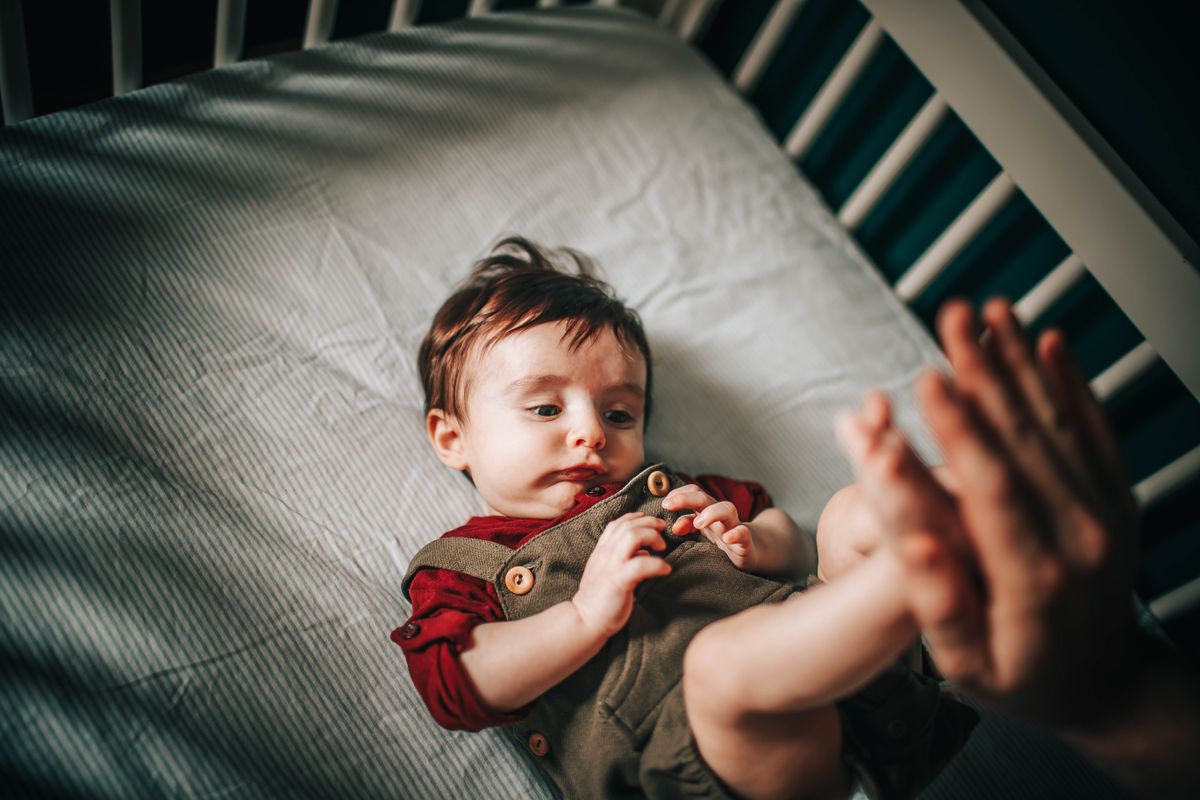
A baby can't eat candy, can't say "trick or treat," and has no idea what a pumpkin means. That doesn't make baby's first Halloween pointless. It just means the point is the memory, not the loot. Good options include a costume photo at home, a short walk with the baby in a carrier or stroller, or a single visit to a grandparent or neighbor you know well.
A few baby-specific cautions apply. Skip masks entirely, and keep any hat from slipping over the eyes or face. Don't put a bulky costume on a baby in a car seat, because thick layers can get in the way of a snug harness, so carry the costume and dress the baby at your destination. And if the baby is asleep when the doorbell starts ringing, do what the AAP suggests and put a "please knock" sign on your door so you don't have to choose between a nap and the neighbors.
1 to 2 years: a few doors, a lot of wobble
Toddlers this age often enjoy the ritual more than the candy: walking up a path, pressing a doorbell, holding a bucket, watching the door open. They also fall down a lot. Even on a good day, some toddlers struggle to walk without tipping over, and a long hem or a stiff costume makes it worse. Plan for a handful of houses, hold a hand on porch steps, and be ready to scoop them up.
As a starting plan, try about 20 to 30 minutes, then see how it goes. If they lose interest fast, the AAP suggests letting them sit on the porch and hand out candy to the bigger kids. That counts as a successful Halloween and it works on sharing skills too.
3 to 4 years: ready for a real loop, with rules
Many 3- and 4-year-olds understand the game. They can say the words, wait their turn, and take one piece. This is the age to teach the street rules that will matter for years: stay on the sidewalk, stop at every curb, hold a grown-up's hand when crossing, and never go inside a home or car for a treat. It is also the age when costume opinions get strong, so a costume they picked and practiced in is less likely to end in tears at house number three.
Fear can still show up here, especially with masks, loud decorations, and teenagers jumping out of bushes. Keep the exit plan ready even if the night starts well.
How to plan the evening, step by step
You don't need a binder. Six small decisions, made a few days ahead, cover most of what goes wrong.
- Pick the goal. "We will visit five houses and take one photo" is a goal. "We'll see how it goes" is a recipe for an overtired toddler at 8 p.m.
- Choose the time and route. Go while it's light if you can, and keep the route short, on well-lit streets with sidewalks. Plan a loop that ends at your door so the exit is easy.
- Practice the costume. Have your child wear it for a short stretch a few days before so you can spot itchy seams, tripping, or a refusal while there's still time to switch.
- Pack a small bag. Include a backup outfit, wipes, a water bottle, a safe snack, a light layer, and a flashlight or glow stick.
- Feed them first. The AAP suggests a good meal before trick-or-treating to discourage sampling. A fed toddler is less likely to grab a piece of candy from the bucket.
- Agree on a quit signal. Decide with your partner or co-parent what counts as "we're done," such as a meltdown, a fall, or a flat refusal to walk. Then actually go home.
Costume safety for toddlers
The best toddler costume is one they can walk, see, breathe, and move their arms in. If the outfit is more complicated than that, it belongs in a photo, not on a sidewalk after dark. Use this as a quick screen before you leave the house.
- Look for "flame resistant" on the costume label, and check wigs and accessories too. Flame resistant is not the same as fireproof, so keep your child away from candles and jack-o'-lanterns with real flames.
- Check the length. The hem should be short enough that your toddler can't trip on it or catch it on a step, a stroller wheel, or a porch rail.
- Skip long capes, trailing tails, scarves, and anything that drags or dangles.
- Make sure shoes fit well and are comfortable. Brand-new, stiff shoes on a night of curbs and steps is a bad pairing.
- Avoid masks. They can block a toddler's view and make breathing harder, and toddlers pull at them.
- Check hats and headbands. Nothing should slide over the eyes or tighten around the neck.
- Leave off swords, wands, canes, and sticks. Toddlers fall, and a long prop turns a small tumble into an injury.
- Check for choking hazards. Tug on buttons, bows, sequins, glued-on gems, felt eyes, and ribbon trim. If a piece comes off easily, it can go into a mouth.
- Add visibility. Choose bright colors, then add reflective tape or glow-in-the-dark strips to the costume and the treat bucket.
- Think about diaper changes and potty trips. An easy-on, easy-off outfit saves you from undressing a cranky toddler in a driveway.
- Pack a Plan B costume. Leaks, spit-up, and potty-training accidents are normal at this age, and a spare outfit keeps one accident from ending the night.
Face paint instead of a mask
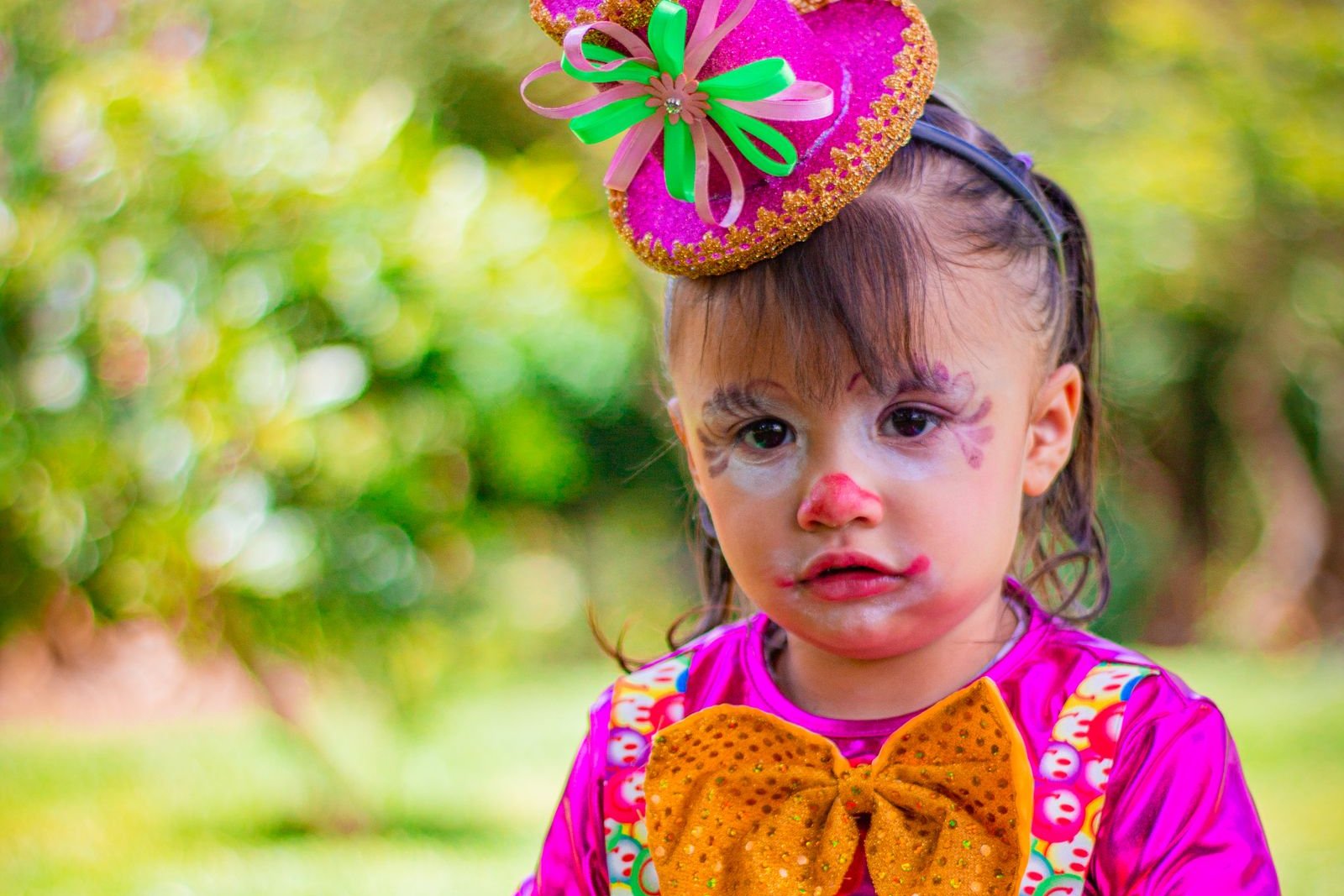
The AAP suggests non-toxic makeup and decorative hats as safer choices than masks. If you go with face paint, test it ahead of time on a small patch of your child's skin, ideally a day or more before Halloween, so a reaction doesn't show up on the big night. Read the ingredient list, keep paint out of the eye area, and wash it off before bed.
Keep it small. A painted nose and whiskers is easier on a toddler than a full face, and a toddler who rubs their face will smear it anyway. If your child pushes your hand away, that's your answer. A costume shirt and a hat can carry the whole look.
Weather, layers, and comfort
Check the forecast before you commit to the costume. Late October can swing from warm to freezing, and a toddler in a thin polyester pumpkin suit will get cold quickly while a toddler in a thick one can overheat on a warm evening. The AAP's advice is to include layers if needed.
The simplest approach is to dress your child in a snug, warm base layer, put the costume over it, and carry one extra layer you can add or remove. Choose a costume with room to fit a long-sleeve shirt underneath. Watch for the signs of a comfort problem: tugging at the outfit, going quiet, red cheeks, cold hands, or a sudden refusal to keep walking. Wet leaves also make sidewalks slick, so shoes with grip matter more than shoes that match the costume.
Protect the nap and bedtime
Babies and toddlers thrive on routine, and Halloween can knock it flat. The AAP suggests going out while it's still light so you can stick to your child's regular bedtime. If your neighborhood starts after dark, check your library, recreation center, or local news for earlier events, such as parades, zoo or botanical garden events, pumpkin festivals, or children's museum activities.
A few things make the evening smoother. Protect the day's nap if you can, since an overtired toddler hits a meltdown much faster. Serve dinner before you leave, rather than hoping candy and a granola bar will cover it. Aim to be home with enough time left for a normal bath and book. If you need a refresher on how long your child can stay awake comfortably, our guide to wake windows by age helps you work backward from bedtime.
When your toddler is scared (and when it's just too much)
Fear of costumes, masks, and decorations is a normal part of this stage. Toddlers are still sorting out what's real and what's pretend, so a grown-up with a monster face can look like a real monster. The AAP advises giving your child plenty of time to get ready: talk about what's going to happen, read picture books about trick-or-treating, practice putting the costume on, and tell them that the scary stuff is all pretend.
On the night, a few moves help. Get down to eye level and narrate what you see: "That's a pretend skeleton. It doesn't move." Let your child watch an adult with a mask take it off before you ask them to say hello. Skip the house with the fog machine and the strobe light, and go to the quiet one next door. If your child buries their face in your shoulder, treat it as clear communication, not bad behavior.
Some of what looks like fear is sensory overload. Between the crowds, the noise, the flashing lights, the itchy costume, and the schedule change, a toddler can tip over fast. Look for rubbing eyes, clinginess, covering ears, sudden wildness, or a meltdown over something tiny. Our guide to the signs of overstimulation in toddlers lists what to look for. When you see the signs, go home or find a quiet spot. Don't push through for one more house.
Candy safety for children under 4
This is the part most parents underestimate. Halloween candy is full of items that are choking hazards for small children, and toddlers are quick. The AAP says babies and toddlers should not have hard candy, caramel apples, popcorn, gum, small candies like jelly beans, gummy candy, pumpkin seeds, or anything with whole nuts. Wrappers, stickers, small toys, and temporary tattoos in treat bags can also be choking hazards.
Here is a simple routine that works at home, away from a hungry toddler.
- Set a rule: nothing gets eaten on the trail. The AAP also advises keeping an eye on what your child has in their mouth at all times while trick-or-treating.
- At home, dump the bucket onto a tray or towel while your toddler is busy with something else.
- Throw out anything unwrapped, torn, spoiled, or suspicious. The AAP notes that tampering is rare but can happen.
- Pull out the choking hazards from the list above. Lollipops, hard candy, gummies, chewy candy, gum, nuts, and small candies go in a bag for older family members.
- Remove stickers, tiny toys, and anything else that is not food.
- Keep a small stash of safe options for your toddler, such as a plain soft chocolate that melts, and offer one piece with a meal or snack rather than as a free-for-all.
- Put everything else out of sight and out of reach, and store the older sibling's candy somewhere your toddler can't climb to.
It also helps to learn the response before you need it. Choking can happen quickly and quietly, so read our guide to choking first aid for babies and toddlers before Halloween rather than after. For more on timing, the AAP's page on easing babies and toddlers into Halloween fun is short and worth reading.
On sugar, the AAP recommends limiting the amount kids get each day. A toddler doesn't need a bucketful, and a piece or two is plenty. Keep your rules realistic, consistent, and positive so you aren't renegotiating on November 2.
Food allergies and the Teal Pumpkin Project
Halloween is one of the trickiest days of the year for children with food allergies. The AAP points out that even candy without the allergen can cause a serious reaction if it was made in a facility that uses the allergen in another product. Read labels at home, not on someone's porch, and if your child has a prescribed epinephrine auto-injector or nasal spray, bring it, review how to use it, and make sure every supervising adult knows what to do.
If you hand out treats, consider the Teal Pumpkin Project from FARE. A teal pumpkin on your porch signals that you have non-food treats, such as stickers, bubbles, glow sticks, or small toys, so children with food allergies can join in. FARE explains how it works on its Teal Pumpkin Project page. For toddlers, choose non-food treats that aren't small parts.
One more allergy tip: don't let Halloween be your child's first taste of peanuts, tree nuts, milk, or egg. Candy labels are long, cross-contact is common, and a dark sidewalk is a poor place to watch for a reaction. If you haven't introduced those foods yet, our guide to introducing allergens safely walks through how to do it at home, in daylight, with time to watch.
Strollers, wagons, and the dark
Most families use a stroller or wagon at this age, which is a good plan, but it comes with its own safety needs. The AAP notes that child pedestrian injuries are more likely on Halloween than on any other night of the year, and drivers may have trouble seeing trick-or-treaters.
- Stay on sidewalks and well-lit streets. If there's no sidewalk, walk at the far edge of the road facing traffic.
- Cross at crosswalks and never between parked cars or out of driveways and alleys. Don't assume a car will stop for you.
- Add reflective tape and a light to the stroller or wagon, not only to the costume. A clip-on light, flashlight, or glow stick helps drivers see you.
- Buckle your toddler in. A stroller harness or a wagon with a seat belt, or a seat with high sides, prevents tipping.
- Keep the wagon load balanced and light. A bucket of candy on the child's lap is a bad idea, so use a bag in the stroller basket or a separate parent-held bag.
- Don't leave a child alone in a wagon or stroller at the end of a driveway, even for a moment. Take your child with you to the door.
- Help your child up and down porch steps. The AAP specifically flags steps and porches as places toddlers fall.
- Only visit houses with a porch light on and, ideally, a well-lit path.
Alternatives that can beat the neighborhood loop
For many families with kids under 4, the best Halloween looks nothing like a classic walk. These options keep the fun and drop the darkness and the crowd.
- Trunk-or-treat events in a parking lot, usually early evening, with no streets to cross and cars parked in one place.
- Daytime events at libraries, recreation centers, zoos, botanical gardens, and children's museums.
- A pumpkin patch visit. Let your child pick a small pumpkin, then decorate it with markers instead of carving. The AAP notes that little ones can help scoop out the insides of a carved pumpkin, which makes for good sensory play.
- An at-home party with two or three friends, a simple snack, a costume parade down the hallway, and a pumpkin craft.
- Handing out candy at your own door. Your toddler can say "happy Halloween" from the porch, with you holding the bowl.
If you use a light inside a jack-o'-lantern, the AAP suggests a battery-operated flameless candle, flashlight, or glow stick. Keep any real flames away from the porch path where costumes can brush past.
What to do with leftover candy
The bucket looks bigger the next morning. Decide on a plan before your child asks, and keep it simple.
Let your child pick a few safe pieces to keep, then move the rest out of sight. Out of sight really matters at this age. Offer one piece after a meal on a few days, rather than a free-for-all. Some communities and dental offices run candy donation or buy-back programs, so it's worth a quick search if you want the stash gone. You can also freeze chocolate bars to use for baking later. What matters most is that the rules are consistent and calm, which the AAP also stresses.
A realistic night, start to finish
Here is how a good evening can look for a family with a 22-month-old. The nap happens at the usual time, and dinner is on the table at 5. The toddler wears a soft costume over a long-sleeve shirt, reflective tape on the sleeves, and a hat that doesn't cover the eyes. A parent carries the backup outfit and a spare layer. They visit four houses on the same street, with a parent holding a hand on every porch step. At the third house, a neighbor in a mask opens the door, and the toddler hides behind a leg. The parent says, "That's our neighbor. Let's wave from here," and they skip the rest of that block.
Back home before it's fully dark, the parent dumps the bucket on a towel, tosses the choking hazards, and offers one soft chocolate with a cup of water. Bath, book, bed at the usual time. Nobody has a meltdown, and the toddler remembers the doorbell, not the candy. That's a win.
Common mistakes to avoid
- Choosing a costume for the photo and not for walking. If your toddler can't move, they won't want to wear it.
- Trying a new costume for the first time on the night. Test it a few days before.
- Letting your toddler eat from the bucket while walking. Candy, a moving toddler, and a dark sidewalk is a choking setup.
- Staying out too long. The first sign of overload is the time to head home, not the last house on the block.
- Skipping dinner. Candy on an empty stomach makes everything harder.
- Forgetting reflective gear on the stroller or wagon.
- Assuming allergen-free means safe. Check the label for cross-contact warnings every time.
- Pushing a scared toddler to "get over it." Pressure usually makes fear stick around.
Myths vs. facts
Myth: Toddlers need to go trick-or-treating to enjoy Halloween.
Fact: Many love a pumpkin patch, a costume parade, or handing out candy more. Sitting out is fine, and next year will be different.
Myth: A flame-resistant costume is fireproof.
Fact: The label is a useful safety feature, but it doesn't make a costume safe near open flames. Keep toddlers away from candles.
Myth: A mask with big eye holes is fine.
Fact: The AAP prefers non-toxic makeup and decorative hats because masks can block vision.
Myth: If the candy has no nuts listed, it's safe for a child with a nut allergy.
Fact: Candy can be made in a facility that also processes nuts. Check labels for cross-contact warnings.
Myth: Candy from neighbors is dangerous, so you shouldn't let kids have any.
Fact: The AAP says tampering is rare, but it can happen, which is why you sort and inspect treats at home before eating.
Night-of checklist
Save this, screenshot it, or tape it to the door. It pulls the whole guide into one pass.
- Nap protected, and dinner eaten before you leave.
- Forecast checked, with a warm base layer under the costume and a spare layer in the bag.
- Costume has a "flame resistant" label, a safe hem, and no loose pieces or long trailing parts.
- Face paint patch-tested ahead of time, or no paint at all. No mask.
- Reflective tape on the costume, bucket, and stroller or wagon, plus a flashlight or glow stick.
- Backup outfit, wipes, water, and a safe snack packed.
- Route planned: short, well lit, on sidewalks, ending at your door.
- Epinephrine packed, if your child has one prescribed, and every adult knows how to use it.
- A rule set: nothing eaten until home.
- A quit signal agreed on with whoever is going with you.
- Phone charged, and the porch light on at home.
And the order of the night, in short:
- Nap, then an early dinner.
- Dress in layers, then the costume, then reflective tape.
- Walk a short route before dark, holding a hand on every step.
- Watch for signs of fear or overload, and head home at the first one.
- At home, sort the candy before your toddler gets near it.
- Wash off any face paint, then do your regular bath, book, and bedtime.
For the full list of what the AAP recommends for every age, see its page on Halloween fun and safety tips for kids of all ages.
Frequently asked questions
When can a baby go trick-or-treating?
A baby can join in at any age, but a baby under 1 can't eat candy and won't know what the night is about, so it's mostly for you. A short stroll in a carrier or stroller, a costume photo, or one or two porch visits is plenty for baby's first Halloween. Skipping the walk entirely is also a fine choice.
What is the best time to go trick-or-treating with a toddler?
Go before dark if you can. The American Academy of Pediatrics suggests trick-or-treating while it's still light so you can keep your child's regular bedtime, and checking local libraries, recreation centers, or parks for earlier Halloween events if your neighborhood only starts after dark.
Can toddlers eat Halloween candy?
Some of it, in small amounts and only after you've sorted it. The AAP says babies and toddlers should not have hard candy, caramel apples, popcorn, gum, small candies like jelly beans, gummy candy, pumpkin seeds, or anything with whole nuts. Wrappers, stickers, small toys, and temporary tattoos are choking hazards too.
Is face paint safe for toddlers?
Non-toxic face paint is a safer choice than a mask, which can block a toddler's view or breathing. Test it first on a small patch of skin to check for a reaction, keep it away from the eyes and mouth, and wash it off before bed. If your toddler hates having their face touched, skip it.
What if my toddler is scared of costumes, masks, or decorations?
Fear is common at this age because toddlers can't always tell pretend from real. Talk through what will happen, read Halloween picture books, let them practice wearing their costume, and tell them the scary parts are pretend. If they still say no, let them sit it out or hand out candy at the door instead.
How do I include a child with a food allergy on Halloween?
Check labels at home, not on the doorstep, and know that even candy without the allergen can be made in a facility that uses it. Carry prescribed emergency medicine if your child has it. Teal pumpkins on a porch signal that non-food treats are available, which makes door-to-door visits easier for allergic kids.