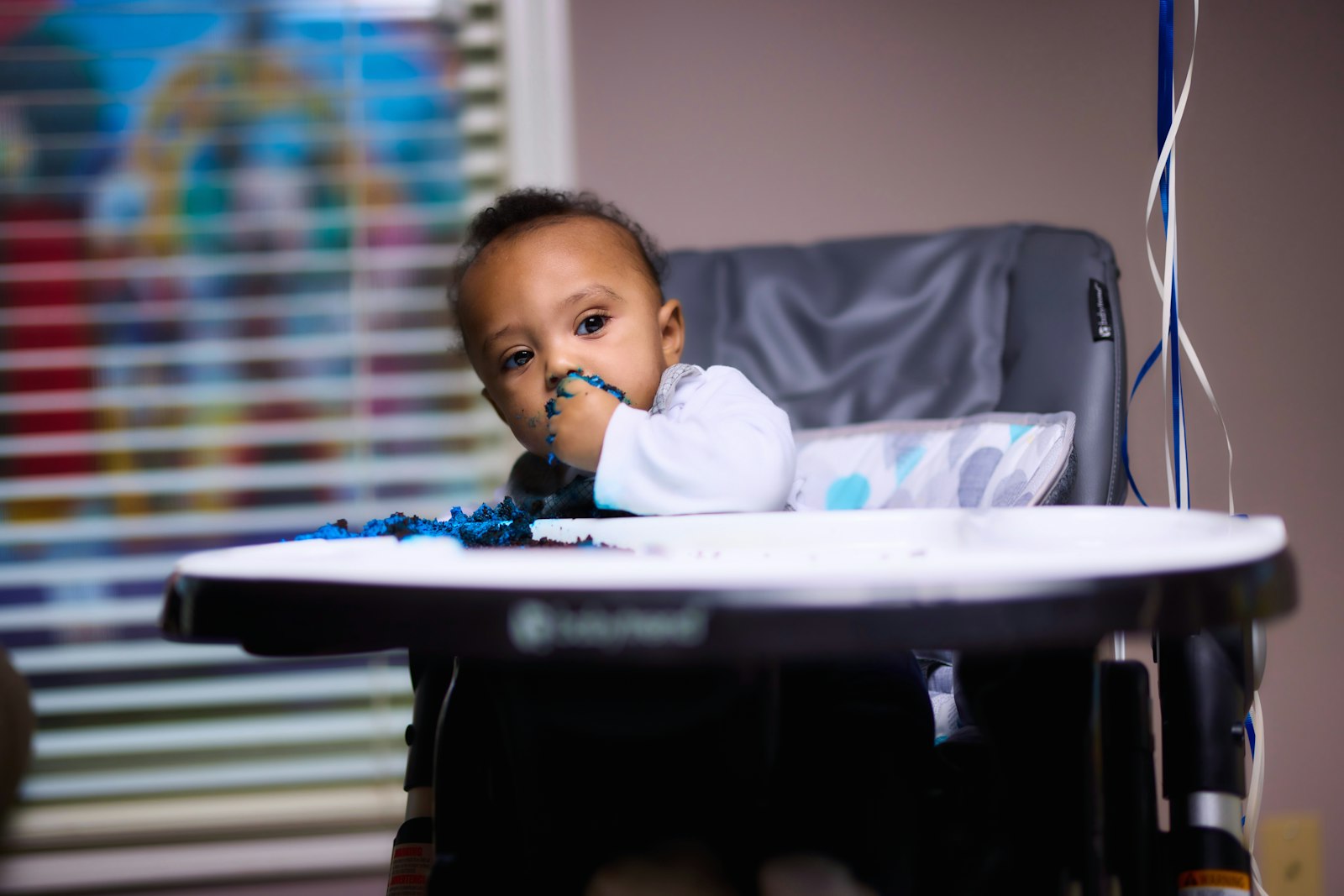
Photo: Pexels
A baby's natural iron stores from birth start running low around 6 months of age — right around when solids typically begin — which makes iron one of the most important nutrients to actually prioritize once a baby starts eating food, rather than something to worry about later.
Why iron matters so much at this age
Iron is essential for healthy brain development and building the hemoglobin that carries oxygen through the body, and both breast milk and standard infant formula alone aren't always enough to meet a growing baby's needs past 6 months. Low iron levels in infancy have been linked to developmental delays, which is why pediatric guidelines consistently emphasize iron-rich first foods rather than treating it as an optional extra.
Best iron-rich first foods
- Iron-fortified infant cereal — often the very first food introduced for exactly this reason; a good baseline source of iron mixed with breast milk or formula.
- Pureed or well-cooked meat — beef, chicken, and turkey are some of the most easily absorbed ("heme") sources of iron available, more efficiently used by the body than plant-based iron.
- Pureed lentils and beans — a solid plant-based iron source, especially useful for vegetarian families.
- Pureed spinach and other leafy greens — contain iron, though it's absorbed less efficiently than iron from meat.
- Egg yolk — a good source of iron that can be introduced early alongside other first foods.
- Iron-fortified oatmeal — a useful rotation alongside infant cereal for variety.
Iron needs by age
Iron needs shift as a baby grows, and the amount that matters at 6 months is not the same as what matters at 18 months.
- 6 to 8 months: this is the window when stored iron from birth is dropping fastest, so an iron-rich food at least once a day is a reasonable target, even in small amounts as your baby learns to eat.
- 9 to 12 months: babies are usually eating more volume and variety by now, which makes it easier to work in iron-rich foods across two or three meals rather than just one.
- 12 to 24 months: toddlers are notorious for eating inconsistently day to day, so think in terms of the week rather than any single meal. A toddler who barely touches dinner but had lentils at lunch and fortified cereal at breakfast is probably doing fine.
- 2 to 3 years and up: iron needs stay steady through the toddler years, and a varied diet with regular meat, beans, or fortified grains generally covers it without any special tracking.
Iron for vegetarian and vegan families
Plant-based iron (non-heme iron) is absorbed less efficiently than the iron in meat, fish, and poultry, which means vegetarian and vegan families often need to be a bit more deliberate about combining iron sources with vitamin C at the same meal. Lentils, beans, tofu, iron-fortified cereals, and dark leafy greens are the main plant sources worth rotating through regularly. Pairing lentils with tomato or bell pepper, or fortified cereal with a fruit high in vitamin C, is a simple habit that meaningfully improves how much iron actually gets absorbed. If you are raising a vegan baby, it is worth discussing iron and B12 specifically with your pediatrician, since a fully plant-based diet needs a bit more planning than one that includes animal products.
Boosting iron absorption
Pairing iron-rich foods with a source of vitamin C — a few spoonfuls of pureed sweet potato, strawberry, or citrus — significantly improves how well the body absorbs plant-based ("non-heme") iron in particular. On the flip side, giving cow's milk as a main drink before 12 months can actually interfere with iron absorption and is one of the reasons pediatricians recommend holding off on it as a primary drink until after the first birthday.
How much matters, and how often
There's no need to precisely calculate iron intake at every meal — the more practical goal is making sure iron-rich foods show up regularly across the week, not necessarily every single meal. A rough rule of thumb many pediatricians suggest is offering an iron-rich food at least once a day once a baby is eating solids with some regularity, whether that's fortified cereal at breakfast or a pureed meat or lentil dish later in the day.
Common mistakes with iron-rich feeding
- Relying on cereal alone past the first few months: fortified cereal is a great starting point, but leaning on it as the only iron source for a year misses out on the more absorbable heme iron in meat and the variety toddlers eventually need.
- Serving cow's milk too early or in large amounts: a full cup of cow's milk as a main drink before 12 months, or too much of it after, can crowd out solids and interfere with iron absorption.
- Giving up after one refusal: a baby who spits out pureed meat once is not necessarily rejecting it long-term; texture and repeated, low-pressure exposure usually matter more than the food itself.
- Assuming a "good eater" automatically gets enough iron: a toddler who eats plenty of carbs and dairy but very little meat, beans, or fortified grain can still fall short on iron despite eating well overall.
- Skipping vitamin C pairing: plant-based iron sources lose much of their advantage if they are never paired with a vitamin C food at the same meal.
Myths about iron and baby feeding
- Myth: breast milk alone provides enough iron through the first year. Breast milk's iron is well absorbed but present in small amounts, which is exactly why solids matter so much for iron starting around 6 months.
- Myth: a picky eater is automatically iron-deficient. Picky eating and iron deficiency are not the same thing; many picky eaters get enough iron through fortified foods even if their diet looks limited in other ways. A screening blood test, not guessing from eating habits, is the reliable way to know.
- Myth: spinach is a great source of iron for babies. Spinach does contain iron, but it is a non-heme source with lower absorption, and it also contains compounds that can further reduce how much iron the body actually takes up. It is a fine addition to a varied diet, just not a replacement for meat or fortified cereal.
- Myth: more iron is always better. Iron from food in a varied diet is not a concern, but iron supplements should only be used when a doctor recommends them based on a test, since unsupervised supplementing is a different situation entirely.
A real-life scenario: the toddler who "won't eat meat"
A common pattern parents describe: their toddler happily eats pasta, cheese, and fruit but turns their nose up at anything resembling a piece of meat. Rather than giving up on meat entirely, many families find success folding small amounts of finely shredded or blended meat into a sauce, meatball, or dish the toddler already likes, such as a bolognese-style pasta sauce or a soft meatball mixed half-and-half with a familiar vegetable. Over a few weeks of this kind of low-pressure blending, some toddlers gradually accept small visible pieces of meat on their own, though for others the blended approach simply becomes the long-term solution, and that is a perfectly reasonable way to keep iron intake up without turning mealtime into a battle.
Signs of low iron worth mentioning to a doctor
Mild iron deficiency often has no obvious symptoms at all, which is part of why many pediatricians screen for it around the 1-year well-child visit with a simple blood test. Signs that can sometimes appear with more significant deficiency include unusual paleness, low energy or increased fussiness, and a reduced appetite — but these are nonspecific and shouldn't be self-diagnosed. If there's any concern, a screening test is a more reliable answer than watching for symptoms alone. The HealthyChildren.org feeding and nutrition section has additional background on iron screening and infant nutrition milestones if you want more detail before your next well-child visit.
A note on food safety with iron-rich foods
Meat and egg both carry their own food safety considerations worth keeping in mind alongside the iron benefits. Ground meat should be cooked all the way through with no pink remaining, and it is worth cooling and mashing or cutting it into small, soft pieces appropriate for your baby's chewing ability rather than serving it in larger chunks. Egg should be cooked until both the yolk and white are fully set, since runny or undercooked egg carries a small risk of foodborne illness that is unrelated to allergy concerns. Leftovers made with meat, egg, or lentils should go in the refrigerator within about two hours of cooking and be used within a few days, the same general rule that applies to any cooked food you are storing for a baby or toddler.
Practical meal ideas to try
A simple, iron-forward first-year rotation might include iron-fortified oatmeal with mashed strawberry for breakfast, a lentil and sweet potato mash for lunch, and a soft, well-cooked ground beef or chicken dish paired with a vitamin-C vegetable for dinner. Rotating between a few reliable combinations rather than trying to reinvent every meal makes it much easier to keep iron intake consistent without adding significant extra effort to meal prep.
What to do if your baby refuses iron-rich foods
It's common for babies to be more resistant to meat textures than to purees or cereals, since meat can be harder to manage in the mouth early on. Blending small amounts of well-cooked meat into a familiar puree your baby already accepts — mixed into sweet potato or a vegetable mash, for instance — is a practical workaround that introduces the iron without requiring your baby to accept an unfamiliar texture on its own. Persistence with repeated, low-pressure exposure over several weeks tends to work better than switching foods entirely at the first sign of refusal.
Iron for baby-led weaning families
Families following baby-led weaning rather than purees can still prioritize iron effectively by offering soft, slow-cooked strips of meat a baby can gnaw on and suck the juices from even before they can fully chew and swallow solid pieces. A well-cooked, iron-fortified toast finger topped with mashed lentils or a thin layer of nut butter (once other allergens have been safely introduced) is another practical finger-food option that fits naturally into a baby-led approach without needing to be pureed.
Shape matters as much as the ingredient itself at this stage — a strip roughly the length and thickness of an adult finger is easier for a baby to hold and gum effectively than a small, hard-to-grip chunk, regardless of how iron-rich the food inside actually is. Slow-cooking methods like braising or using a slow cooker tend to produce meat that is soft enough for gumming without needing to be pureed, which many baby-led weaning families find is the easiest way to serve meat safely at this stage.
Frequently asked questions
Do formula-fed babies need extra iron-rich foods too?
Standard infant formula is iron-fortified, which helps, but pediatricians still generally recommend introducing iron-rich solids around 6 months for formula-fed babies as part of a well-rounded diet, not just for breastfed babies.
Can too much iron be a problem?
Getting iron from whole foods as part of a varied diet is not a concern for healthy babies. Iron supplements should only be given if a doctor recommends them based on a screening test, since supplementing without a documented need is a different situation.
Is it okay to give my baby iron-fortified cereal every single day?
Yes, in moderation as part of a varied diet — many pediatricians consider daily fortified cereal a reasonable baseline, as long as it isn't crowding out other iron sources and food variety as your baby gets older.