Photo: Pexels
Baby teeth care starts before the first tooth even shows up: wipe gums with a damp washcloth from birth, start brushing the moment a tooth erupts, use a rice-grain smear of fluoride toothpaste under age 3 and a pea-sized amount after, and book a first dental visit by the first birthday or within six months of that first tooth, whichever comes first. Baby teeth hold space for adult teeth and support chewing and speech, so decay in them is worth taking seriously even though they'll eventually fall out.
Baby teeth care by age
Oral care needs shift quickly during the first three years, and knowing what's expected at each stage takes the guesswork out of a routine that can otherwise feel like it's changing every few months.
- Birth to first tooth (usually birth to 6 months): Wipe gums gently with a clean, damp washcloth or gauze pad after feedings, especially before bed. No toothpaste is needed yet.
- First tooth to age 3: Brush twice a day with a soft, infant-sized toothbrush and a smear of fluoride toothpaste about the size of a grain of rice. Brush before bed without fail, since saliva flow drops overnight and leaves teeth more exposed to sugars left behind.
- Age 3 and up: Move to a pea-sized amount of fluoride toothpaste, keep brushing twice a day, and start supervising rather than fully doing it for them as their own hand control improves, usually somewhere around age 6 or when they can tie their own shoes reliably.
How much toothpaste to use, and why the amount matters
The American Academy of Pediatrics and the American Dental Association both recommend fluoride toothpaste from the first tooth onward, in specific amounts tied to age rather than to how big a child's mouth looks. Under age 3, that's a smear roughly the size of a grain of rice, thin enough to barely coat the bristles. From age 3 on, once a child can reliably spit rather than swallow, the amount increases to a pea-sized dab. Fluoride strengthens the outer layer of enamel and helps reverse the very earliest stages of decay before a cavity fully forms, which is why skipping it in the name of caution usually backfires. Swallowing a rice-grain smear now and then isn't dangerous. The specific amounts exist to limit total fluoride exposure while a child is still learning to spit, not because fluoride toothpaste itself is risky at recommended doses. More detail on both amounts and technique is available through the ADA's MouthHealthy resource.
How to brush a toddler's teeth, step by step
The mechanics of brushing a wiggly, opinionated toddler are different from brushing an infant's first few teeth. This sequence works for most toddlers who can sit (or be held) for under a minute.
- Sit the toddler on your lap facing away from you, or lay them back gently in your lap, so you can see into their mouth from above.
- Use a soft-bristled, toddler-sized toothbrush with a pea- or rice-grain amount of fluoride toothpaste depending on age.
- Brush in small circles along the outer surfaces of the top and bottom teeth first, since those are easier for a toddler to tolerate.
- Gently lift the lip to reach the gumline, where plaque tends to build up along the edge of the tooth.
- Move to the inner surfaces and chewing surfaces, going tooth by tooth rather than rushing through the whole mouth at once.
- Finish with a light brush of the tongue, which can hold onto bacteria and contribute to morning breath.
- Let them spit if they're able to, but don't rinse with water afterward. A thin film of fluoride left on the teeth keeps working after brushing ends.
When a toddler resists brushing
Brushing refusal is extremely common somewhere between 18 months and 3 years, right as toddlers are testing independence in every part of daily life. It rarely means anything is medically wrong, and it usually responds to routine more than to any single trick.
- Keep sessions short, ideally under a minute per session, and matter-of-fact rather than dramatic.
- Hand them a toothbrush to hold and "brush" with while you do the real cleaning with a second brush.
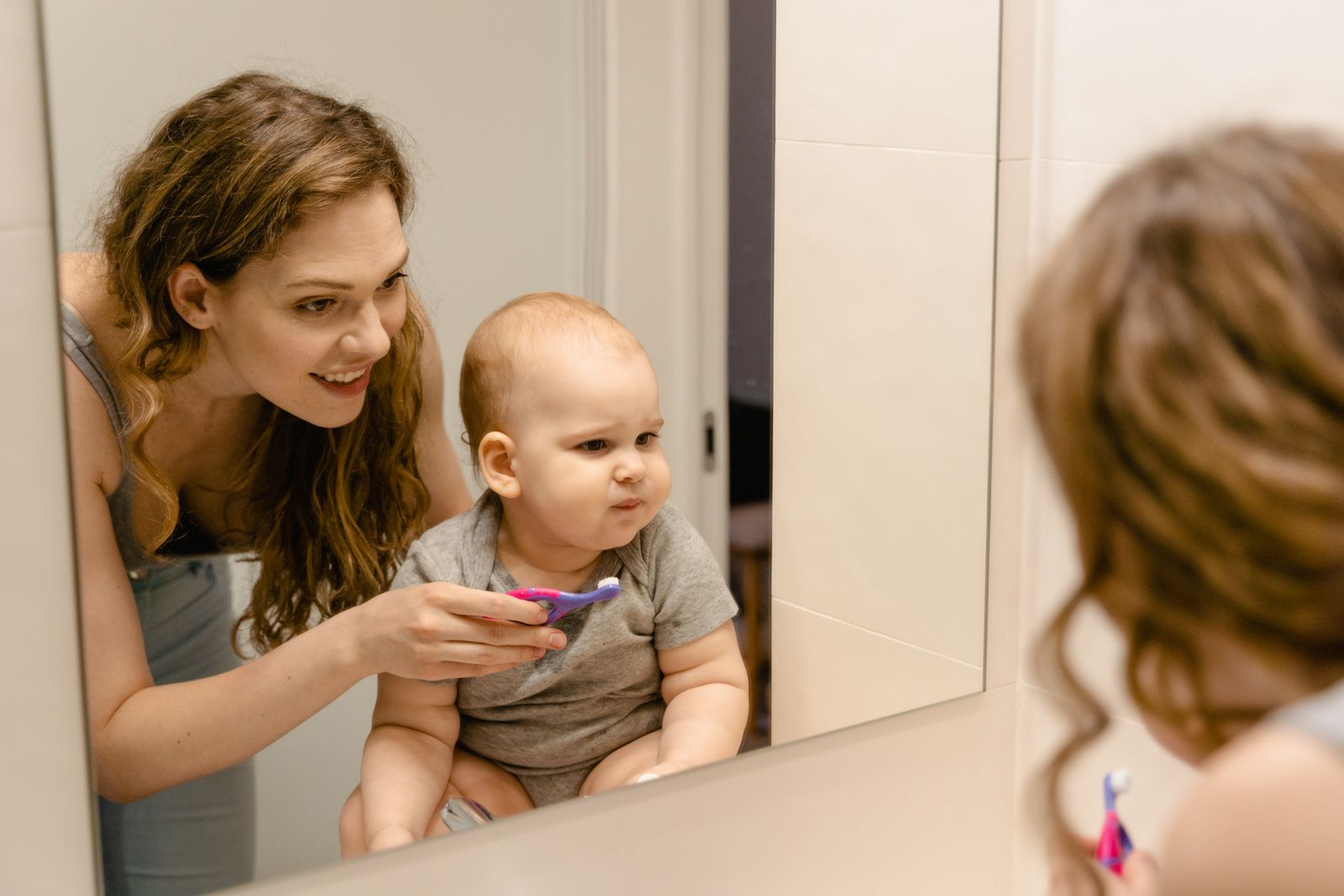
- Try brushing from behind while they look in a mirror, which some toddlers tolerate better than face-to-face brushing.
- Make it predictable: same order, same song, same spot in the bedtime or morning routine every time.
- Offer a limited choice, like which of two toothbrushes to use, rather than asking whether they want to brush at all.
- Stay calm and consistent even on rough nights. A shorter, imperfect brushing session beats skipping it entirely, but skipping should stay the rare exception, not the pattern.
Bottles, sippy cups, and bedtime milk
How and when a child drinks milk or juice matters almost as much as brushing itself. Sugars from milk, formula, and juice feed the bacteria that cause decay, and the longer those sugars sit against the teeth, the more damage they can do. A baby who regularly falls asleep with a bottle of milk, formula, or juice lets that liquid pool around the teeth for hours at a stretch, since saliva production slows during sleep and can't wash it away as effectively. This pattern is closely linked to what's sometimes called early childhood caries, or baby bottle tooth decay, which tends to show up first and worst on the upper front teeth. The safest bedtime bottle or sippy cup contains only water. If a bottle is part of a bedtime routine that's hard to change overnight, the goal is to phase it out gradually rather than adding to it, and to brush right before that final bottle rather than after the child has already fallen asleep with it.
Juice, snacks, and grazing through the day
Juice offers little nutritional benefit that whole fruit doesn't already provide, and the American Academy of Pediatrics recommends avoiding juice entirely before 12 months and limiting it after that. When juice is offered, serving it in a regular cup with a meal rather than sipping it from a bottle or sippy cup throughout the day reduces how long sugar stays in contact with teeth. The same logic applies to snacking in general: a toddler who grazes on crackers, dried fruit, or other starchy or sugary snacks all afternoon exposes their teeth to a near-constant acid attack, since each bite resets the clock on bacteria producing acid. Sticky snacks like fruit snacks, raisins, and gummy vitamins are particularly worth rinsing or brushing after, since they cling to tooth surfaces longer than most other foods.
The first dentist visit: when and why
The American Academy of Pediatric Dentistry recommends a first dental visit by a child's first birthday, or within six months of the first tooth coming in, whichever happens first. That's earlier than many parents expect, and earlier than most general dentists used to recommend, but the timing is intentional. A pediatric dentist or general dentist comfortable with young children can catch early warning signs, apply preventive treatments, and answer questions about brushing, feeding, and habits like thumb-sucking before small issues become bigger ones. For a related habit that can affect how teeth come in, see our guide on thumb-sucking and pacifier weaning.
What actually happens at the first visit
The first appointment is short and mostly about prevention, not treatment. Knowing what to expect ahead of time makes it easier for both the parent and the child.
- A visual exam of the teeth, gums, and jaw, often done with the child sitting on a parent's lap rather than alone in a dental chair.
- A look at bite alignment and how the teeth are coming in relative to typical patterns.
- A conversation about brushing technique, toothpaste amount, and diet, including bottle and sippy cup habits.
- Screening for early decay, including white or brown spots near the gumline.
- Fluoride varnish applied directly to the teeth, if the dentist recommends it, which is a quick and painless step that helps protect enamel.
- A discussion of thumb-sucking, pacifier use, and when those habits typically need to be phased out.
What to bring or ask about at that first visit:
- A list of any medications the child takes regularly, since some can affect saliva or gum tissue.
- Notes on current bottle, sippy cup, or breastfeeding habits, especially around bedtime.
- Any white, brown, or discolored spots you've noticed on the teeth.
- Questions about fluoride varnish, whether your local water is fluoridated, and whether a fluoride supplement is needed.
- Family history of early or severe cavities, which can affect how often follow-up visits are recommended.
Fluoride varnish: what it is and why dentists use it
Fluoride varnish is a concentrated fluoride treatment painted directly onto the teeth with a small brush, then left to set as it contacts saliva. It hardens quickly and is generally applied every three to six months for children at higher risk of decay. Unlike toothpaste, which a toddler swallows some of no matter how careful the technique, varnish delivers a concentrated dose exactly where it's needed and sets on contact, so very little is swallowed. Pediatricians as well as dentists are increasingly trained to apply it during well-child visits in areas where dental access is limited, which is part of why the CDC and the American Academy of Pediatrics both support fluoride varnish as a preventive tool for young children.
Teething discomfort versus early tooth decay
Parents often wonder whether something they're seeing in a baby's mouth is normal teething or an early sign of a problem. The two look different once you know what to check for. For the full range of teething symptoms and safe remedies, see our guide on teething symptoms and remedies.
- Usually just teething: swollen or tender gums, drooling, chewing on hands or toys, mild fussiness, and a slightly raised temperature under 101°F.
- Worth a closer look: a dull white spot or chalky band near the gumline on an already-erupted tooth, which is often the earliest visible sign of decay starting to form.
- Worth a dentist visit soon: a spot that has darkened from white to brown or black, visible pitting or a hole in the tooth, or a tooth that looks discolored compared to the others around it.
White spots in particular are easy to miss or dismiss, since they don't look dramatic and don't usually cause pain at that early stage. That's exactly why they matter: decay caught at the white-spot stage can sometimes be reversed with fluoride treatment, while a brown or black spot usually means the decay has progressed past the point where fluoride alone can fix it.
A realistic scenario: catching decay early
Picture a two-year-old who still takes a bottle of milk to bed most nights because it's the only thing that reliably settles her before sleep. At a routine check-up, her dentist notices a faint white line along the gumline of her two upper front teeth, teeth that otherwise look and act completely normal. There's no pain, no visible hole, nothing that would have caught a parent's attention at home. The dentist applies fluoride varnish, walks through a plan to phase out the bedtime bottle over a couple of weeks by diluting the milk with water and then swapping to plain water, and schedules a follow-up in three months to check whether the white line has stabilized or worsened. Because the family caught it at the white-spot stage rather than waiting for a visible cavity, the fix stayed simple: no drilling, no filling, just a change in habit and a bit of fluoride.
Common mistakes with baby teeth care
- Waiting until a child has "enough teeth to bother with" before starting to brush, rather than starting with the very first tooth.
- Using far more toothpaste than recommended, which increases fluoride exposure without adding any real cleaning benefit for a toddler.
- Letting a bedtime bottle of milk or juice become a nightly habit, especially once a child can hold their own bottle and self-settle with it.
- Assuming baby teeth "don't matter" because they'll fall out anyway, when in fact they hold space for adult teeth and a badly decayed baby tooth can affect the permanent tooth developing underneath it.
- Delaying the first dental visit until age 2 or 3, or until there seems to be an obvious problem, rather than going by the first birthday as recommended.
- Rinsing with water right after brushing, which washes away the fluoride left behind on the teeth before it can keep working.
Myths versus facts about baby teeth
- Myth: Baby teeth don't need much care since they fall out anyway. Fact: decay in baby teeth can cause pain, infection, and problems with the permanent teeth forming beneath them, and can affect eating and speech development in the meantime.
- Myth: Fluoride toothpaste is unsafe for young children. Fact: fluoride toothpaste used in the recommended smear or pea-sized amount is considered safe and effective by the American Academy of Pediatrics and the American Dental Association, and helps prevent the most common chronic disease of childhood, which is tooth decay.
- Myth: Juice is a healthy substitute for water between meals. Fact: juice, including 100% fruit juice, contains sugars that feed decay-causing bacteria, and pediatric guidance recommends limiting it and serving it with meals rather than sipping it throughout the day.
- Myth: A first dental visit isn't needed until a child has a full set of teeth. Fact: pediatric dental guidance recommends a first visit by age one or within six months of the first tooth, specifically to catch and prevent problems early rather than treat them later.
Thumb-sucking, pacifiers, and how they relate to teeth
Sucking is a normal, soothing reflex for infants and most toddlers, and it isn't something to worry about on its own during the early years. Once permanent teeth are on the way, though, prolonged and intense thumb-sucking or pacifier use can start to affect how the front teeth and jaw line up, particularly if it continues past age 3 or 4 with real force behind it. A dentist can flag this during a routine visit well before it becomes a bigger concern. Our full guide on thumb-sucking and pacifier weaning covers realistic ways to phase out the habit at the right age.
Building a routine that actually sticks
The families who keep up with brushing long-term tend to build it into a routine that doesn't rely on daily willpower or negotiation. Brushing at the same two points in the day, right after breakfast and right before the last bedtime story, works better than trying to find "a good moment" each day. Letting a toddler pick their own toothbrush, within reason, and keeping a consistent bedtime sequence (bath, pajamas, brush, book, bed) gives brushing a fixed place in a routine they already expect rather than treating it as a separate battle. None of this needs to be elaborate. The goal is for brushing to become as automatic and unremarkable as putting on pajamas, not a nightly negotiation.
When to call a dentist
Most oral care questions can wait for a regularly scheduled visit, but a few situations are worth a call sooner rather than later: a tooth that looks broken, chipped, or knocked loose after a fall; a white, brown, or black spot that's new or changing; visible swelling of the gums or face; a tooth that seems unusually painful to touch or to hot and cold; or no teeth at all by 18 months, which is worth mentioning at a pediatric visit as well. Catching a concern between scheduled cleanings rarely hurts and often saves a more complicated fix later.
Frequently asked questions
How much toothpaste should a toddler use?
A smear about the size of a grain of rice for children under 3, and a pea-sized amount from age 3 onward, using fluoride toothpaste both times, per the American Academy of Pediatrics and American Dental Association.
When should a baby go to the dentist for the first time?
By the first birthday, or within six months of the first tooth coming in, whichever happens first, according to the American Academy of Pediatric Dentistry.
When should I start brushing my baby's teeth?
As soon as the first tooth appears, brush it twice a day with a soft, infant-sized toothbrush and a rice-grain smear of fluoride toothpaste. Before any teeth arrive, wipe the gums with a clean, damp washcloth after feedings.
Is it bad for a baby to fall asleep with a bottle of milk?
Yes, regularly falling asleep with a bottle of milk, formula, or juice lets sugars pool against the teeth for hours, which raises the risk of early childhood tooth decay, sometimes called baby bottle tooth decay. Plain water is the only safe choice for a bedtime bottle or sippy cup.
What does early tooth decay look like in a baby?
The earliest sign is usually a dull white spot or band near the gumline, often on the upper front teeth. Left alone, it can darken into a brown or black spot as the decay progresses. White or brown spots are different from the normal shine of a healthy tooth and are worth a dentist visit.
How do I brush a toddler's teeth when they refuse?
Keep sessions short and matter-of-fact, let them hold a toothbrush too while you do the real brushing with a second one, try brushing from behind or in a mirror, sing or count to make it predictable, and stay consistent even on hard nights. Resistance around 18 months to 3 years is common and usually fades with routine.