Photo: Unsplash
Between six and twelve months, most babies move from sitting with support to crawling, pulling up, and sometimes cruising along furniture. Fine motor skills sharpen fast too — a baby who could barely swipe at a rattle at four months can often pick up small pieces of food with a finger-and-thumb pincer grip by ten or eleven months. Toys for this stretch should keep pace with that mobility and growing hand control.
6–8 months: sitting, transferring, and mouthing
Once a baby can sit unsupported, their hands are free to explore two objects at once — transferring a toy from one hand to the other is a genuine milestone, not just a cute habit.
- Stacking cups or rings — even before a baby stacks them "correctly," banging, nesting, and mouthing them builds hand control.
- Textured balls that are easy to grip and roll, encouraging early cause-and-effect play ("I pushed it, it moved").
- Teethers in a few different textures, since teething discomfort often peaks in this window.
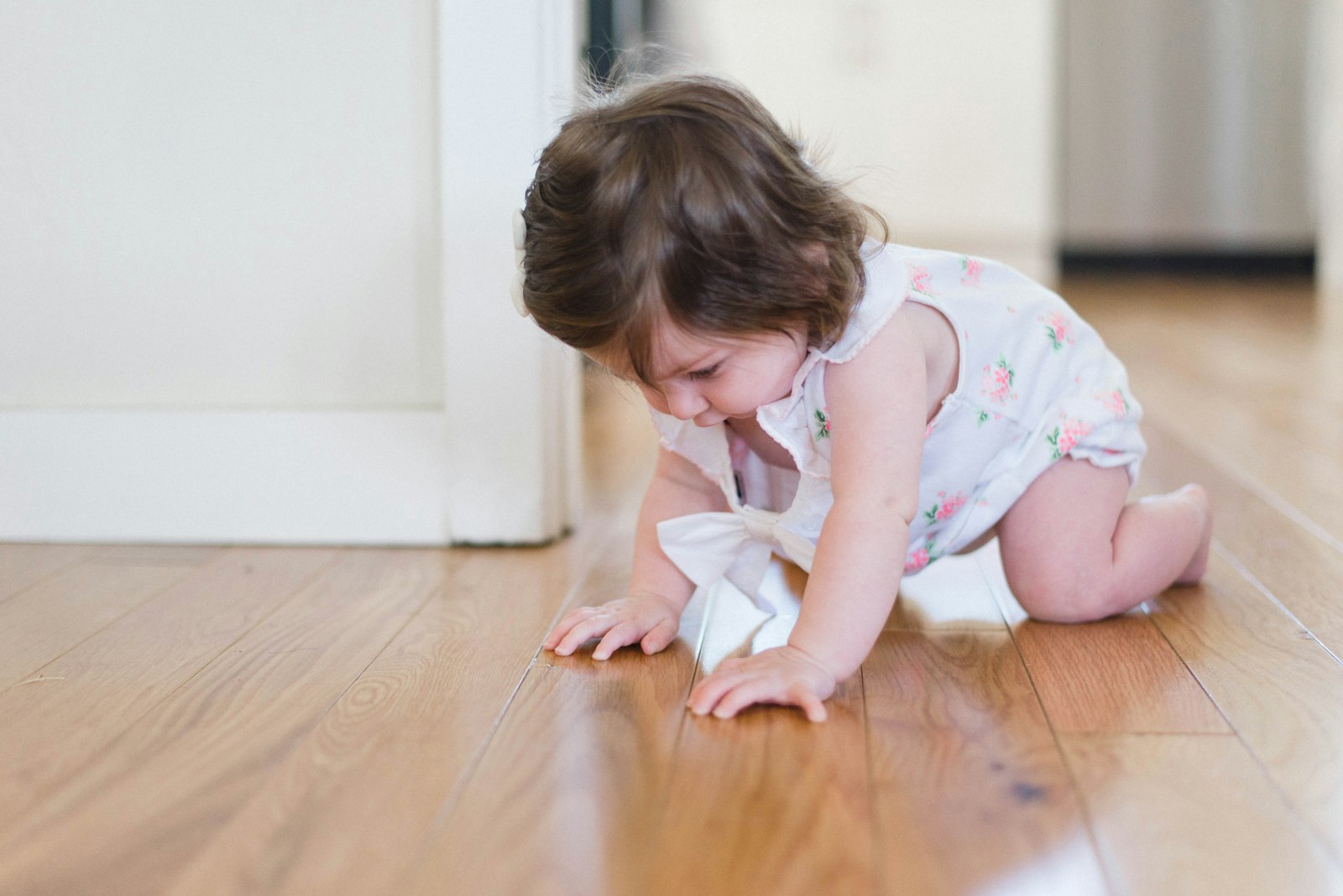
8–10 months: crawling and object permanence
Many babies start understanding that an object still exists even when it's hidden — a concept called object permanence. This is why simple hide-and-reveal toys and shape sorters suddenly become interesting around this age, when they seemed pointless a few months earlier.
- Simple shape sorters with two or three large, easy-to-grip shapes rather than a dozen small, fiddly ones.
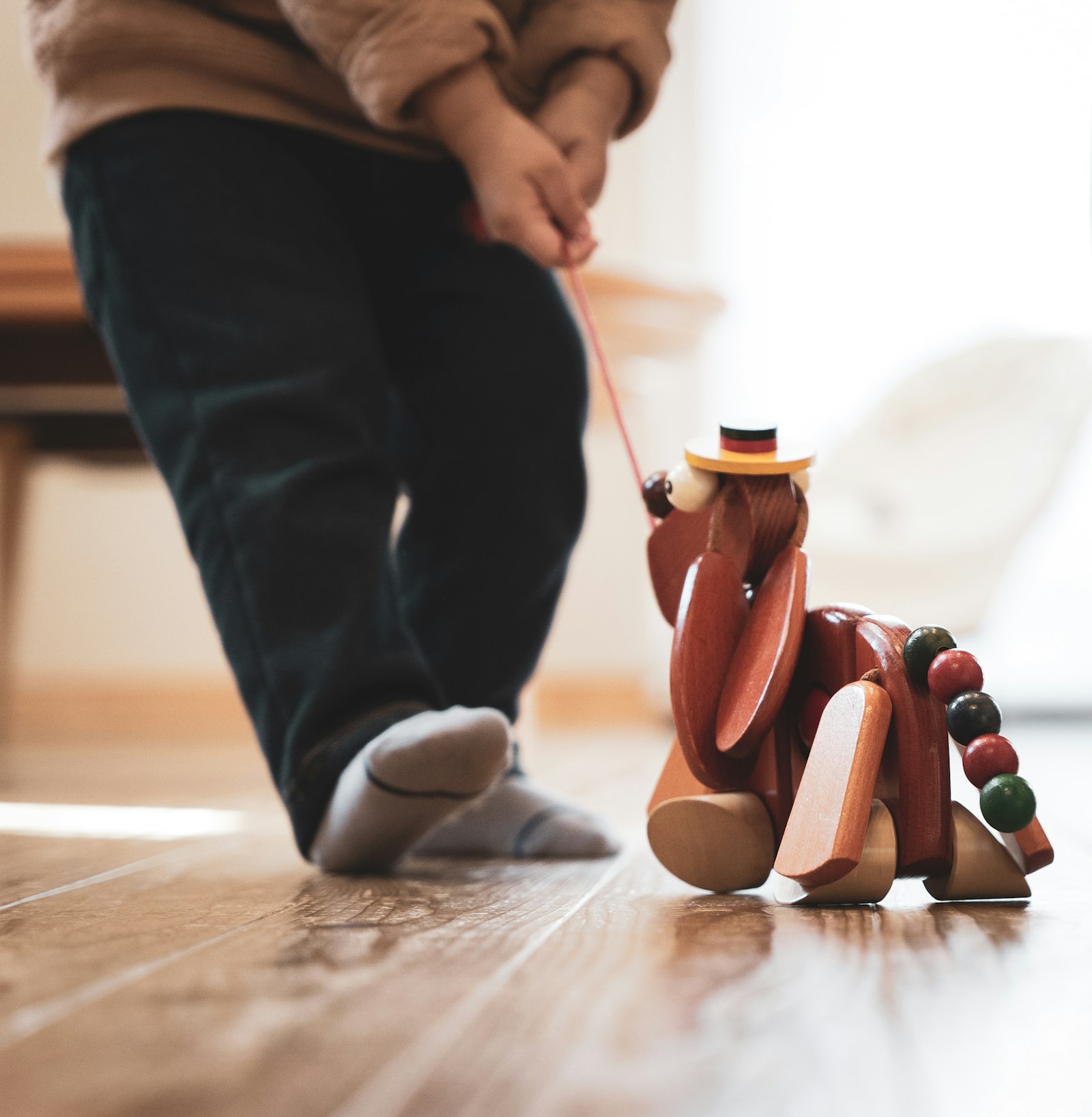
- Push-and-crawl-after toys that roll a short distance, rewarding a baby's new mobility.
- Board books with flaps — an early bridge between object permanence play and reading habits.
10–12 months: pulling up, cruising, and first intentional words
As babies pull up to stand and cruise along furniture, toys that support balance and encourage standing play start to make sense — always on a soft, cleared surface.
- Sturdy push walkers that won't tip when a baby pulls up on them (check the manufacturer's stability rating, not just the price point).
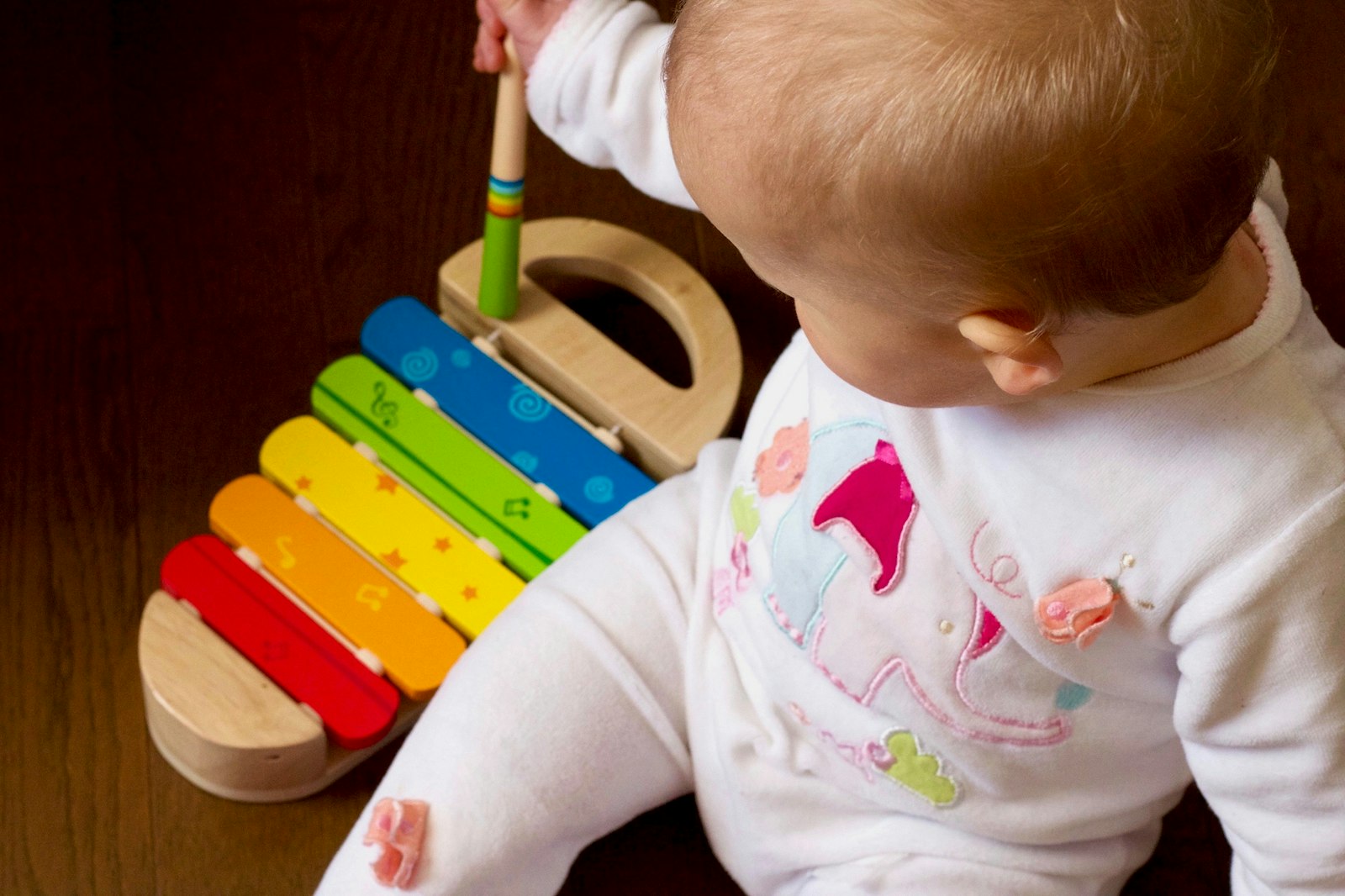
- Simple musical toys with large, easy-to-press buttons — cause-and-effect play remains a favorite through this whole stage.
- Soft first blocks for early stacking attempts, which usually start as knocking down more than building up — that's normal.
Why sensory variety matters more than toy count
Between six and twelve months, a baby's brain is building connections fastest in response to varied sensory input — different textures, sounds, weights, and resistances teach more than a large pile of similar plastic rattles. A basket with a soft fabric ball, a hard wooden ring, a crinkly fabric square, and a smooth silicone teether gives a baby more genuinely useful sensory information than ten toys that all rattle the same way when shaken. If you're choosing between adding another toy or diversifying textures within the toys you already have, diversifying tends to pay off more at this stage.
Open-ended toys at this age
Even before a baby can use a toy "correctly," open-ended objects — a set of stacking cups, a basket of household items safe to mouth, a wooden spoon and a pot — often hold attention longer than toys that do one specific thing when a button is pressed. Single-purpose electronic toys can produce a strong short burst of interest, but once a baby has triggered the light or sound a few times, novelty fades fast. Toys that respond differently depending on how a baby handles them — rolling one way when pushed, stacking a different way when balanced — keep offering something new to discover for weeks rather than days.
Rotating toys to match rapid developmental change
Because babies this age change so quickly — a toy that was too advanced in month seven can be exactly right by month nine — keeping a rotating stock rather than a fixed toy shelf pays off more here than at almost any other stage. Store toys your baby has outgrown or hasn't grown into yet in a labeled bin, and reintroduce them every few weeks. A toy that got no reaction in month six sometimes becomes a sudden favorite in month eight, once the fine motor skill needed to enjoy it has caught up.
Budget vs. splurge for this stage
Most toys built for six-to-twelve-month-olds are simple enough that price doesn't buy much extra developmental value — a basic set of stacking cups from a budget brand does the same job as an expensive imported version. Where spending more tends to be worthwhile is anything the baby will put significant weight or force against, like a push walker or a stand-and-play activity table; sturdier construction there reduces both tip-over risk and the frustration of a wobbly toy falling over mid-play. It's also reasonable to spend a bit more on teethers, since food-grade silicone and well-sealed construction matter more for anything that spends hours in a baby's mouth.
Buying criteria: what to check before you order
This age range is when mouthing peaks, so material and construction checks matter more here than at almost any other stage. Look for a statement of ASTM F963 compliance (in the US) or a CE/UKCA mark (in the UK and EU) on packaging, and check that the toy has no small, detachable pieces that fit inside a standard choke-test tube of about 1.25 inches across. Anything with felt eyes, buttons, bells, or small plastic accessories glued or sewn on should be avoided for a baby who mouths everything, even if the toy is marketed for this age. Pull the pieces yourself in the store or check reviews closely before buying online.
Battery compartments need a screw or tool to open, not a snap-open panel a baby could pry with persistent gnawing. This matters especially for musical toys and light-up play mats, which are popular gifts at this age. Button batteries in particular are dangerous if swallowed, since they can cause internal burns within hours, so a loose or poorly secured compartment is a reason to return a toy even if everything else about it looks fine. For push walkers and stand-and-play tables, check the manufacturer's stated stability or tip-resistance rating rather than assuming a bigger base is automatically safer; some narrow-footprint walkers are actually well weighted and stable, while some wide ones tip more easily than expected.
Fabric toys and teethers should be labeled with the materials used (organic cotton, food-grade silicone, natural rubber) since a baby in this age range will spend real time with these items in their mouth. Machine-washable fabric toys hold up much better under the amount of drool and floor contact that's normal at this stage.
Common mistakes parents make at this stage
The most common mistake is buying toys built for a slightly older baby based on how advanced the child seems. A baby who's an early crawler or an early stander is still working with the same fine motor timeline as their peers in most cases, and a toy with small pieces meant for toddlers can genuinely be unsafe even for a physically advanced eight- or nine-month-old, since choking risk tracks with mouthing behavior and molar development, not gross motor skill. It's worth resisting the urge to "size up" a toy purchase just because a baby seems ahead physically.
A second mistake is over-relying on electronic toys with lights, songs, and buttons as the default gift. These toys aren't harmful, but a shelf full of them, with no plain wooden or fabric toys mixed in, tends to produce shorter and shallower play sessions than a mix that includes simple, quiet, open-ended objects. Babies this age often engage longer with a set of nesting cups or a basket of safe household objects than with a toy that does something flashy but the same way every single time.
A third mistake is skipping the recall check. Push walkers, activity tables, and bath toys are recalled fairly often for tip-over risk, mold growth in enclosed water toys, or small parts that detach after normal wear. A quick check of the CPSC recall list before buying secondhand, or before passing an older sibling's toy down, takes a minute and catches problems a visual inspection alone might miss.
A real-life scenario: the toy that gets ignored
It's common for parents to buy an expensive activity table or walker expecting it to become a daily favorite, only to find their baby is far more interested in the box it came in, a wooden spoon, or a set of plastic measuring cups from the kitchen drawer. This isn't a sign anything is wrong with the baby or the purchase. At six to twelve months, novelty, texture, and the ability to bang two things together often matter more than a toy's designed purpose. Keeping a few safe household objects in reach alongside "real" toys, and not reading too much into which one gets chosen on a given day, tends to be a more useful mindset than trying to redirect a baby back toward the toy that cost more.
When development doesn't match the "typical" toy timeline
Every baby moves through sitting, crawling, and cruising on their own schedule, and toy suggestions tied to age ranges are a general guide, not a checklist to hit on time. A baby who isn't yet sitting independently by eight months, or who shows little interest in reaching for objects, is worth mentioning at a well-child visit, since early intervention services are widely available and most effective when started early if there's ever a need. The American Academy of Pediatrics publishes general milestone timelines that are useful for context, though a pediatrician who knows your baby is always the better resource than a general chart.
Toy hygiene during the mouthing months
Because so much play at this age involves a toy going straight into a baby's mouth, cleaning routines matter more here than for older children. Hard plastic and silicone toys can usually go through a dishwasher cycle or be wiped with warm soapy water daily, while fabric toys and soft books hold up best with regular machine washing on a gentle cycle. Bath toys with small holes or squeeze bulbs are worth checking regularly for mold, since trapped water inside a sealed toy is a common, often overlooked hygiene issue; toys that can be fully drained and air-dried between uses avoid this problem better than ones with no way to empty out.
Our picks
Each pick below was checked against real order and rating data — not pulled from the top of a search page — so every one genuinely holds a 95%+ rating from a meaningful number of real buyers.
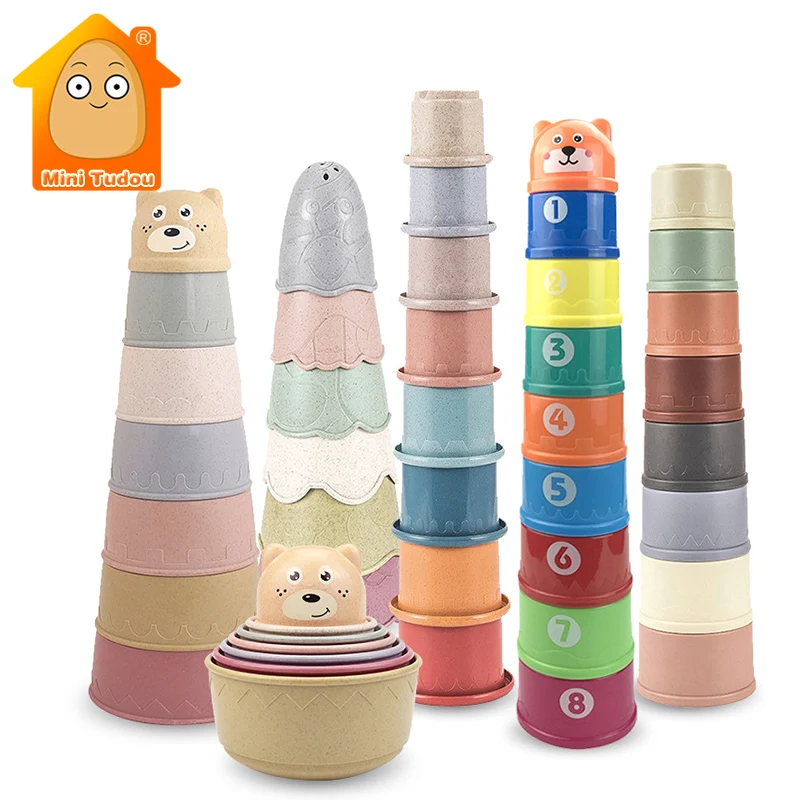
Baby Toys Stacking Cup Cartoon Early Educational Learning Color Number Nesting…
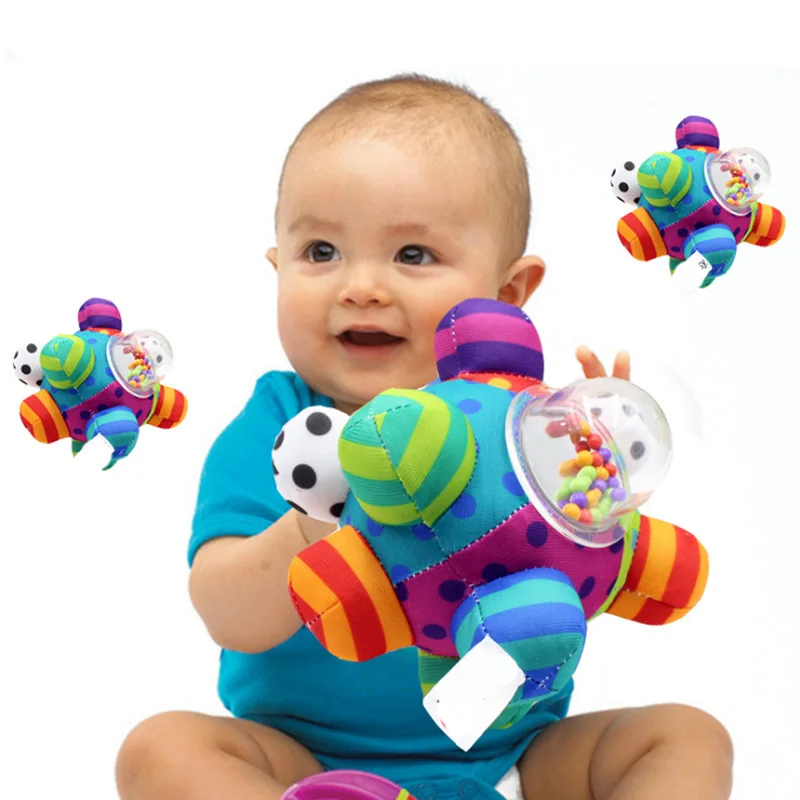
Ball Rattles Toddlers Sensory Bell Toys Cognitive Developmental Bumpy Newborns…
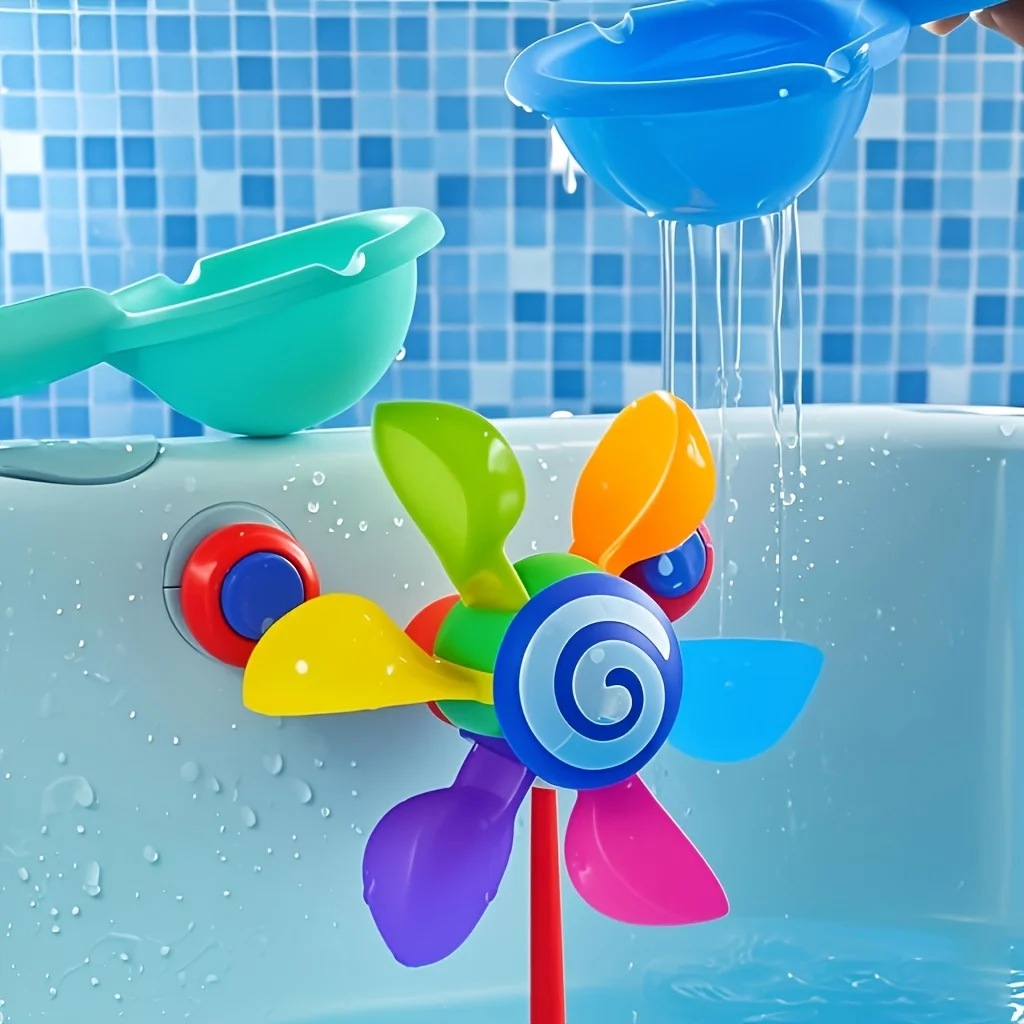
1pc Spinning Bath Toy Windmill, Fun Bathtime Sensory Play for Baby Boys & Girl…
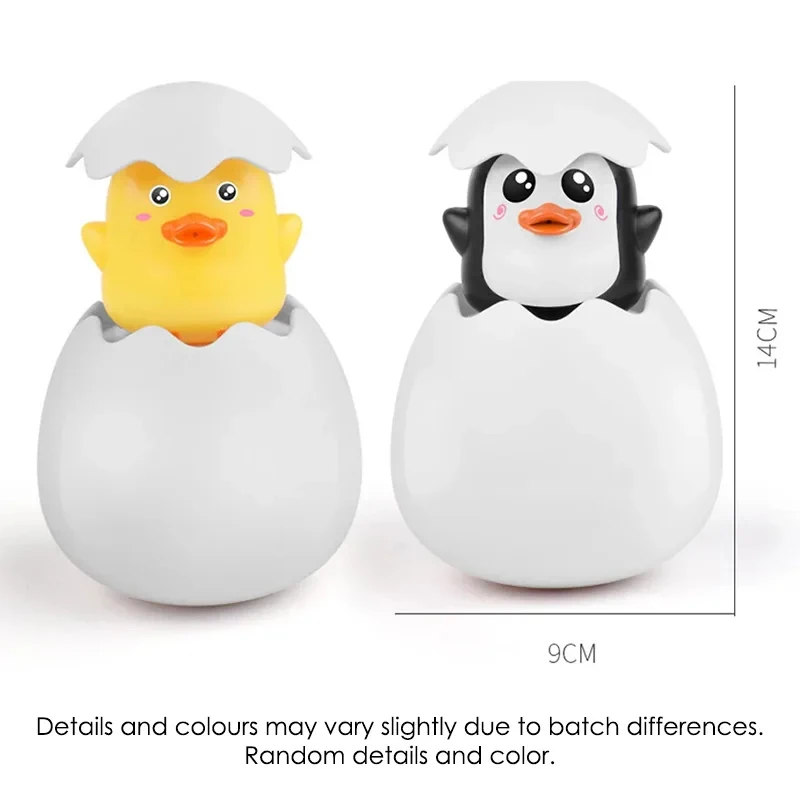
Baby Bath Toy Cute Duck Penguin Egg Water Spray Sprinkler Shower Sensory Toy G…
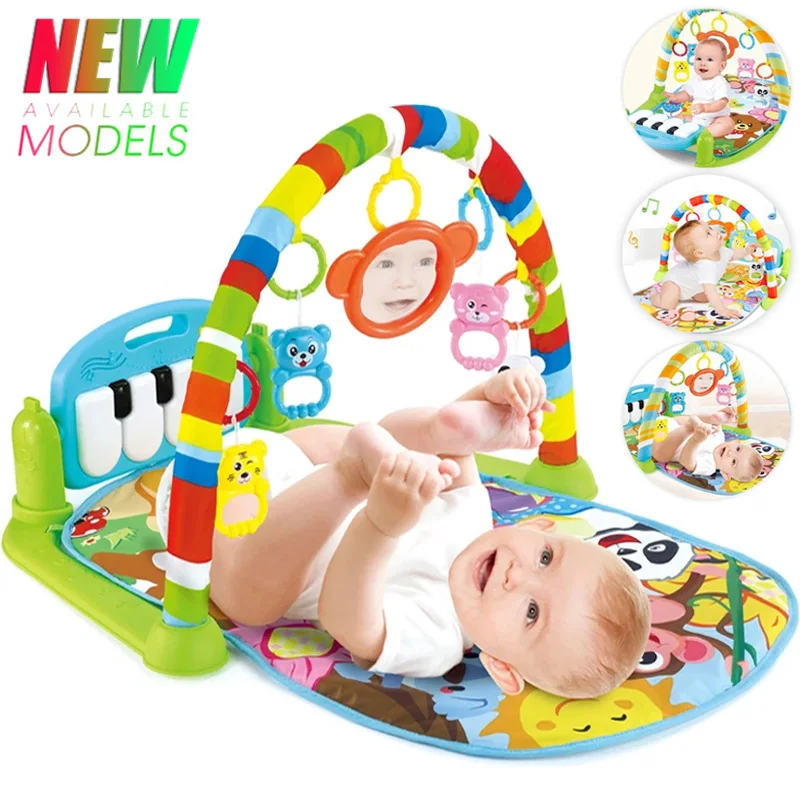
Baby Music Activity Gym Rug Play Mat Newborn Carpet Pedal Piano Keyboard Infan…
Affiliate links — we may earn a commission at no extra cost to you. Learn more.
Safety notes specific to this stage
- Push walkers should be wide and stable enough not to tip when a baby pulls up on the edge.
- Any toy your baby will use while standing or cruising should be checked for a stable, non-slip base.
- Small parts become a bigger risk once babies crawl and explore floors independently — check under furniture regularly for choking hazards, not just inside the toy box.
- Continue checking that batteries are secured behind screwed panels, especially in musical and light-up toys.
See our full toy safety checklist for labeling standards and how to check for recalls before you buy.