Photo: Unsplash
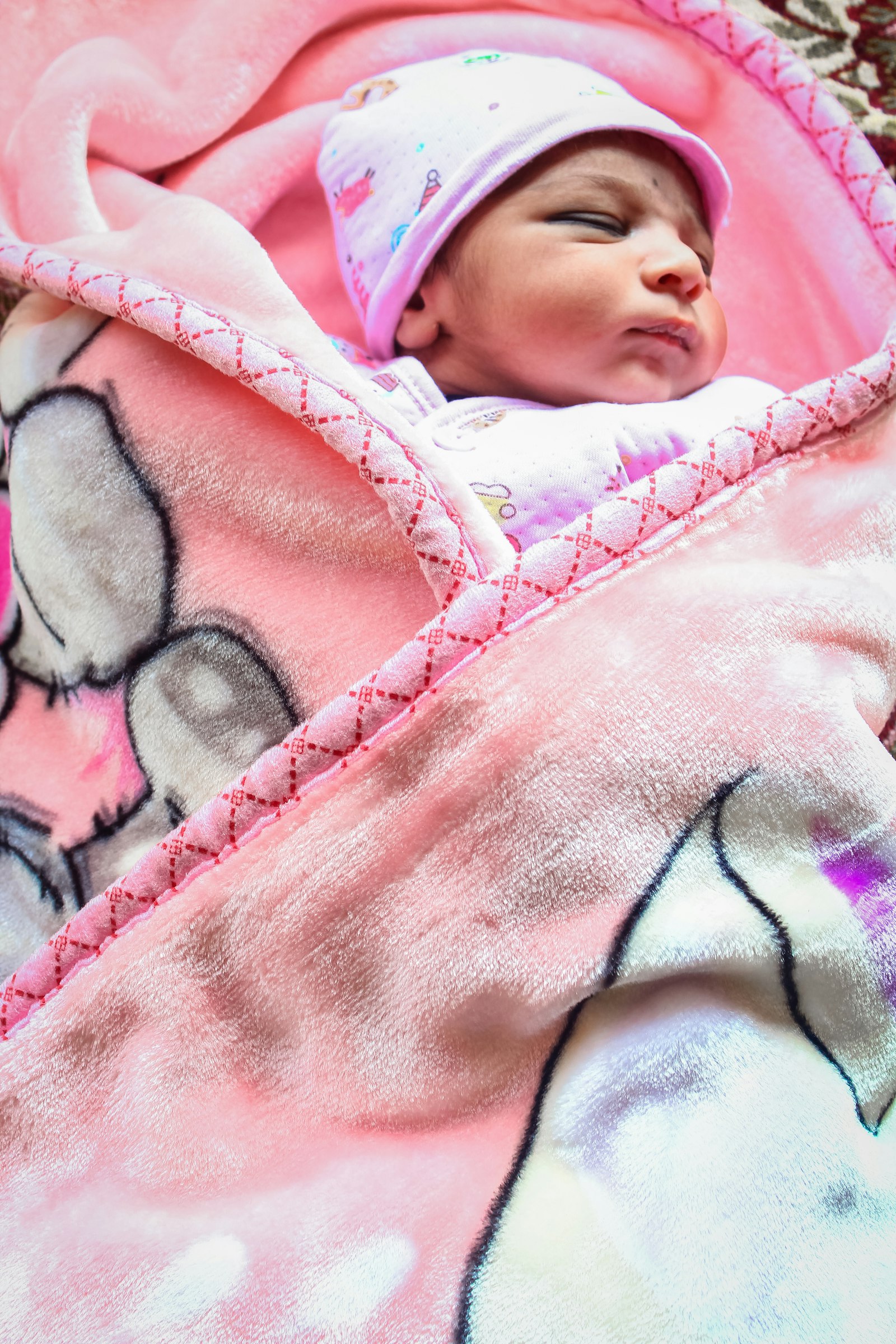
Swaddling recreates the snug, contained feeling of the womb, which is why it genuinely helps many newborns settle and sleep longer. Done incorrectly, though, it can interfere with healthy hip development or create a suffocation risk — so the technique and the safety rules matter equally here. The good news is that once you've practiced the fold a handful of times, it becomes a fast, almost automatic part of a bedtime routine rather than something that needs to be looked up each night.
This guide covers the step-by-step wrap, the safety rules that matter most, how to choose between a blanket and a wearable swaddle product, and what to do as your baby outgrows the need for it. If you're short on time, the hip-safe rule and the rolling-milestone cutoff are the two details worth remembering above everything else.
Step-by-step swaddle technique
- Lay a large, thin, breathable blanket in a diamond shape and fold the top corner down.
- Place your baby face-up with shoulders just below the fold, arms at their sides (or one arm out, for a partial swaddle).
- Bring one side across the body and tuck it snugly under the opposite side.
- Fold the bottom corner up and over the feet, leaving room for hips and knees to bend up and out — not straightened and pressed together.
- Bring the remaining side across and tuck it in, snug at the chest and arms but loose enough at the hips for natural movement.
The hip-safe rule
The single most important safety detail: hips and knees need room to bend up and out into a natural, slightly frog-like position. A swaddle that forces the legs straight and pressed together increases the risk of hip dysplasia, since a newborn's hip joints are still developing and depend on this natural position to form correctly. Look for "hip-healthy" certified swaddle products if you're buying one rather than using a blanket, which typically build this room in by design.
Safe sleep rules while swaddled
- Always place a swaddled baby on their back to sleep, never on their stomach or side.
- Stop swaddling arms-in the moment your baby shows any sign of trying to roll over — a swaddled baby who rolls onto their stomach can't push up to breathe as easily.
- Keep the crib bare otherwise: no loose blankets, pillows, or bumpers in addition to the swaddle.
- Check for overheating — a swaddle adds warmth, so dress baby lighter underneath than you would unswaddled.
When to stop swaddling
Stop arms-in swaddling as soon as your baby shows early rolling attempts, even before they fully roll over — this is a safety cutoff, not a flexible guideline. Some babies attempt rolling as early as 8-10 weeks, well before the "average" milestone age, so watch your specific baby rather than a calendar date.
Swaddle blankets versus wearable swaddle products
A traditional square blanket swaddle gives you the most control over snugness and is inexpensive, but it takes practice to get consistently tight enough to stay put through a full sleep stretch without a baby's own movement loosening it. Velcro or zip-style swaddle products are generally easier for tired parents to get right every time and reduce the chance of a loose blanket working free in the crib, which is itself a safety consideration — a swaddle that comes undone can become loose fabric near a baby's face. Whichever style you use, the same hip-safe and rolling-related rules apply; a wearable swaddle product isn't automatically safer if it's the wrong size or used past the rolling milestone.
Getting a snug swaddle without it feeling like a struggle
New parents often either swaddle too loosely, which defeats the settling effect and can come undone, or worry so much about being too tight that they undershoot on snugness around the chest and arms. A good gauge is being able to slide two or three fingers between the swaddle and your baby's chest — snug enough to limit the startle reflex that often wakes newborns, loose enough to allow normal breathing and chest movement. It also helps to swaddle before a baby is fully worked up and crying, since a calm baby is easier to position than one who's already thrashing — swaddling as part of the same calm routine each time, rather than as a last resort mid-meltdown, tends to go more smoothly for both of you.
The startle reflex and why swaddling works
Newborns are born with a strong startle reflex (sometimes called the Moro reflex) that causes their arms to fling outward suddenly, often in response to a sound, a sensation of falling, or even their own movement — and that flinging motion frequently wakes a sleeping newborn who was otherwise settled. Swaddling works largely by containing this reflex so the arm movement doesn't fully wake the baby, which is the core reason swaddled newborns often sleep in longer stretches than unswaddled ones. This reflex fades naturally over the first few months, which is part of why many babies need swaddling less as they get older even independent of the rolling safety cutoff.
Making the transition out of swaddling easier
Because swaddling and safe sleep both matter, the transition away from it deserves a plan rather than an abrupt stop. Many families use a graduated approach: switching to a one-arm-out swaddle for a few nights, then both arms out, before moving to a wearable sleep sack that keeps the same cozy sensation without restricting the arms at all. Expect some disrupted sleep during this transition — a startled arm movement will briefly wake a newly-unswaddled baby more than it did before — and know that this adjustment period is normal and typically settles within one to two weeks as your baby adapts to sleeping with their arms free.
Choosing the right swaddle blanket or product
Fabric matters more than most first-time parents expect. A thin, breathable material such as muslin cotton or bamboo is easier to get snug without bulk, and it breathes well enough to reduce overheating risk compared with thicker flannel or fleece. Muslin also softens with repeated washing, which makes later swaddles easier to wrap tightly than a brand-new, stiffer blanket straight out of the package. Size matters too: a blanket in the 40 to 47 inch square range gives enough fabric to wrap a newborn snugly with material to spare, while a smaller blanket forces compromises on tuck depth that make the swaddle more likely to come loose overnight.
If you'd rather skip the folding technique altogether, a hip-healthy certified wearable swaddle with a zipper or Velcro closure removes the guesswork. Look specifically for products that carry the International Hip Dysplasia Institute's "hip-healthy" seal, since that certification means the product has been independently checked for adequate hip and knee room, not just marketed as such.
Swaddling for naps versus overnight sleep
The same safety rules apply regardless of whether it's a daytime nap or overnight sleep, but a few practical details differ. Daytime naps tend to be shorter and lighter, so a slightly less snug swaddle that a baby can settle into quickly for twenty or thirty minutes is often enough, whereas overnight sleep benefits from the tightest safe wrap you can manage, since it needs to hold up through several hours of natural movement. Room temperature is also worth checking twice a day rather than assuming it stays constant, since many homes get warmer in the afternoon than at night, and a swaddle that was appropriate for an overnight temperature might be too warm for a midday nap in a sunnier room.
Swaddling multiples or a smaller baby
Parents of twins or babies born early or small for their age often find that standard swaddle blankets and wearable swaddles run large, leaving too much loose fabric even at the smallest adjustment. Preemie-sized or "newborn small" swaddle products exist specifically for this, and it's worth sizing down rather than trying to make a standard swaddle work through extra folding, which can create uneven bulk and pressure points. If your baby was born prematurely or has any diagnosed hip risk factors, checking with your pediatrician before starting swaddling at home, even though the general hip-safe technique is the same, is a reasonable extra step given the additional monitoring premature babies often need in the early weeks.
Common swaddling mistakes
- Wrapping too loosely at the chest: a swaddle that's loose enough to work its way up near the face during sleep is a real hazard, not just an inconvenience — snug at the chest and arms is the priority.
- Wrapping too tightly at the hips and legs: the opposite mistake, and the one linked to hip dysplasia risk if it becomes a habit over weeks of daily swaddling.
- Using too many layers underneath: a swaddle already adds warmth, so a onesie or light layer underneath is usually enough; a sleeper plus a swaddle plus a warm room adds up to overheating risk.
- Continuing arms-in swaddling past the rolling milestone: the single most important rule to not bend on, even when a baby seems to sleep better swaddled.
- Swaddling over a wet or dirty diaper for too long: a full swaddle makes it easy to lose track of how long it's been since the last change; keeping to a normal change schedule even during long naps avoids rash.
Swaddling myths worth clearing up
"Swaddling spoils a baby by making them dependent on being wrapped" is not supported by evidence; swaddling addresses a physiological reflex, not a preference that gets reinforced through habit, and babies transition off it without lasting sleep problems. "You should swaddle as tightly as possible for the best effect" is also inaccurate and, taken too far, is exactly the mistake that raises hip dysplasia risk. And "swaddling is only for very young newborns" oversimplifies things: the appropriate window is really until rolling begins, which varies enough by baby that a fixed age cutoff is less useful than watching your own baby's development.
When to check in with your pediatrician about swaddling or hips
Most swaddling questions are about technique and comfort rather than medical concerns, but a few signs are worth mentioning at a well-child visit: a clicking sound from the hip during diaper changes, uneven leg length, uneven skin folds on the thighs, or reduced movement in one leg compared with the other. These can be signs of hip dysplasia unrelated to swaddling itself, though tight swaddling can worsen an existing predisposition, which is exactly why the hip-safe wrapping technique matters even for babies without any known risk factors. The American Academy of Pediatrics and resources like HealthyChildren.org cover safe sleep and swaddling guidance in more depth if you want additional reading between visits.
Frequently asked questions
Is swaddling safe for every newborn?
Swaddling is broadly safe when done with correct hip positioning, back-sleeping, and stopped once a baby shows rolling attempts. Babies with hip conditions identified at birth may need a modified approach — check with your pediatrician if that applies.
My baby fights the swaddle and cries when wrapped — what should I do?
Some babies simply prefer arms-free sleep from the start. A one-arm-out swaddle or a wearable sleep sack are both reasonable alternatives if a full swaddle consistently causes more distress than it soothes.
Can a baby overheat in a swaddle?
Yes — a swaddle adds a meaningful layer of warmth. Dress your baby in fewer layers underneath than you would for unswaddled sleep, and check the back of their neck for sweating as a simple overheating check.
Is it okay to swaddle for every single sleep, including short car naps?
Swaddling is meant for a flat, supervised sleep surface such as a crib or bassinet, not a car seat, stroller, or baby carrier, where a snug swaddle can restrict natural movement in a way that's less safe in those settings. Save swaddling for flat, dedicated sleep spaces and let your baby sleep unswaddled elsewhere.