Photo: Pexels
Life skills activities are simple, everyday tasks — pouring a drink, buttoning a shirt, spreading peanut butter, sorting laundry by color — that build a child's real-world capability through hands-on practice rather than instruction alone. The best ones are chosen to match a child's current age and fine motor ability, broken into small enough steps that success comes quickly, and treated as a genuine skill to master rather than a job to get through. Unlike a chore, which is about the household getting something done, a life skills activity is about the child walking away more capable than they started — and most kids find that kind of visible progress genuinely fun.
Why life skills activities matter
Every time a child pours their own cereal milk without a spill, zips their own jacket, or successfully counts out coins for a pretend shop, something is happening underneath the task itself. These small, repeated wins build what psychologists call self-efficacy — a child's internal sense that they are someone who can figure things out and get better with practice. That sense of "I can do this" doesn't stay contained to the specific skill; it tends to spill over into how a child approaches new challenges generally, from a tricky puzzle to a hard homework problem years later.
Life skills practice also does quiet work on executive function — the mental skills involved in planning, sequencing, and following through on a multi-step task. Buttoning a coat requires noticing which button lines up with which hole, holding a plan in mind, and adjusting when the first attempt doesn't work. Tying a shoe requires remembering a sequence of steps in order. These are exactly the same underlying skills a child will later use for homework, chores, and eventually adult responsibilities — practicing them through low-stakes, genuinely enjoyable activities in early childhood gives that development a real head start.
There's also a simpler, more immediate payoff: kids who can do more things for themselves tend to have fewer daily friction points with the adults around them. A child who can pour their own water doesn't need to wait for a parent mid-task. A child who can dress themselves doesn't turn every morning into a wrestling match. None of that requires framing the activity as helpful to the parent — the capability itself is the reward, and the smoother mornings are simply what follows.
Life skills activities by age
These are grouped by rough developmental stage rather than a strict cutoff — a child's fine motor control, patience, and interest matter more than their exact age, so feel free to borrow from the stage above or below if it fits better.
Roughly 2-3 years: first independent motions
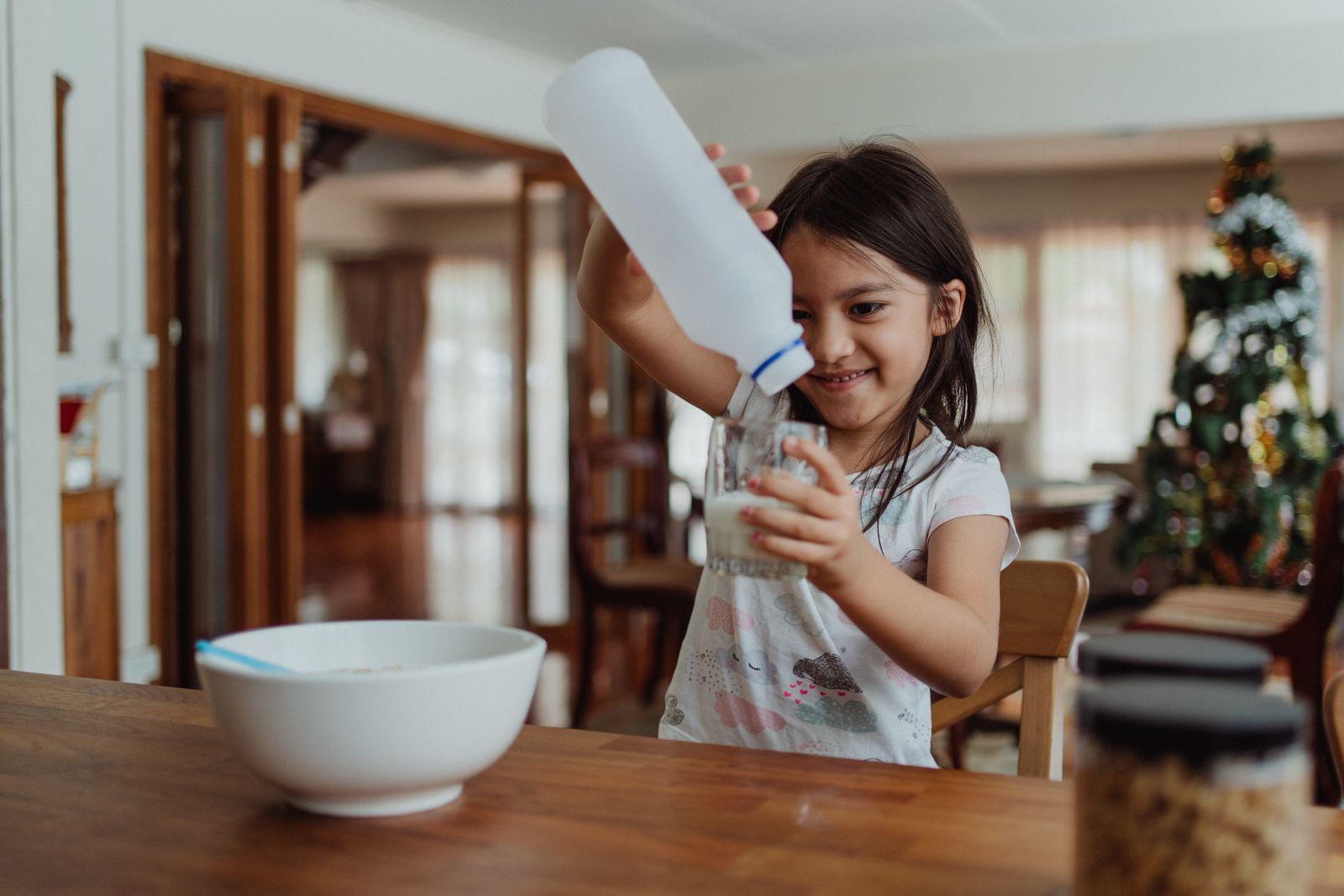
- Pouring from a small, light pitcher — start with water in the bathtub or over a sink before moving to the table, where a spill matters less.
- Pulling on loose clothing — elastic-waist pants, a poncho-style top, or slip-on shoes give an early win without fasteners.
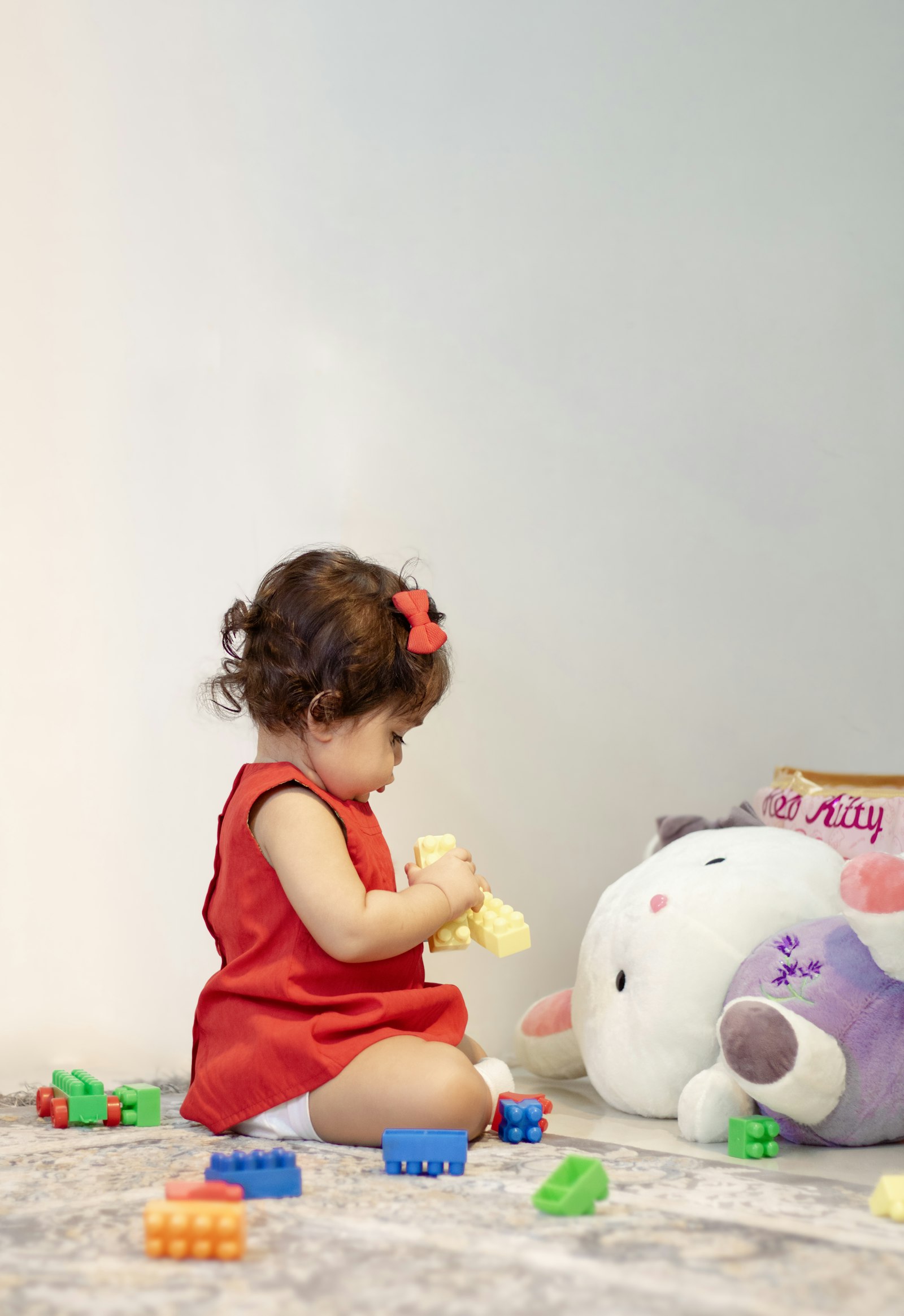
- Putting objects where they belong — sorting big blocks into a bin by color or size builds the same sorting logic used later for laundry.
- Scooping and spooning — transferring dry cereal or pom-poms between two bowls with a large spoon.
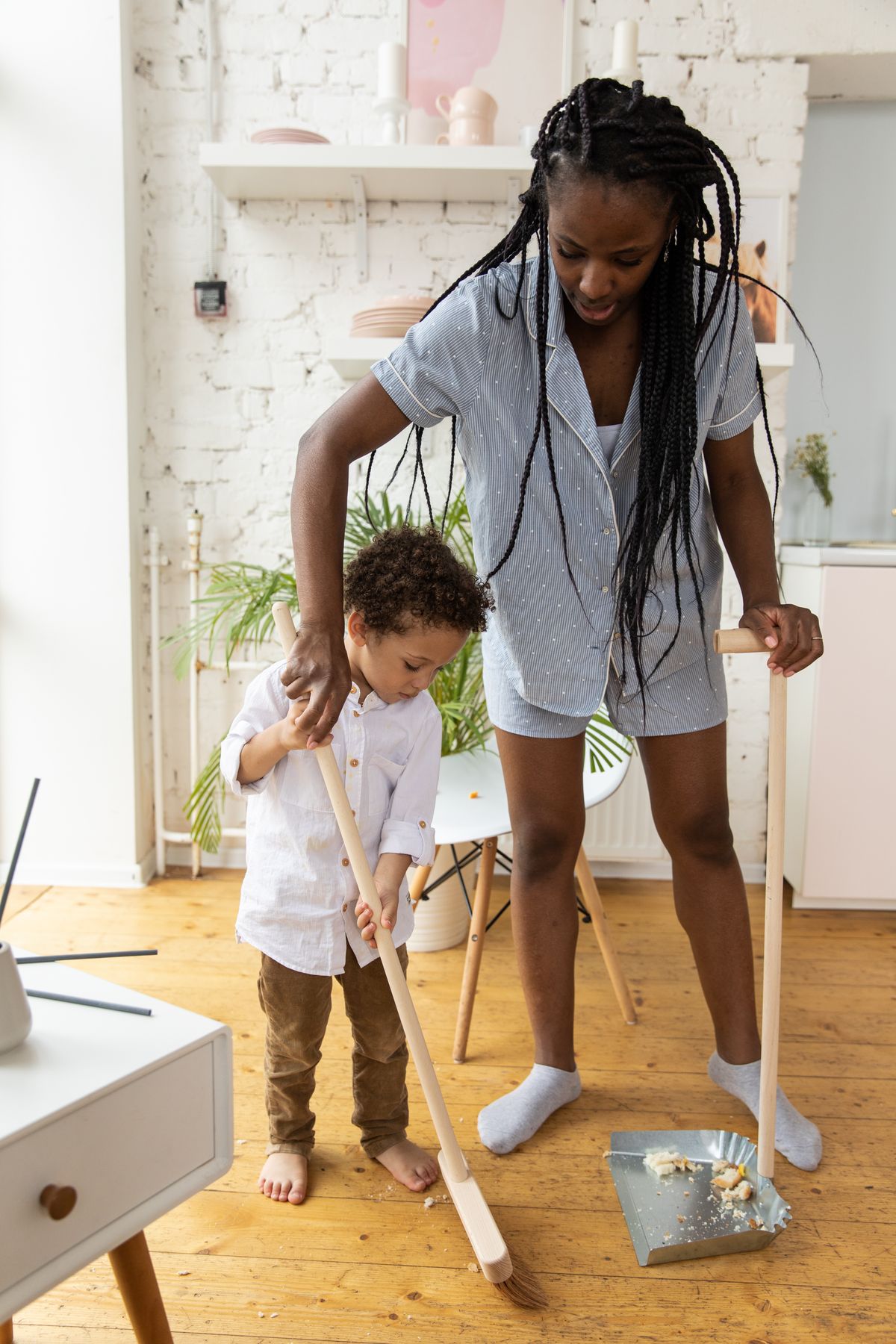
- Wiping up a small spill — handing over a cloth and letting them dab at a spill, even imperfectly, starts the habit early.
- Simple counting play — counting out three crackers onto a plate, or dropping coins one at a time into a jar while counting aloud.
3-5 years: building fine motor control
- Buttoning and zipping — practice on a spare shirt or a dedicated "busy board" before it matters for getting out the door on time.
- Spreading with a butter knife — peanut butter or hummus on crackers or toast is a forgiving, low-mess way to practice controlled pressure.
- Using safety scissors — snipping straight lines on paper, then gradually simple shapes, with supervision.
- Tidying a specific zone — "all the books go on this shelf" is more achievable than "clean your room," and teaches sorting-by-category thinking.
- Pretend shopping with coins — a play cash register or a jar of coins for a pretend store builds early money and counting concepts.
- Pouring dry ingredients while cooking — measuring cups of flour or oats into a bowl during a simple recipe.
- Washing hands and face independently — a step stool at the sink turns a hygiene task into a genuinely manageable one.
5-7 years: multi-step sequences
- Tying shoes — the "bunny ears" method breaks the sequence into two loops, which is usually easier than the single-loop method at this age.
- Making a simple snack — a sandwich, sliced banana with the right (supervised) tool, or a bowl of cereal start to finish.
- Reading an analog clock to the hour or half hour — a genuinely fun life skill that also builds number sense.
- Sorting laundry by color — darks, lights, and "ask an adult" is a manageable three-pile system.
- Packing part of their own school bag — a checklist with pictures for younger readers helps them work independently.
- Using a can opener or child-safe kitchen tool — always with direct supervision, but genuinely satisfying to master.
- Counting and making simple change in play — "if this costs 30 cents and you give me a quarter and a nickel..." during pretend play.
7-10 years: real independence
- Preparing a basic meal — scrambled eggs or a simple pasta with supervision for anything involving heat.
- Doing their own laundry from start to finish — sorting, starting the machine, and folding, with occasional check-ins rather than full oversight.
- Managing a small amount of real money — an allowance with a simple save/spend split introduces budgeting concepts concretely.
- Reading a full analog clock, including minutes — and using it to manage their own morning or homework timing.
- Writing a simple shopping or packing list — planning ahead is itself a life skill worth practicing directly.
- Using a sewing kit for a simple repair — reattaching a button is a genuinely useful, confidence-building skill at this age.
- Following a written recipe independently — reading, measuring, and sequencing all at once, for a simple no-heat or low-heat recipe.
How to introduce a new skill without frustration
The single biggest mistake when introducing a new life skill is presenting the whole task at once. Tying shoes, for instance, has several distinct sub-steps — crossing the laces, forming a loop, wrapping, and pulling through — and a child who's asked to do all of it on the first try is being set up to fail even if each individual step is within their ability. Breaking the task down and practicing just the first step until it's comfortable, then adding the next, keeps the challenge sized correctly and keeps frustration from building up before any success has happened.
Modeling the skill matters more than explaining it. Narrating each step out loud while doing it yourself — "I'm going to pour slowly so it doesn't overflow, watching the line get close to the top" — gives a child language and a mental model to copy, which tends to land better than a verbal instruction given without a demonstration. Doing the task alongside a child a few times before stepping back to watch, and stepping back further once they're consistently succeeding, is a more reliable path than either doing it for them indefinitely or handing it over all at once.
Expecting imperfection is not just kindness — it's realistic. A first attempt at buttoning will be slow and probably a little crooked; a first poured glass of milk may end up mostly on the counter. None of that means the child isn't ready. It means the skill is being learned, which is a different thing entirely from being mastered. Praising the attempt and the specific improvement ("you got that button through on your first try that time") rather than only praising a flawless result keeps kids willing to keep trying rather than avoiding a task where they don't yet feel competent.
How this is different from assigning chores
Chores and life skills activities can look identical from the outside — the same child, pouring the same milk — but the framing and the expectation behind them are genuinely different. A chore exists because the household needs something done: the table needs setting, the trash needs taking out, regardless of how the child feels about doing it. The measure of success is whether the task got done.
A life skills activity exists because the child benefits from practicing the underlying capability. The measure of success is progress, not a finished product — a child who pours milk mostly onto the counter but is genuinely trying and improving has "succeeded" at the activity in a way that wouldn't count as success for a chore. That difference in framing changes how a parent responds to a shaky first attempt: annoyance at a spilled task versus encouragement at a skill in progress.
The two categories overlap constantly in practice — a child who learns to pour their own cereal is also, eventually, capable of the chore of setting the table — and that overlap is a genuine bonus, not a contradiction. The distinction is less about which bucket a specific task belongs in and more about which lens a parent is using in the moment: "does the house need this done" versus "is my child getting better at something." Leading with the second lens, especially early on, tends to build both the skill and the enthusiasm faster than leading with the first.
Common pitfalls parents run into
- Taking over too quickly. Stepping in the moment a task slows down or gets messy feels efficient in the moment, but it quietly teaches a child that their own effort isn't good enough to finish the job, which discourages future attempts.
- Only introducing a skill as a punishment or consequence. A skill first encountered as "now you have to learn this because you made a mess" starts the association off on the wrong foot; introducing skills during calm, low-pressure moments builds a much better relationship with the task.
- Expecting adult-level competence immediately. A task that takes an adult ten seconds can reasonably take a young child two full minutes, and rushing them to match adult speed undermines the confidence the activity is supposed to be building.
- Choosing a skill that's developmentally out of reach. Tying shoes before the fine motor control is there, or expecting real money management before basic counting is solid, sets a child up for repeated frustration rather than progress.
- Redoing the task immediately afterward, in view of the child. Quietly wiping up "properly" the moment a child walks away sends the message that their effort was pointless, even when the intention was just tidiness.
- Turning every single household moment into a teaching opportunity. Life skills activities work best in short, specific windows rather than constant correction throughout the day, which can start to feel like being watched rather than being taught.
Frequently asked questions
What is the difference between a life skills activity and a chore?
A chore is framed around household contribution — the family needs the dishwasher unloaded, regardless of whether the child enjoys it. A life skills activity is framed around building the child's own capability — pouring their own juice or buttoning their own coat — and the payoff belongs to the child first, the household second, even though the same task can serve both purposes at once.
What age should kids start learning basic life skills?
Most children can begin very simple life skills, like pouring from a small pitcher or pulling on loose clothing, around age 2 to 3. The skills get progressively more complex through early elementary school, but there's no single correct starting age — following a child's current fine motor control and interest matters more than hitting a specific birthday.
My child gets frustrated and gives up when learning a new skill — what should I do?
Break the skill into a smaller first step and let them succeed at that piece before adding the next one — for example, practicing just the pouring motion with water in the bathtub before pouring at the table. Frustration usually means the current step is too big, not that the child isn't ready for the skill at all.
Is it worth the mess and time it takes for a child to do these things themselves?
In the short term, it's almost always faster and cleaner for an adult to do it. Over months, though, kids who practice real skills regularly become genuinely more capable and need less adult help with daily routines, which is what most parents are aiming for in the long run — so the upfront time and spilled milk tend to pay off.