Photo: Unsplash
The right breast pump depends almost entirely on how often you'll use it, not on price alone — a pump that's perfect for occasional relief can be genuinely frustrating for someone pumping at work five days a week, and vice versa. Thinking through your actual routine before shopping saves both money and the frustration of returning or replacing a pump that doesn't fit how you'll really use it day to day.
Pump types compared
| Type | Best for | Typical price range |
|---|---|---|
| Manual pumps | Occasional use, backup pump, travel, budget-conscious families | $10–$40 |
| Standard electric pumps (single or double) | Regular daily pumping, strongest and most adjustable suction | $40–$300 |
| Wearable/hands-free pumps | Multitasking while pumping, discretion, pumping on the go | $40–$300 |
What to look for
- Suction strength and adjustability, including a distinct "let-down" mode versus "expression" mode.
- Number of parts to wash — fewer parts means less daily cleanup, which matters more than it sounds like early on.
- Noise level, especially for pumping at work or without waking a sleeping baby nearby.
- Battery life and portability, if you'll pump away from an outlet.
- Milk storage compatibility — some wearable pumps use proprietary containers, others fit standard bottles directly.
Matching a pump to your situation
- Exclusively breastfeeding, occasional bottle: a manual pump is usually enough.
- Returning to work and pumping daily: a standard double electric pump with strong suction and easy cleanup is worth the investment.
- Wanting hands-free flexibility during the day: a wearable pump lets you pump while doing other things, at some tradeoff in maximum suction power versus a standard electric pump.
- Exclusively pumping (not breastfeeding at the breast at all): invest in a hospital-grade or high-end double electric pump — durability and consistent output matter most here.
How pumping fits into a combo-feeding routine
Not every family pumps to build a full stash or to replace breastfeeding entirely; many pump occasionally to allow a partner or caregiver to handle a feed, to relieve engorgement, or to bridge a gap while returning to work part-time. For this kind of occasional use, a simpler, less expensive pump usually does the job just as well as a premium model built for exclusive pumpers, since the daily wear and output demands are lower. It's worth being honest with yourself about how often you'll realistically use a pump before buying, since a highly rated, expensive pump that ends up used twice a month isn't necessarily a better investment than a modest one that fits your actual routine.
Getting flange size right
Flange sizing is one of the most overlooked factors in pump comfort and output, and getting it wrong is a common reason people assume "pumping just doesn't work for me" when the real issue is fit. A flange that's too small can pinch and cause pain or reduced milk flow, while one that's too large can pull too much areola tissue into the tunnel and cause friction and rubbing. Most pumps ship with a standard size that doesn't fit everyone, and nipple size can also change over the weeks and months of pumping, especially in the early postpartum period. If pumping consistently feels uncomfortable or output seems lower than expected despite good latch and technique, trying a different flange size — many brands sell size ranges separately — is worth doing before assuming the pump itself is the problem.
Building a routine that keeps supply steady
Establishing a workable rhythm early tends to matter more for long-term comfort than any single piece of equipment. For anyone pumping regularly, especially after returning to work, consistency in timing matters almost as much as the pump itself for maintaining milk supply. Pumping at roughly the same times each day, spaced to mirror a baby's typical feeding schedule, helps signal the body to keep producing at a steady level. Skipping sessions or letting long gaps build up between pumps tends to reduce supply over time more than most people expect, since milk production responds directly and fairly quickly to how often and how completely the breast is emptied at each session. A hands-on approach, gentle breast massage before and during pumping, along with hand-expressing a bit of extra milk at the end of a session, can meaningfully increase total output without needing a stronger or more expensive pump at all.
Understanding milk storage guidelines
Knowing how long pumped milk stays safe at different temperatures removes a lot of daily guesswork. General guidance from the CDC suggests freshly pumped milk can sit at room temperature for up to about four hours, in a refrigerator for up to four days, and in a standard freezer for six months or more, though specific times can vary by source and by how the milk is stored. Labeling every container clearly and following a first-in, first-out approach when pulling milk from the freezer keeps a stockpile organized and reduces waste. It's also worth knowing that thawed milk should never be refrozen, and that milk warmed for a feeding but not finished should typically be used within about two hours or discarded, similar to the guidance for prepared formula.
Pumping at work: what to know before you go back
Returning to work while pumping brings a logistical layer that's easy to underestimate until it's actually happening. In the US, federal law requires most employers to provide reasonable break time and a private, non-bathroom space for pumping, though the specifics can vary by employer size and state. Talking with your workplace before returning, rather than figuring it out on your first day back, gives everyone time to sort out a suitable space and a realistic break schedule. Bringing a spare set of pump parts and flanges to work, storing a spare set of clothes for the inevitable spill, and building buffer time into your pumping schedule for interruptions all help the transition feel less overwhelming during an already demanding stretch.
Troubleshooting low output
- Check flange fit first. An ill-fitting flange is one of the most common, most fixable causes of disappointing pump output.
- Look at suction settings. Many pumps have a two-phase cycle (faster, lighter suction to stimulate let-down, then slower, deeper suction to express milk); using the wrong phase for too long can reduce output.
- Consider timing and stress. Pumping in a rushed, stressful moment can measurably reduce let-down compared to a calm, unhurried session, even with the same equipment.
- Rule out mechanical issues. Worn membranes or valves, even small, hard-to-see ones, can quietly reduce suction over months of regular use and are usually inexpensive to replace.
- Talk to a lactation consultant if output stays consistently low. A trained professional can rule out underlying supply issues that pump adjustments alone won't fix.
Pumping and traveling
Traveling while pumping, whether for a work trip or a family visit, takes some extra planning. A manual or lightweight wearable pump is often more practical for travel than a bulkier standard electric unit, especially if outlet access is uncertain. Airlines in the US are generally required to accommodate breast pumps and pumped milk in carry-on luggage beyond standard liquid limits, though it's worth checking specific airline policy and TSA guidance before a flight. A portable cooler bag with reusable ice packs keeps pumped milk safe for several hours between refrigeration opportunities, and packing a battery pack or car charger avoids being stranded without power for an electric pump during a long day away from outlets.
Cleaning and storage that actually saves time
Pump parts need thorough cleaning after each use to prevent bacterial growth, but the daily process can be streamlined without cutting safety corners. Many parents keep a second set of pump parts so one set can be washing or drying while the other is in use, which removes a lot of the time pressure around back-to-back pumping sessions. Refrigerating clean, unused pump parts between sessions on the same day — a practice sometimes called the "fridge hack" — is considered safe by many pediatric guidelines when parts are only being reused within the same day, and it saves significant time over a full wash-and-dry cycle every single session. Labeling milk storage bags with the date and amount as you go, rather than trying to remember later, avoids waste and makes it easier to use the oldest milk first, which matters more and more once a freezer stash starts to grow considerably larger over the following months.
Our picks
Each pump below was checked against real order and rating data before being added here — not picked from the top of a search page — so every pick genuinely holds a 98%+ rating (or perfect rating, for the smaller-volume manual pump) from real buyers.
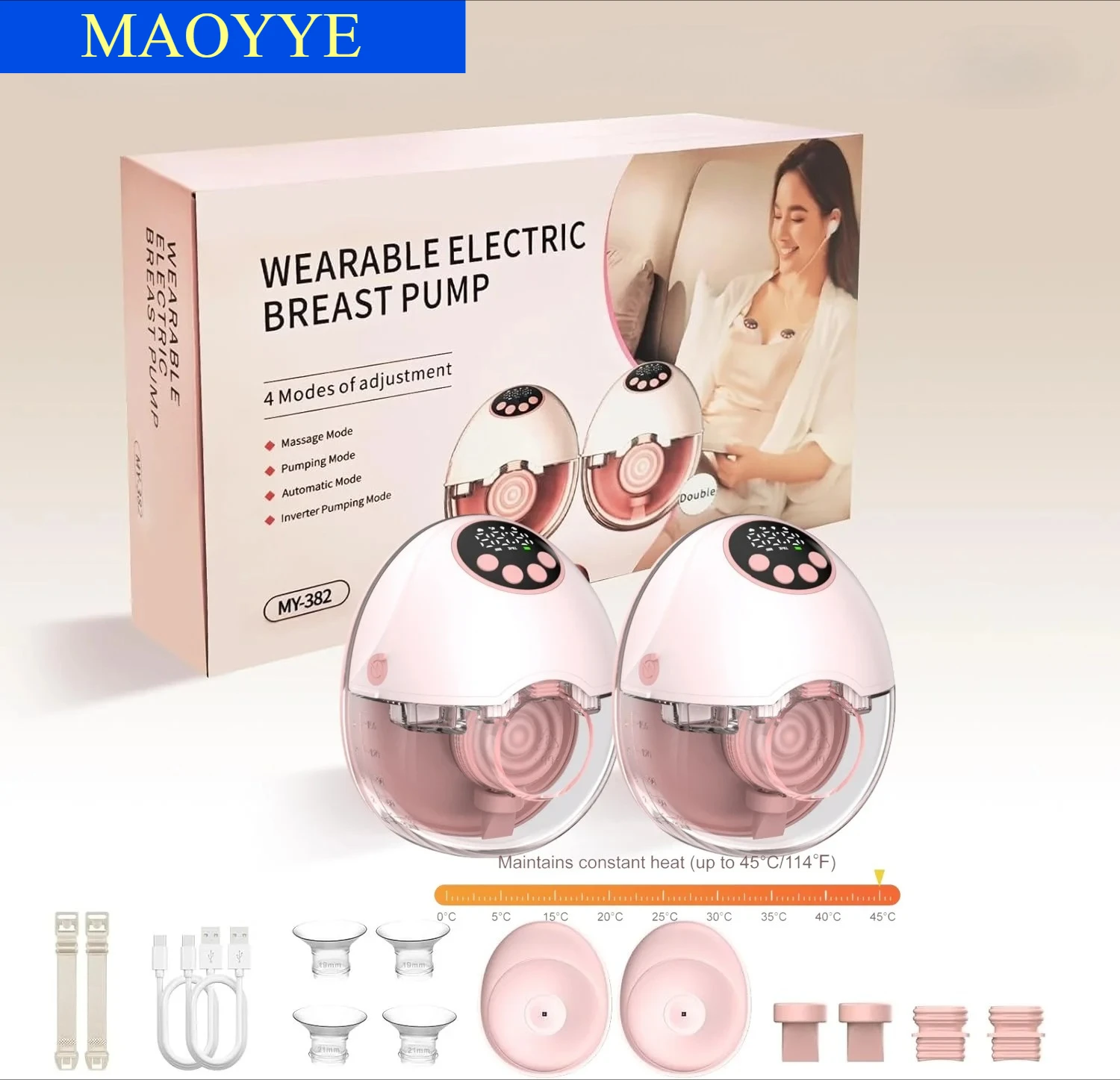
Breast Pump Electric Handsfree BPA Free With Heating & UV Sterilize Lid Opt…
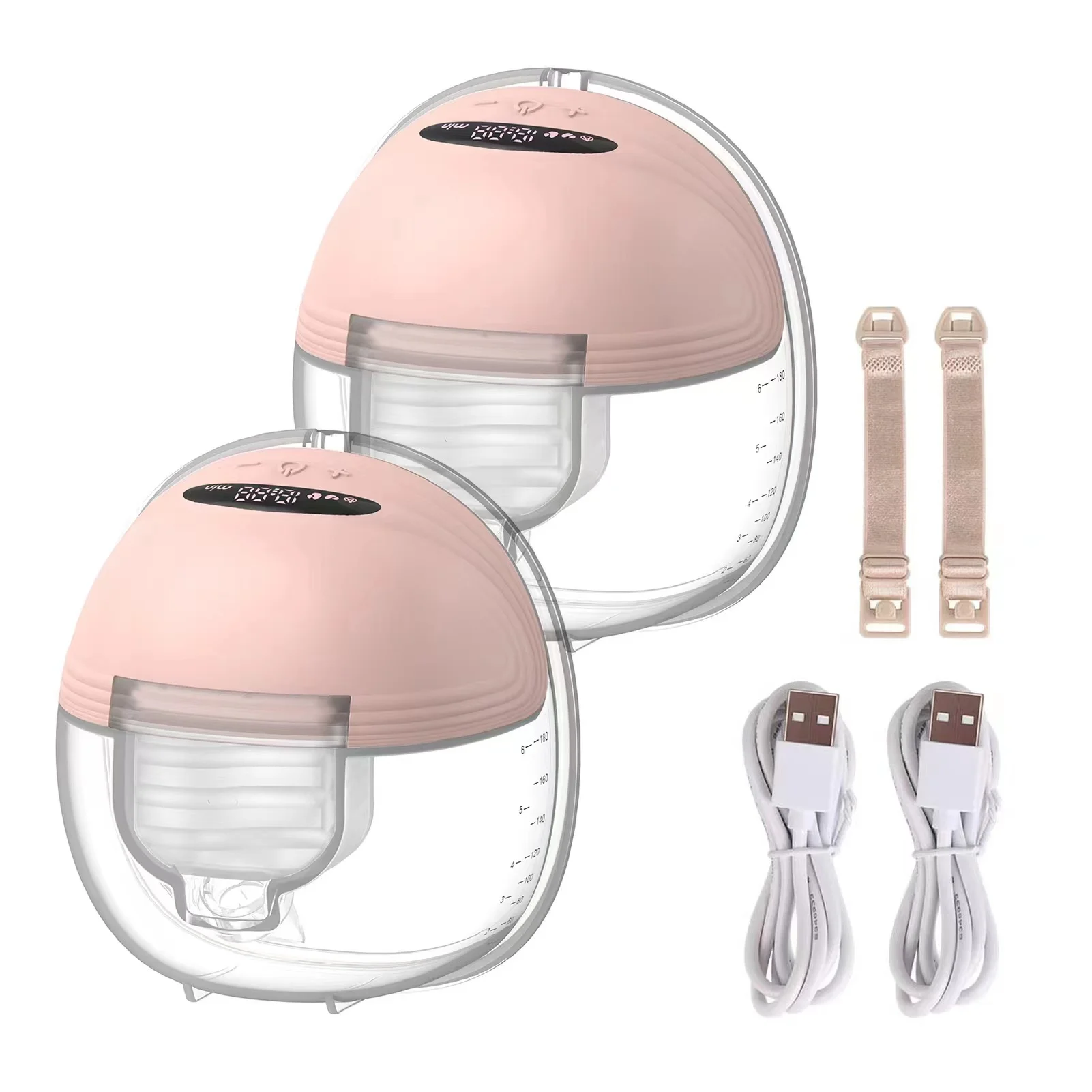
Wearable Breast Pump Hands Free Electric Portable Wearable Breast Pumps Sli…
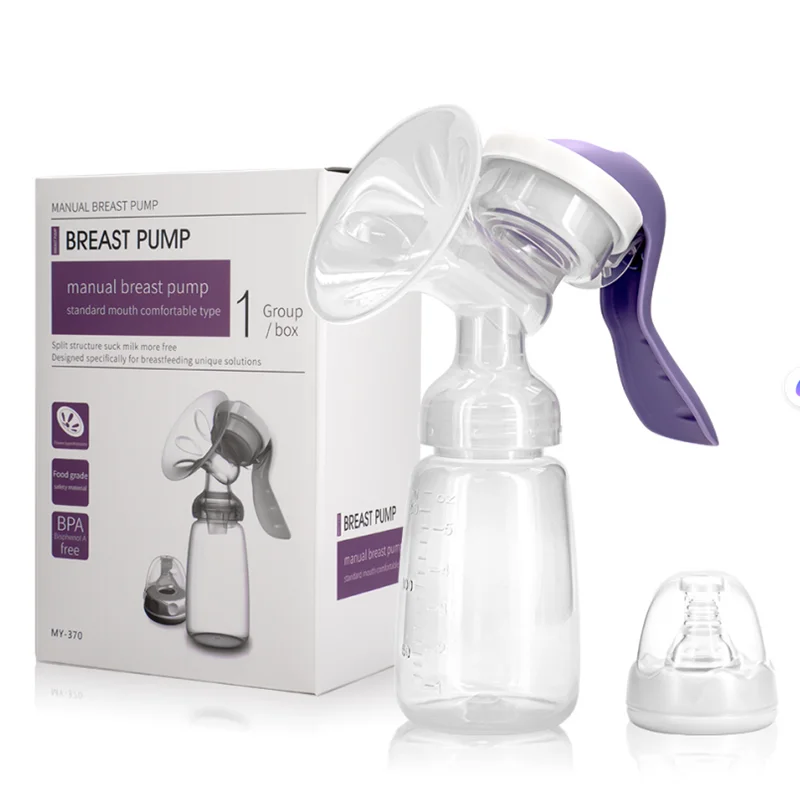
Portable Manual Breast Pump with Painless Breast Soak Silicone Flange 150ml…
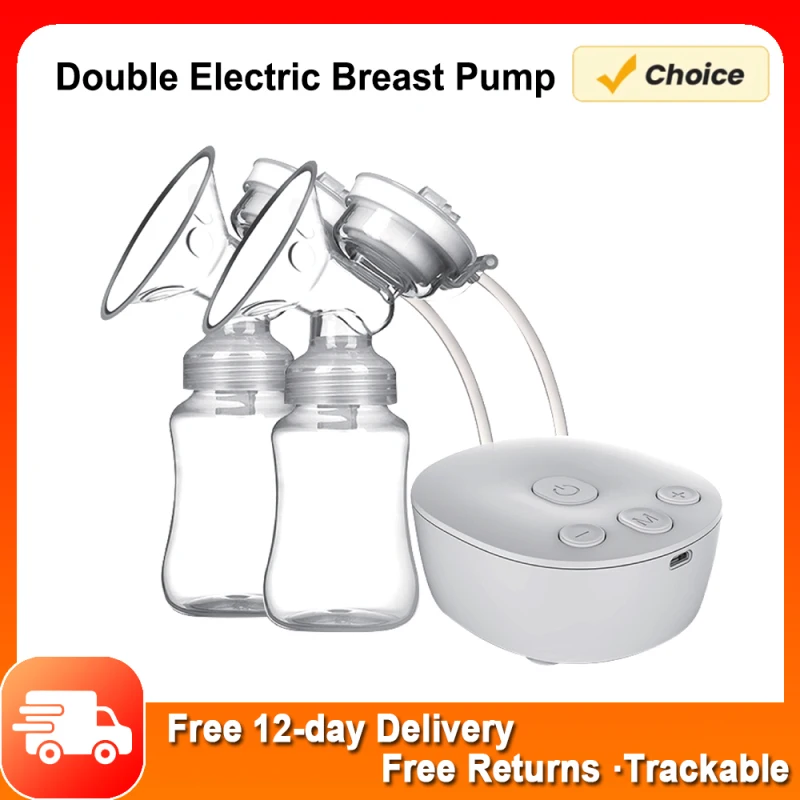
Double Electric Breast Pump Hands Free Breast Pump for Breastfeeding 2 Mode…
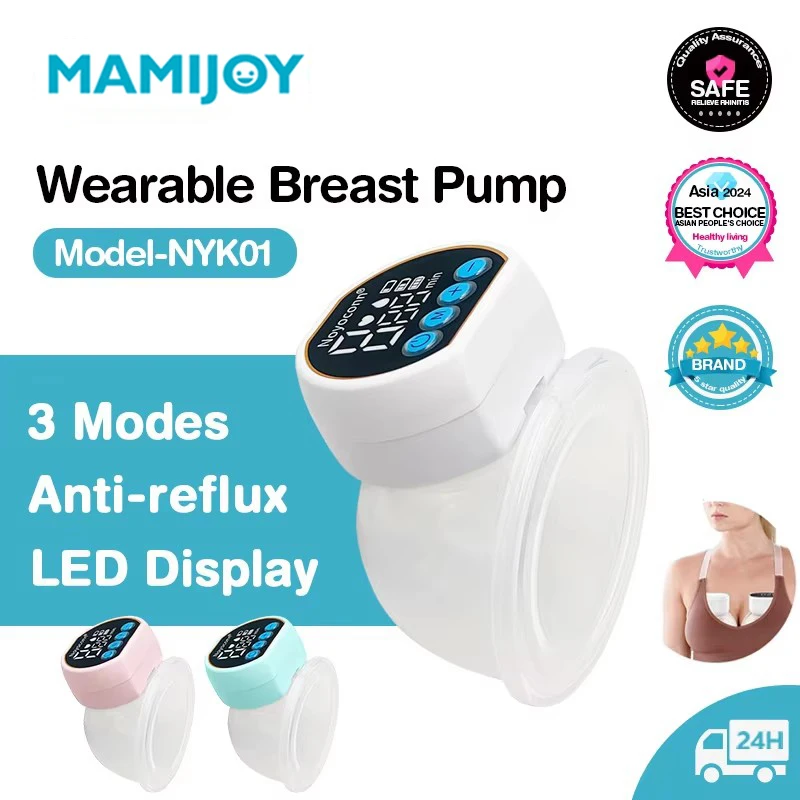
MAMIJOY Portable Double-sided Wearable Smart Breast Pump Silent Powerful S…
Affiliate links — we may earn a commission at no extra cost to you. Learn more.
Frequently asked questions
Is a wearable pump as effective as a standard electric pump?
Wearable pumps have improved a lot, but many still produce slightly less suction than a strong standard double electric pump. For most people pumping occasionally or supplementing, the difference doesn’t matter much; for exclusive pumpers, it can affect total output over time.
How many pump parts actually need washing after each use?
This varies by model but is worth checking before buying — some pumps have 6+ small parts that touch milk, while newer designs have consolidated this to 2-3 pieces, which makes a real difference in daily routine, especially with a newborn.
Does insurance really cover a free breast pump?
In the US, most private health insurance plans are required to cover a breast pump under the ACA, though the specific model options and whether it’s a rental or a personal unit vary by insurer. It’s worth calling to confirm coverage before buying one yourself.
When should I start pumping if I plan to build a milk stash?
For most breastfeeding parents without supply concerns, waiting until breastfeeding is well established, often around three to four weeks postpartum, helps avoid oversupply issues that can come with pumping too early and too often. Parents returning to work sooner, or dealing with a specific supply or feeding challenge, may need a different timeline, which is worth discussing with a lactation consultant or pediatrician for guidance specific to your situation.
Can I use a manual and electric pump together?
Yes, many parents keep a manual pump as a backup for power outages, travel, or quick single-session relief, while using an electric pump for regular daily sessions. Hand-expressing or manually pumping the opposite breast while electric pumping the other side is also a common technique some parents use to boost total output per session.
How often should pump parts be replaced?
Valves and membranes typically need replacing every few weeks to a couple of months with regular use, since these small, flexible parts wear out faster than the more durable tubing and flanges and directly affect suction when worn. Manufacturer guidance varies by model, so checking the specific replacement schedule for your pump avoids a slow, hard-to-notice decline in performance.