
Photo: Unsplash
The single most important decision with any baby gate isn't the brand — it's whether it's mounted correctly for where it's being used. Getting the mounting type wrong at the top of a staircase is a genuine, serious safety hazard, not just a minor inconvenience. Falls remain one of the more common causes of injury in young children at home, and a correctly chosen and installed gate is one of the simplest, most effective tools available for reducing that risk in a mobile household.
Mounting types compared
| Type | Safe for top of stairs? | Best for |
|---|---|---|
| Hardware-mounted gates | Yes — the only type recommended here | Top of stairs, anywhere a fall would be dangerous |
| Pressure-mounted gates | No — can be pushed loose under a child's weight | Doorways, bottom of stairs, room dividers on a flat, even surface |
| Retractable mesh gates | Only if hardware-mounted (check the specific product) | Wide openings, renters who need a low-visual-impact option |
What to look for
- ASTM F1004 certification — the US safety standard covering gate strength, latch security, and opening sizes.
- A one-handed release latch you can operate while carrying a baby, but that a toddler can't figure out.
- Bar spacing under 2.25 inches (about 3 fingers), so a child's head can't slip through.
- Walk-through capability, if you'll be going through it dozens of times a day.
- Width range and extensions available, for wider-than-standard openings.
Angled and irregular openings
Not every home has a neat, rectangular opening at the top of a staircase, and this is one of the more frequent reasons a gate purchase goes wrong. Angled stair openings, openings with a newel post in the way, or unusually wide hallways sometimes need a specific angle-mount kit or a wider gate with extensions rather than a standard model. Measuring the full width of an opening, including any trim or molding that juts out, and checking the manufacturer's stated maximum width with extensions before buying, saves a return trip to the store or a frustrating repackaging process. A tape measure and five minutes spent before shopping online is far easier than discovering a gate doesn't fit after it's already been unpacked and partially assembled.
Multi-level and open-concept homes
Homes with an open floor plan or a loft-style upper level sometimes need creative gate placement that a standard doorway-focused product wasn't designed for. Freestanding, extra-wide gate panels, sometimes called play yard gates or room-divider gates, can wall off an entire open area rather than a single doorway, which works well for blocking access to a staircase that opens directly into a living room without a defined doorway frame. These freestanding units generally need a wider footprint and more floor space than a doorway gate, so measuring the full area you want to block, not just a single opening, is worth doing before buying.
Common installation mistakes
Even a hardware-mounted gate can fail to do its job if it's installed incorrectly, so it's worth taking the extra ten minutes to do it right rather than rushing. A frequent mistake is mounting into drywall alone without hitting a wall stud or using the wall anchors that come with the gate, since drywall alone won't hold under the repeated force of a climbing toddler pulling and pushing on the frame day after day. Another is leaving the gate slightly loose after installation, assuming it will "settle in," when a wobbly gate should be tightened immediately rather than left for later. It's also easy to overlook checking the gate periodically after installation; door frames and walls shift slightly over time, and screws can loosen with repeated use, so a quick tug-test every month or so catches problems before they become a hazard rather than after.
Where gates matter most beyond stairs
Staircases get most of the attention in baby-proofing advice, but gates serve an equally important role in a few other spots that are easy to overlook, especially once a baby becomes a confident, fast crawler or an early walker exploring every corner of the house. A gate across the kitchen entrance keeps a mobile baby away from hot stovetops, sharp knives in reach of an open drawer, and the general chaos of meal prep, which is one of the more common injury settings in a home with young kids. A gate at the entrance to a home office, laundry room, or garage keeps curious toddlers away from cleaning chemicals, tools, and small objects that pose a choking hazard. For homes with a fireplace, a dedicated hearth gate — different from a standard doorway gate — wraps around the hazard itself rather than blocking a doorway, which is worth budgeting for separately if a fireplace is part of your main living space.
Choosing gates by material
- Metal gates — sturdiest option, resist a determined climber well, but heavier to move and reposition between rooms.
- Wood gates — blend in visually with many home interiors, generally sturdy, though bar spacing needs the same 2.25-inch check as any other material.
- Mesh gates — lightweight, often foldable for travel, and gentler if a child bumps into them, though mesh can sag over time and needs periodic tension checks.
- Plastic gates — usually the most affordable, reasonable for low-stakes areas like a doorway between two carpeted rooms, less ideal for a heavily used walkway.
A step-by-step approach to gate placement in your home
Walking through your home room by room, rather than buying gates reactively after a near-miss, tends to produce a safer and more cost-effective setup. Start with the top and bottom of every staircase, since falls on stairs are among the more common serious injuries in young children. Move next to the kitchen, bathroom, and any home office or utility room containing chemicals, tools, or medications. Finally, consider any room with especially hazardous furniture, a fireplace, an unfenced pool area, or fragile decor that would be genuinely upsetting to lose. Mapping this out before buying anything helps you budget for the right number and type of gates upfront instead of discovering gaps in coverage one incident at a time.
Renting and gate installation without permanent damage
Renters worried about wall damage from a hardware-mounted gate have more options than it might seem. Some hardware-mounted gates use a pressure-and-cup system with minimal wall contact, others come with wall-friendly mounting kits designed to fill small holes easily upon move-out. It's worth checking with a landlord before installing anything permanent, since many are more flexible about small screw holes for child safety than about other kinds of wall modifications, and a quick written confirmation avoids any dispute over a security deposit later. For truly non-negotiable no-drill situations, a well-reviewed pressure-mounted gate used only in a spot that isn't at the top of stairs remains a reasonably safe compromise.
Gates around pets
Many households need a gate that works for both a toddler and a dog or cat, and the requirements don't always line up neatly. A gate with a small pet door cut into the bottom lets an animal pass through freely while still blocking a toddler, though it's worth checking that the cutout itself doesn't create a new hazard, such as a gap large enough for a child's head. Gates marketed jointly for pets and children are generally built to the same structural standards as dedicated baby gates, but it's still worth confirming a specific model carries a real child-safety certification like ASTM F1004 rather than assuming "pet and baby gate" branding covers both uses equally well.
Getting older kids and visitors on board
A gate only works if it actually stays closed, and older siblings, grandparents, and visitors are often the weakest link in an otherwise solid setup. Taking a moment to explain why the gate matters, and asking directly that it be latched every single time rather than left propped open "just for a minute," heads off a lot of near-misses. A brief, friendly reminder posted near a frequently used gate can help visiting friends and family remember the rule without you having to repeat it at every single visit.
Signs it's time to replace a gate
- Visible cracks, rust, or warping in the frame or hinges.
- A latch that no longer clicks securely shut on the first try.
- Wobbling at the mounting points that tightening no longer fixes.
- Mesh that has stretched, torn, or lost tension over repeated use.
- A gate inherited or bought secondhand with no visible certification label or known history.
Our picks
Every pick below was checked against real order and rating data before being added here. The no-drill option is genuinely useful for renters or doorway use, but should never substitute for a hardware-mounted gate at the top of a staircase.
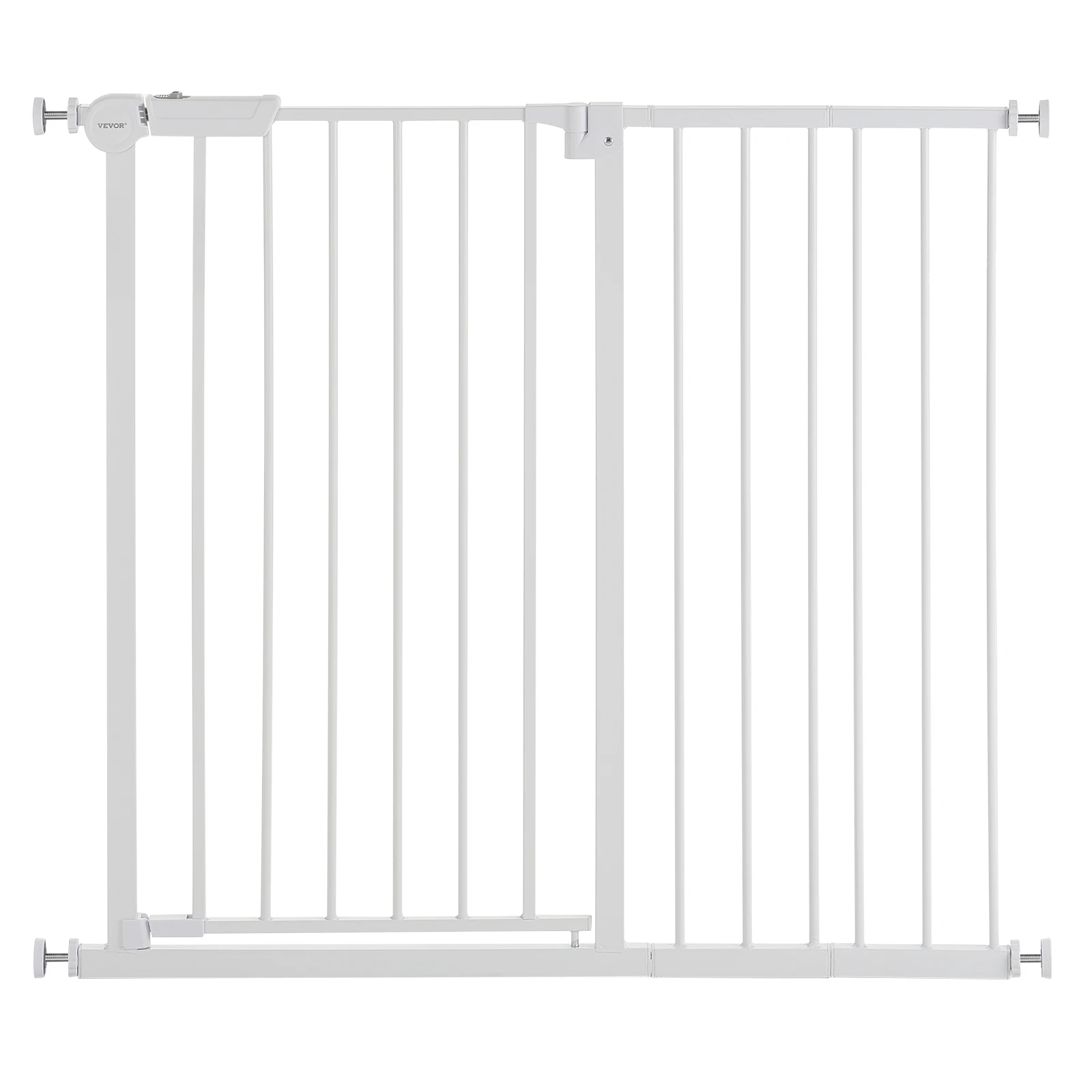
SucceBuy Baby Gate 28/30/36 Inches High Dog Gate Easy Step Walk Thru Child …
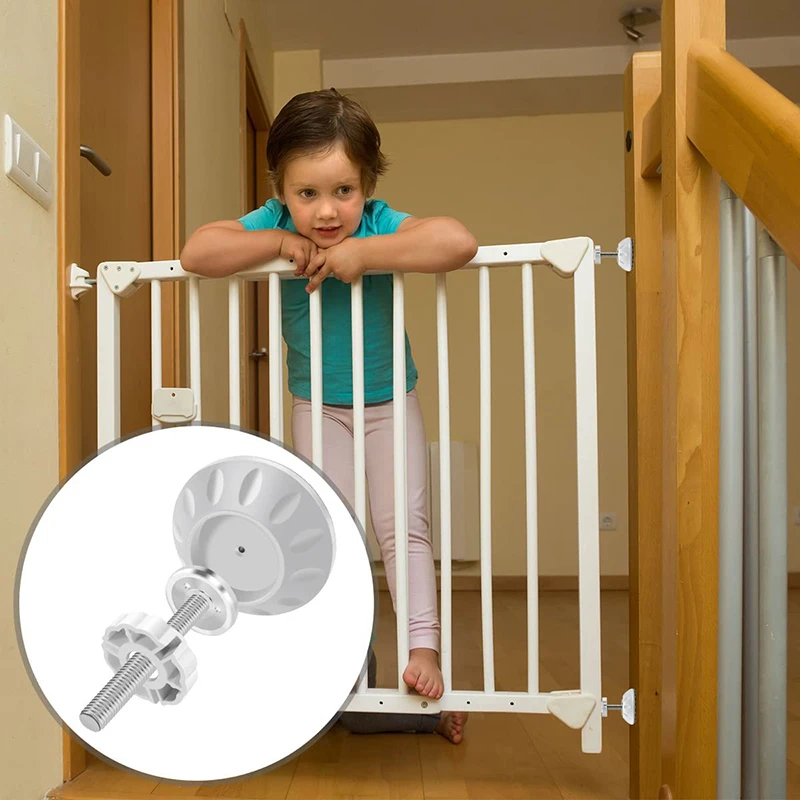
Baby Safety Door Gate Pet Fence Stair Door Metal High Strength Gate For Kid…
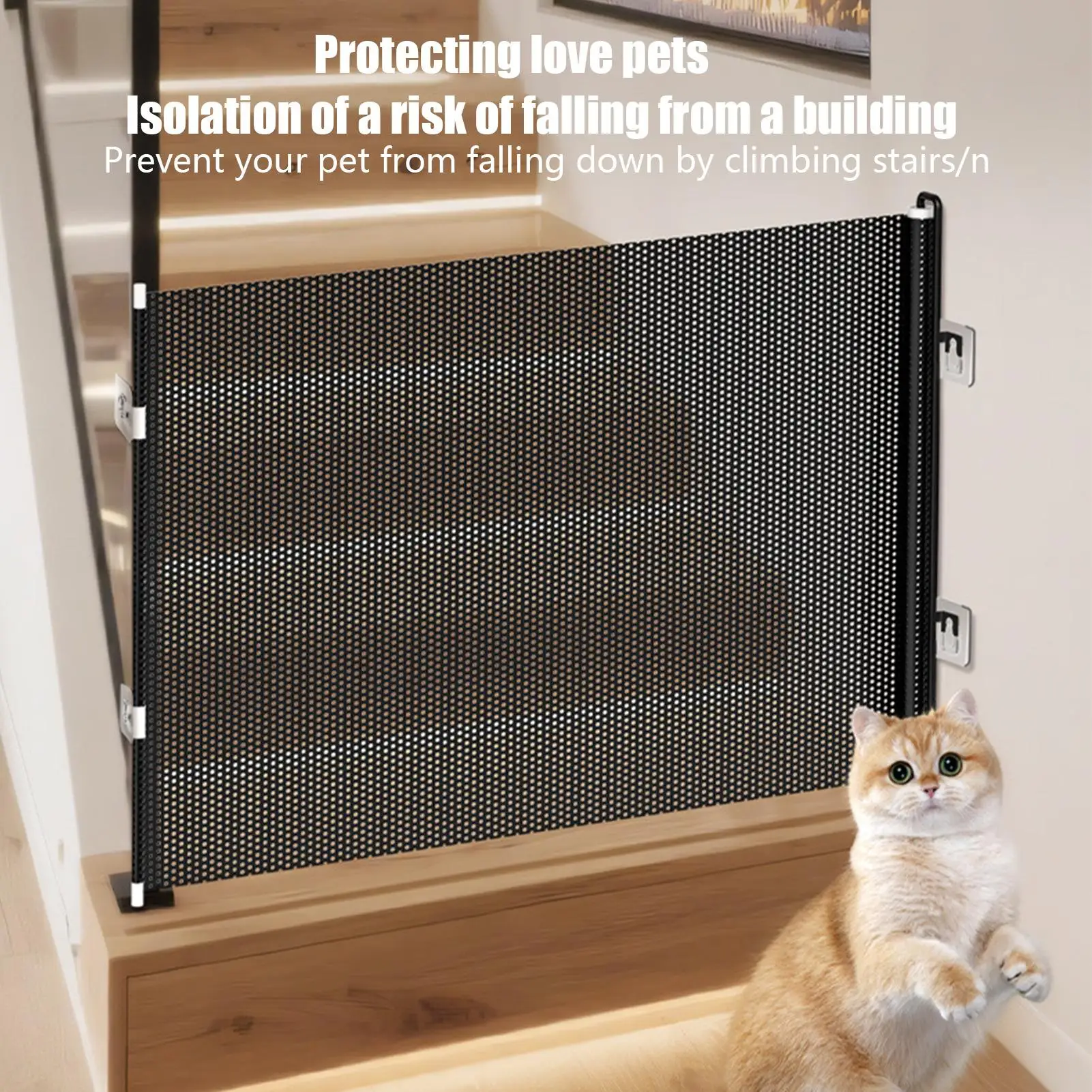
Retractable Pet Gate Dog Retractable Gate No-Drill Childproof Net Fence Cat…
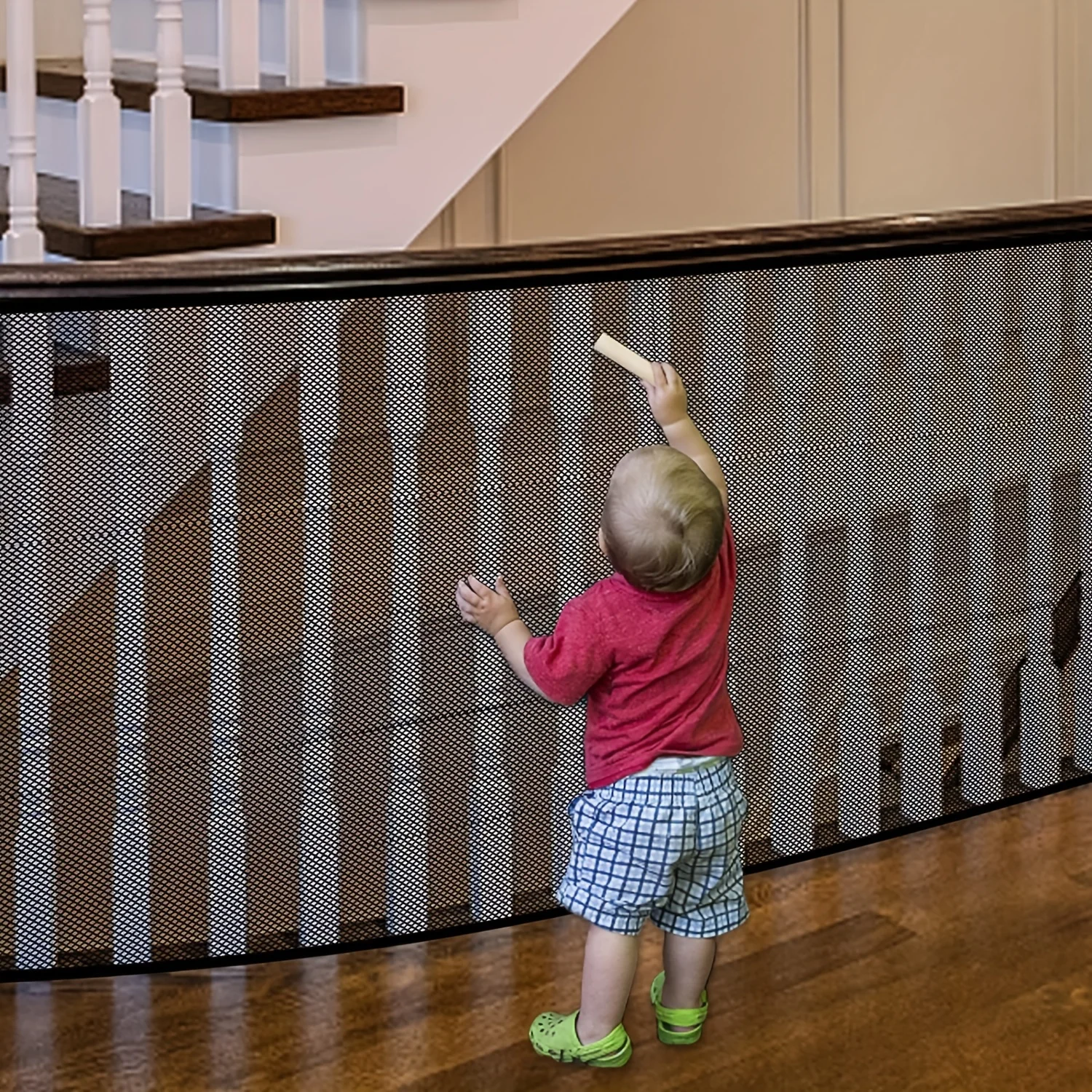
Baby Gate for Stairs Banister Guard for Kids Pets Mesh Safety Net for Balco…
Affiliate links — we may earn a commission at no extra cost to you. Learn more.
Frequently asked questions
Can I use a pressure-mounted gate at the top of the stairs?
No — safety organizations consistently recommend against this. A pressure-mounted gate relies on tension alone and can be pushed loose by a child leaning or climbing on it, which at the top of a staircase turns a minor mishap into a serious fall risk. Use a hardware-mounted gate there instead.
What bar spacing is safe for a baby gate?
Look for spacing under 2.25 inches (roughly 3 finger-widths), which is small enough to prevent a child’s head from fitting through while still allowing visibility. This matches the same standard used for crib slats.
When can I stop using baby gates?
Most families remove gates somewhere between 2 and 3 years old, once a child reliably understands and follows "stop" instructions at stairs — but this varies a lot by child, and there’s no harm in keeping a stair gate longer if you’re not confident yet.
Can I install a baby gate on stairs with a banister instead of a wall?
Yes, though it usually requires a specific banister mounting kit rather than the standard wall-mounted hardware, since screwing directly into a banister post can weaken it. Many hardware-mounted gates sell a compatible kit separately, and it's worth confirming compatibility with your specific banister shape before purchasing.
Do I need a gate if I already keep the stairway door closed?
A closed door works as long as it's reliably closed every single time, by every person in the household, including visitors. In practice, this is harder to guarantee consistently than a permanently mounted gate, which is why most safety guidance still recommends a dedicated gate at any staircase a mobile child could access, even if a door exists as a backup.
How much should I expect to spend on baby gates for a whole house?
This depends heavily on how many staircases and hazardous rooms your specific layout has, but budgeting for at least two to four gates (top of stairs, bottom of stairs if applicable, kitchen, and one additional hazard room) is a reasonable starting point for a typical multi-level home. Extensions for wider-than-standard openings add to the cost, so measuring every opening before shopping avoids paying twice for the wrong size.