Photo: Pexels
Crawling is one of the milestones parents watch for most closely — partly out of excitement, and partly because it marks the moment a baby's whole world (and yours) gets a lot more mobile.
The typical age range
Most babies start some form of crawling between 6 and 10 months, with many landing around 8 or 9 months. That's a wide window, and it's a genuinely normal one — crawling isn't a fixed-date milestone the way, say, a due date is, and healthy babies routinely start on either end of that range or slightly outside it.
Crawling progress, broken down by age
Crawling isn't really a single event that happens on one particular day — it's the visible result of weeks of smaller physical gains stacking on top of each other. Here's roughly what that progression tends to look like, though every baby's timeline shifts around within this general shape.
0–3 months: laying the groundwork
Long before anything resembling crawling, babies are building the raw materials for it. Supervised tummy time from the newborn period on helps develop neck and upper-back strength, and by around 2–3 months, many babies can lift their head and chest briefly while on their stomach. None of this looks like crawling yet, but it's the foundation everything else builds on — babies who get consistent tummy time tend to develop these early strength gains a bit sooner.
4–6 months: rolling and pushing up
This is usually when rolling from tummy to back and back to tummy becomes reliable, and many babies start pushing up on straight arms during tummy time, sometimes rocking gently forward and back on their belly. Some babies in this window also start getting up onto their hands and knees for a few seconds at a time, though they typically don't yet know how to move forward from that position — it's more like discovering a new pose than actual locomotion.
6–7 months: rocking and pivoting
Once a baby can hold the hands-and-knees position, rocking back and forth in it is extremely common — think of it as a baby "revving the engine" before actually going anywhere. Around this age, many babies also start pivoting in a circle while sitting or lying on their belly, reaching and turning toward toys rather than moving in a straight line yet. Independent sitting is also usually solidifying around this time, which frees up the hands for more exploring.
7–8 months: the first real forward movement
This is often when the first true forward movement shows up, and for a lot of babies it doesn't look like classic crawling at all — it's frequently the "commando crawl," pulling the body forward on the belly using the arms, sometimes dragging the legs along rather than pushing off them. Some babies go straight to a wobbly hands-and-knees crawl instead. Either way, this stage tends to be more effort than grace, with a fair amount of moving sideways or backward before forward movement clicks.
8–9 months: crawling becomes more coordinated
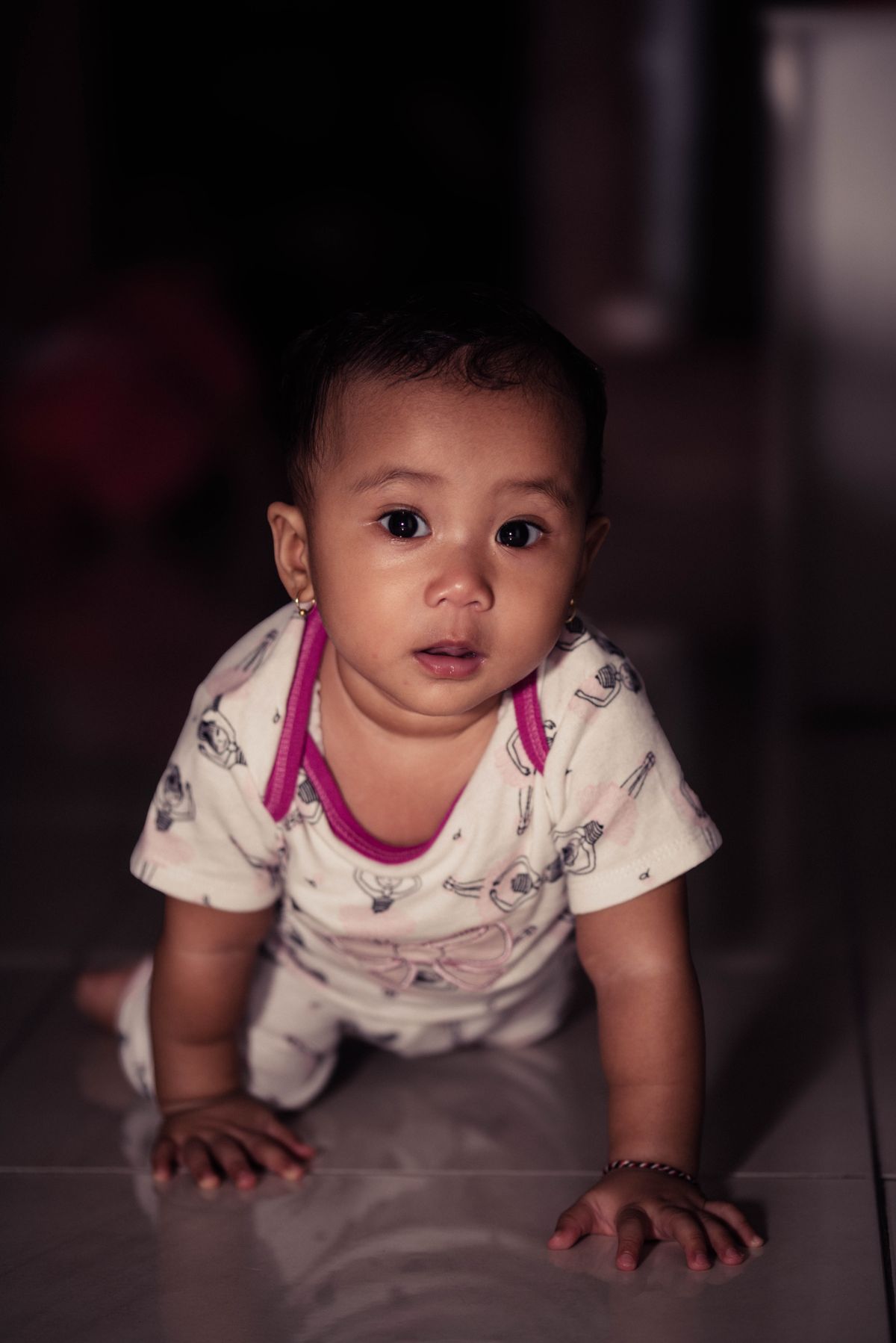
For many babies, this is the age where hands-and-knees crawling — with the classic opposite-arm-opposite-leg pattern — really comes together and starts to look more confident and efficient. Speed tends to pick up noticeably in this window too, which is often the point where parents first say their baby is "getting into everything."
9–10 months: pulling to stand joins in
Around now, many babies start using furniture to pull themselves up to standing, often from a crawling position, and may briefly let go before plopping back down. Crawling itself usually gets faster and more purposeful — heading straight for a specific toy or person rather than exploring more randomly. Some babies also start crawling up a step or two of stairs around this age, which is exactly why stair gates matter from this point on, not just once walking starts.
10–12 months: cruising and the runway to walking
This is typically when "cruising" appears — walking sideways while holding onto furniture for support — often alongside continued crawling as the faster, more reliable way to get around for a while longer. Many babies use crawling and cruising side by side for weeks or months before taking independent steps, which commonly happens somewhere between 9 and 18 months, with real variation on both ends being normal.
Why the range is so wide
Crawling depends on a combination of things developing together: core and upper-body strength, coordination between opposite arms and legs, and enough motivation to want to move toward something. Babies who spend more time on their tummy tend to build the needed strength earlier, while babies who spent more time in carriers, swings, or seats may take a little longer simply because they've had less floor-time practice — not because anything is wrong. Birth order can play a small role too: some parents notice a second or third child crawls earlier, possibly motivated by watching older siblings move around, though this is anecdotal rather than a hard rule. Body type is another minor factor — a baby with a larger build relative to their strength may take a bit longer to get the mechanics working than a leaner baby of the same age.
Crawling doesn't always look the way you'd expect
- Classic hands-and-knees crawling — the version most people picture, with opposite arm and leg moving together.
- The "commando crawl" — pulling forward on the belly using the arms, often an early stage before pushing up onto hands and knees.
- Bottom scooting — sitting upright and scooting forward using the legs and arms, which some babies use as their primary way of getting around instead of hands-and-knees crawling.
- Rolling — a small number of babies get around almost entirely by rolling from place to place before or instead of crawling.
- Skipping crawling entirely — some babies go straight from sitting to pulling up to walking without a clear crawling phase, which is a recognized normal variation, not a missed step that needs to be "made up."
Signs a baby is getting close
In the weeks before crawling starts, many babies show a recognizable buildup: rocking back and forth on hands and knees without going anywhere yet, pushing up into a more sustained plank-like position during tummy time, reaching forward for toys while propped on their arms, and generally showing more frustration or determination about wanting to reach something just out of range. Some babies also start pivoting in a circle on their belly, ending up facing a completely different direction than where they started, or scoot backward before figuring out how to go forward — backward movement first is extremely common and often confuses parents who expect forward progress right away.
Increased arm and leg strength usually shows up in smaller ways too: a baby who previously flopped their legs during diaper changes might start actively kicking against your hand, or a baby who slouched during supported sitting starts holding themselves more upright. These small strength gains, easy to miss individually, are usually what's converting into crawling ability over the following weeks.
How to encourage it safely
- Plenty of supervised floor time on a firm, safe surface — this is the single biggest factor within a parent's control.
- Placing toys just out of reach during play to motivate reaching and scooting forward.
- Getting down on the floor at your baby's level, since babies are often motivated to move toward a parent's face or voice.
- Limiting time in bouncers, swings, and seats to short stretches, since these don't build the same strength as free floor movement.
- Baby-proofing before crawling starts rather than after — mobility tends to arrive faster than parents expect once it begins.
Baby-proofing timing: earlier than you think
Once a baby shows early signs of scooting or rocking, it's worth doing at least a basic safety pass of the main living space — securing furniture, covering outlets, and moving small choking-hazard items up and out of reach — since the gap between "just starting to move" and "surprisingly fast across the room" is often shorter than expected. Waiting until crawling is fully established to baby-proof usually means playing catch-up.
A useful trick many parents use is getting down on hands and knees themselves and looking at a room from that height — cords, small objects, unstable furniture edges, and low cabinet contents are far more obvious from a baby's-eye view than from standing height. Anchoring furniture (bookshelves, dressers, TVs) is worth doing before crawling even starts, since a baby who's just beginning to pull up on things doesn't yet have the judgment to test whether something is stable.
When to bring it up with your pediatrician
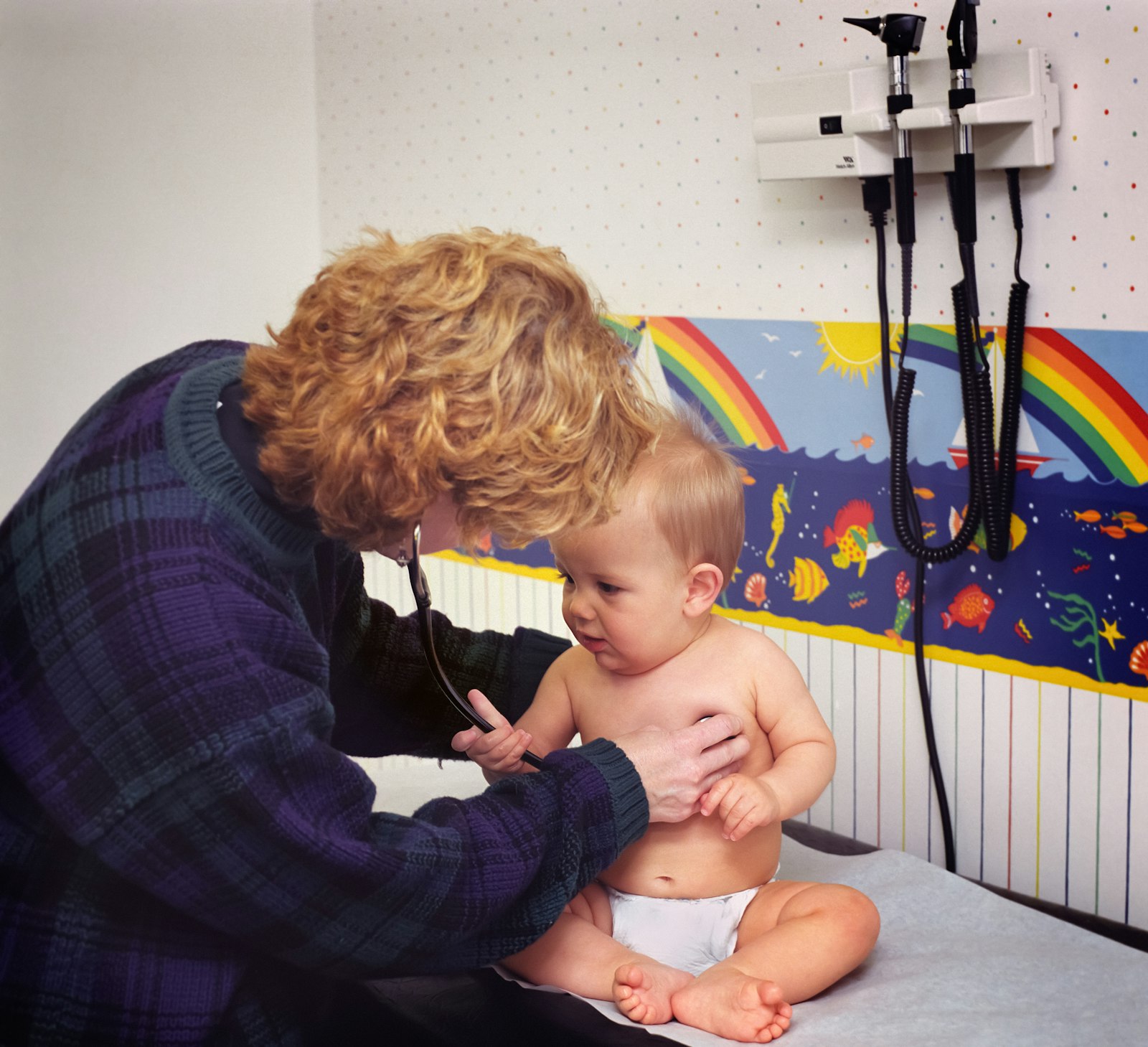
Occasional, isolated milestone timing varies enough on its own that a single "late" milestone rarely means much by itself. It's worth mentioning at a well-child visit if a baby isn't showing any interest in movement (rolling, scooting, pushing up) by around 9 to 10 months, isn't bearing any weight on their legs when held upright, favors one side of the body noticeably, or has lost a skill they previously had. Your pediatrician tracks overall developmental progress across categories, not just crawling in isolation, which gives a much clearer picture than any single milestone can.
Do walkers and jumpers help or hurt?
Traditional baby walkers on wheels are actually discouraged by many pediatric organizations — they've been linked to injuries from falls and stairs, and they don't build the same muscles crawling and pulling to stand do, since a walker supports a baby's weight for them rather than requiring them to develop it. Stationary activity centers and jumpers are generally considered safer in that they don't move around the house, but they're still best used in short stretches rather than as a substitute for floor time, which remains the most effective way to build the strength crawling and walking both depend on.
What crawling actually does for development
Crawling isn't valued just because it's cute or because it's "supposed to" happen — the cross-body coordination it requires (moving an arm and the opposite leg together) is thought to support the two sides of the brain learning to communicate and work together, a pattern that shows up again later in skills like walking, running, and even handwriting. Crawling also builds core, shoulder, and wrist strength that supports later fine motor skills, and it gives babies practice with distance and depth perception as they judge how far to reach or how close an object actually is.
None of this means a baby who skips crawling entirely is missing out on some irreplaceable developmental step — the research on outcomes for babies who go straight from sitting to walking is reassuring, not alarming. It's simply one of several possible paths to the same destination.
Common questions and myths worth clearing up
A persistent myth is that crawling "must" happen before walking or something has gone wrong — pediatric guidance doesn't support this; plenty of typically-developing babies walk without ever crawling in the classic sense. Another common misconception is that crawling early predicts being an early walker, or that a late crawler will also walk late — in practice, the two milestones don't reliably predict each other, and a baby who takes their time crawling can still walk right on the early side of typical, or vice versa.
Parents sometimes worry that a baby crawling "wrong" — asymmetrically, with one leg dragging, or using an unusual pattern — needs immediate correction. A brief period of an unusual-looking crawl as a baby experiments with the mechanics is common and often resolves on its own within a few weeks. A pattern that's consistently and persistently asymmetric over an extended period, rather than just an early awkward phase, is the kind of thing worth mentioning at a well-child visit rather than something to self-diagnose from watching your baby move around the living room.
What happens right after crawling starts
Once crawling clicks, progress often feels fast — many babies go from tentative first crawls to confidently cruising around furniture within a matter of weeks. This is also typically when pulling to stand and cruising along furniture begin, laying the groundwork for independent walking, which most commonly follows somewhere in the range of 9 to 18 months.
Frequently asked questions
Is it normal for a baby to skip crawling entirely?
Yes — some babies move straight from sitting to pulling up to walking without a distinct crawling phase. This is a recognized normal variation and isn't something that needs to be corrected or made up.
My baby scoots on their bottom instead of crawling on hands and knees — is that okay?
Yes, bottom-scooting is a common and normal way for babies to get around, and it doesn't predict any difference in later development compared to hands-and-knees crawling.
When should I worry about a crawling delay?
A single late milestone in isolation is rarely concerning, but it's worth mentioning to your pediatrician if a baby shows no interest in movement by 9-10 months, doesn't bear weight on their legs, favors one side of their body, or has lost a previously acquired skill.