Photo: Unsplash
Head lice sends a wave of dread through school pickup lines every year, and it's one of the most repeatedly searched childhood health topics for a reason: it's extremely common, spreads easily among kids in close contact, and carries a stigma it genuinely doesn't deserve.
Lice have nothing to do with cleanliness
This is worth saying plainly, because the stigma is the part that causes the most unnecessary distress: lice prefer clean hair just as much as dirty hair, and having lice reflects close contact with an infested person or their belongings — not poor hygiene. It spreads mainly through direct head-to-head contact, and less commonly through shared hats, brushes, or pillows.
How to check for lice
- Use a bright light and a fine-toothed lice comb, working through small sections of dry or wet hair.
- Look for live lice (small, fast-moving, tan to grayish-white) and nits (tiny eggs firmly glued to the hair shaft, usually close to the scalp).
- Nits are often mistaken for dandruff, but unlike dandruff they don't brush or flick off easily — they're attached with a natural glue-like substance.
- Check behind the ears and at the nape of the neck first — the most common areas lice are found.
What actually treats it
Over-the-counter treatments containing permethrin are the standard first-line option and work well in most cases, though resistance has grown in some areas, so a second treatment 7-9 days later is standard to catch any newly hatched lice the first round missed. Combing wet hair with a fine-toothed nit comb, repeated every few days for two weeks, meaningfully improves success rates alongside any treatment product.
Home remedies (mayonnaise, olive oil, suffocation methods) are popular online but have inconsistent evidence — a proper treatment plus thorough combing remains the most reliable approach if the first-line option isn't working. Following the label's exposure and rinse times exactly, rather than leaving a treatment on longer to seem more thorough, also matters for both effectiveness and skin safety.
What to do about school and other kids
Most current school guidance has moved away from strict "no return until nit-free" policies, since they're not well-supported by evidence and cause unnecessary missed school days — many schools now allow return after the first treatment. Check your specific school's actual policy rather than assuming the older, stricter standard.
The life cycle, and why timing treatment matters
A louse egg (nit) takes about a week to hatch, and the newly hatched louse takes another week or so to mature and start laying its own eggs. This cycle is exactly why a single treatment round isn't enough — most lice treatments kill live lice effectively but don't reliably kill every egg, so nits that survive the first treatment hatch a week or so later and restart the cycle if a second treatment isn't done on schedule. Sticking to the recommended 7-9 day window between the first and second treatment, rather than skipping it once symptoms seem to improve, is the single biggest factor in whether treatment actually works the first time.
Treatment failure or reinfestation? How to tell
When lice reappear after treatment, it's natural to assume the product didn't work, but reinfestation from a sibling, classmate, or shared item is actually the more common explanation. A helpful clue: true treatment failure usually shows live lice again within a few days of completing both treatment rounds, while reinfestation often shows up later and may coincide with a known case at school or in the household. If you suspect reinfestation, checking (and treating, if needed) everyone in the household at the same time prevents the frustrating back-and-forth of passing lice between family members.
Lowering the odds of a repeat case
While there's no way to fully lice-proof a child in group settings, a few habits reduce the odds: tying back long hair for school and activities, avoiding sharing hats, hair ties, brushes, and helmets, and doing a quick comb-through check every week or two during periods when lice are going around at school. None of these guarantee prevention, since head-to-head contact during normal play is hard to avoid entirely, but they meaningfully lower exposure.
Itchy scalp with no lice found — what else it could be
Itching can start before lice are easily visible, since it often takes several weeks of exposure before a child's scalp becomes sensitized enough to react. But persistent itching with no lice or nits found on repeated checks can also point to dry scalp, eczema, dandruff (seborrheic dermatitis), or a reaction to a hair product. If a thorough comb-through with a bright light and lice comb turns up nothing on more than one occasion, it's worth considering these other, more common causes rather than continuing to treat for lice that aren't there.
A step-by-step approach to combing correctly
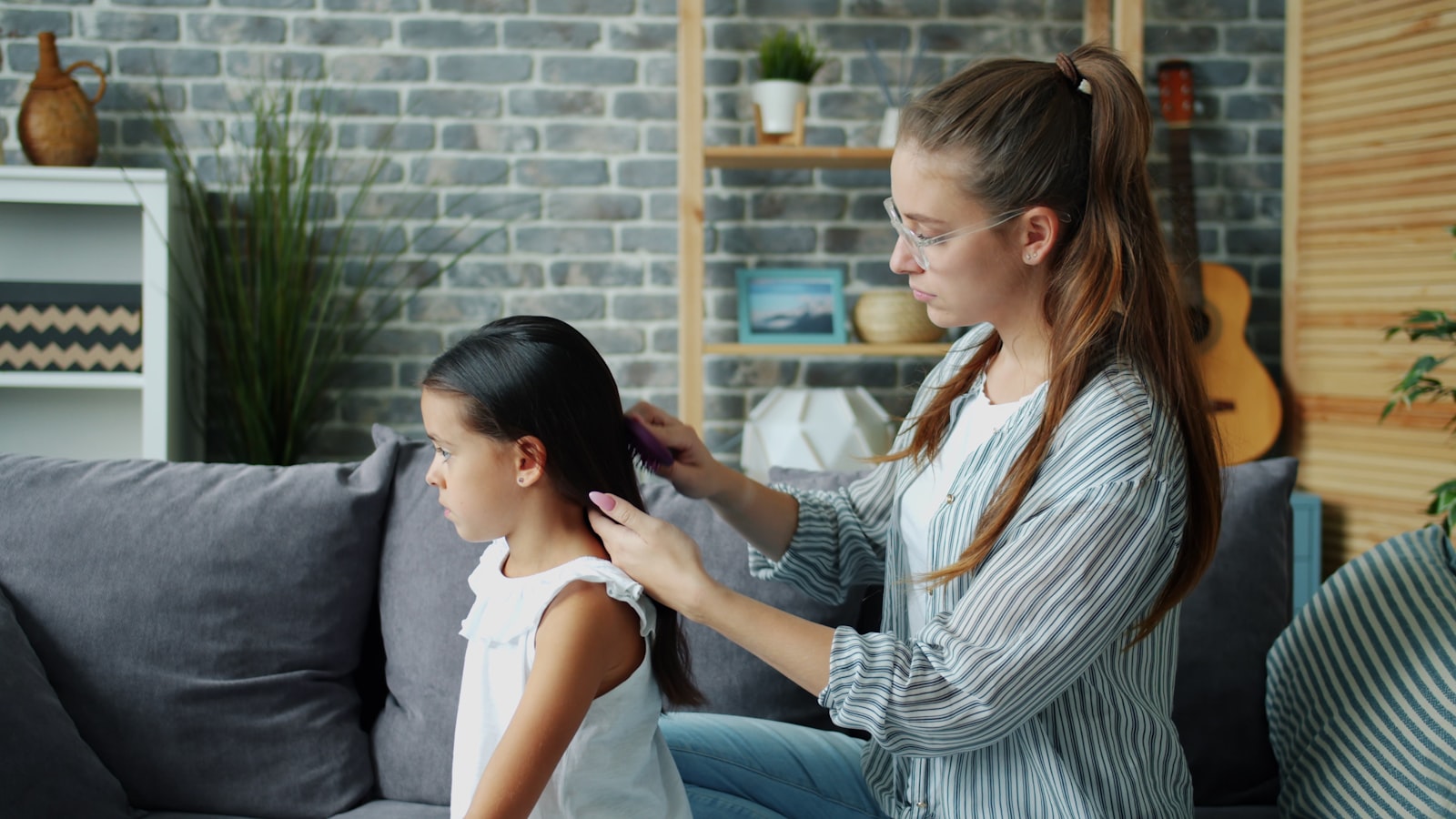
Combing technique matters almost as much as the treatment product itself. Start on freshly washed, towel-dried hair, since wet hair slows lice movement and makes them easier to catch. Apply a generous amount of regular conditioner to help the comb glide smoothly and to further immobilize any live lice. Working in small sections, clip back the rest of the hair and comb from root to tip in a single, slow stroke, wiping the comb on a paper towel or tissue after every pass to check what's been caught. Cover the entire head systematically, section by section, rather than combing randomly, so no area gets missed. This full process typically takes 15 to 30 minutes depending on hair length and thickness, and doing it thoroughly the first time saves having to repeat an incomplete session later.
Choosing a treatment when the first option doesn't work
If a permethrin-based product doesn't fully clear an infestation after two properly timed treatments, it's a reasonable time to check in with a pediatrician rather than trying a third round of the same product, since resistance to permethrin has increased in some regions over the years. A pediatrician can prescribe an alternative, such as a different active ingredient that isn't affected by the same resistance patterns. Prescription options are generally reserved for cases where over-the-counter treatment has genuinely failed with correct technique and timing, rather than being a first-choice option, partly due to cost and partly because most cases do resolve with proper over-the-counter treatment and combing.
How lice actually spread between kids
Direct head-to-head contact accounts for the large majority of lice transmission, which is why it spreads so efficiently among young children who naturally huddle together for photos, share pillows during sleepovers, or put their heads close together over a shared tablet or book. Sharing helmets, headphones, hats, hair ties, and brushes accounts for a smaller share of cases but is still worth avoiding during an active outbreak at school. Lice cannot jump, fly, or survive long away from a scalp, so brief incidental contact, like sitting near an infested classmate without direct head contact, carries a much lower risk than parents sometimes assume.
Group activities that involve close, sustained head contact, like sports team huddles, dance classes, or slumber parties, understandably see more transmission than typical classroom seating, since the actual contact time and closeness matter more than simply being in the same room. This is worth keeping in mind when weighing precautions during a known local outbreak, since avoiding those higher-contact activities briefly makes more practical difference than, say, avoiding shared classroom supplies.
Checking siblings and the rest of the household
Once one child in a household has a confirmed case, it's worth checking every other person who shares close contact, including siblings who share a room or play closely together, and any adult who regularly puts their head near the child's, such as during story time or carrying a younger one. Not everyone checked will have lice, and treating someone who doesn't actually have an active infestation isn't necessary or recommended, since treatment products are medications with their own instructions and shouldn't be used preventively. A simple comb-through check for everyone, followed by treatment only for those with confirmed live lice, is the accurate and proportionate approach.
Supporting a child through the social side of it
Beyond the physical process of treatment, lice can carry an emotional weight for kids old enough to worry about what classmates think. Reassuring a child that lice are extremely common, unrelated to cleanliness, and nothing to be embarrassed about goes a long way, especially since kids sometimes pick up on outdated stigma from overheard adult conversations or older stories. Keeping the tone matter-of-fact at home, rather than treating it as a crisis, tends to help a child feel less singled out and more able to talk openly if it happens again, which it very well might during the elementary school years.
Involving an older child in their own treatment, letting them hold the comb, choose a movie to watch during the process, or simply understand what's happening and why, can turn what might otherwise feel like an ordeal into a more manageable, even mildly boring routine. Framing it as something that happens to lots of kids at some point, rather than a special problem specific to them, tends to land better than over-explaining or over-apologizing about it.
Myths that make lice feel scarier than they are
A common myth is that lice are a sign of a dirty house or an unwashed child; the opposite is closer to true, since lice actually attach more easily to clean, product-free hair. Another myth suggests lice can be starved out by shaving a child's head; while this technically removes the environment lice need, it's an extreme and unnecessary step compared to standard treatment, and isn't something pediatricians recommend. Finally, some parents believe a single treatment always clears an infestation completely; as covered above, the life cycle of lice specifically requires a second treatment round to be effective, and skipping it is one of the most common reasons cases seem to "come back" when really they never fully cleared.
A last myth worth mentioning: that hair color, texture, or length has anything to do with lice risk. Lice attach to hair shafts of any type, and while very long hair can make thorough combing take longer, it doesn't meaningfully change how likely a child is to catch lice in the first place, since transmission depends on head contact, not hair characteristics.
Frequently asked questions
Can you get lice from a pet?
No — head lice are species-specific to humans and cannot live on or spread from cats or dogs. Pets are never part of a lice treatment plan.
How long does it take to get rid of lice completely?
With correct treatment and follow-up combing, most cases clear within 2-3 weeks, including the required second treatment round to catch newly hatched lice. Ongoing new cases usually mean reinfestation from a shared contact, not treatment failure.
Do I need to wash everything in the house?
No — lice die within a day or two away from a human scalp, so extensive home treatment is unnecessary. Washing recently-used pillowcases, hats, and hair accessories in hot water is a reasonable, proportionate step; deep-cleaning the whole house is not needed.
What if the over-the-counter treatment doesn't work?
If two properly timed rounds of an over-the-counter treatment don't clear an infestation, it's worth checking with a pediatrician, since resistance to common treatments has grown in some areas. A prescription alternative with a different active ingredient is often the next step.
Should I check other family members if one child has lice?
Yes, it's reasonable to do a comb-through check on siblings and anyone with close head contact with the affected child. Only treat those with confirmed live lice found during the check, since treatment products shouldn't be used preventively on people without an active infestation.