Photo: Vanessa Loring on Pexels
Baby led weaning (BLW) means your baby feeds themself soft, finger-sized pieces of real food from around 6 months, instead of being spoon-fed purees. Wait for readiness signs, offer an iron-rich food most days, skip choking hazards like whole nuts and whole grapes, stay within arm's reach, and keep breast milk or formula as the main drink.
What baby led weaning is, and how it differs from spoon-feeding
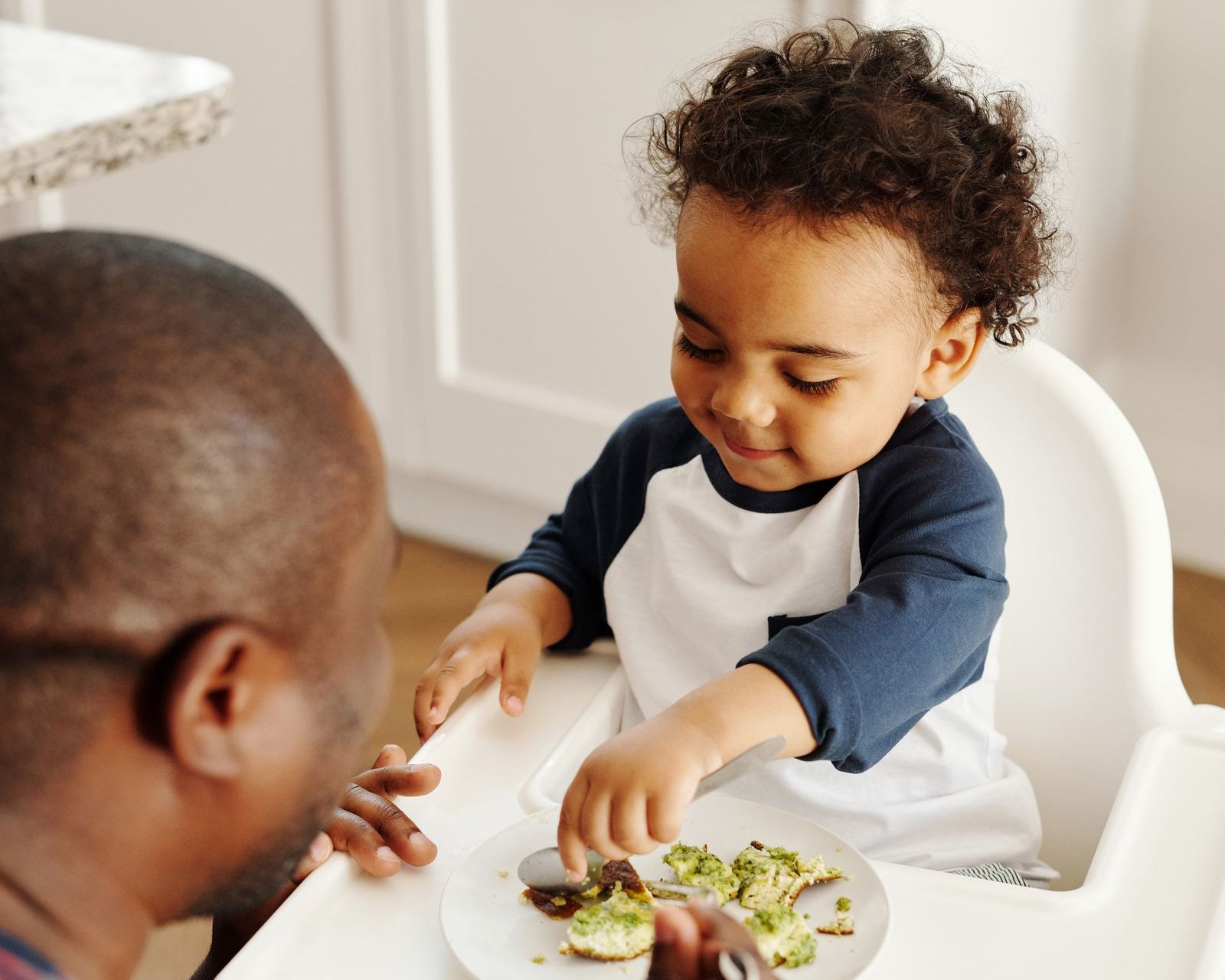
With traditional spoon-feeding, an adult controls the pace. Food starts smooth and gets lumpier over several months, and the adult decides when the next bite arrives. With baby led weaning, your baby sits at the table with you, picks up soft pieces from the tray, and decides how much to eat and how fast. The American Academy of Pediatrics describes it as slowly moving a baby from only breast milk or formula to a mixed diet that includes solid foods, with the baby self-feeding and never required to finish what is offered. Their article, Baby-Led Weaning: Is It Safe?, is worth reading alongside this one.
The two approaches share more than they differ. Both start around 6 months, both depend on readiness, and both avoid the same risky foods. The main difference is who holds the food.
You do not have to choose a side. The AAP says you can bend the baby-led idea to fit your family, and that spoon-feeding for a few days or weeks will not stop your baby from learning to eat independently. A very common mix is finger foods on the tray plus a preloaded spoon of thick yogurt or mashed beans that your baby guides to their own mouth.
Signs your baby is ready
Age is only a guide. The NHS says to start around 6 months and to look for signs that appear together, not one at a time. Before you begin, check this list.
- Your baby is around 6 months old.
- They sit with little support and hold their head steady.
- They bring objects to their mouth and can coordinate eyes, hands, and mouth to pick food up.
- They have lost the tongue-thrust reflex, so food is not automatically pushed back out.
- They watch you eat and show real interest in your plate.
Some behaviors look like readiness but are not. Chewing fists, waking more at night, and wanting extra milk feeds are all normal for babies and do not mean your baby needs solid food. Starting solids will not make your baby sleep through the night. If your baby was born prematurely, struggles to sit up, or has trouble swallowing even soft foods, waiting and asking your pediatrician is the better call. For a wider look at timing, our starting solids first foods guide covers the basics for both purees and finger foods.
Baby led weaning first foods
A good first food is soft enough to squish between your thumb and finger and shaped so a small fist can hold it. These are easy places to begin:
- Avocado wedges or thick slices of ripe banana.
- Steamed sweet potato or carrot sticks, cooked until they mash easily.
- Steamed broccoli florets, with the stem left on as a handle.
- Well-cooked scrambled egg or omelet strips.
- Tender strips or shreds of chicken, beef, or lamb, cooked until very soft.
- Soft tofu strips, or mashed beans and lentils pressed into a thick patty.
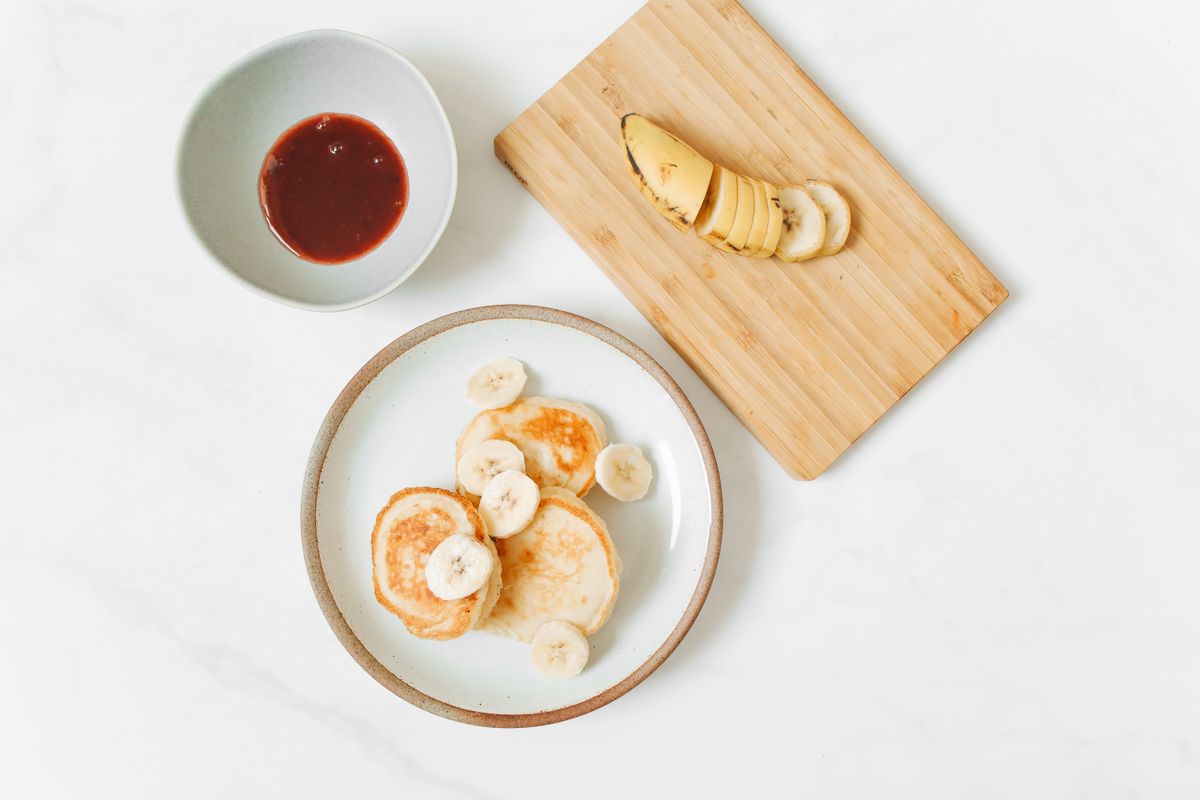
- Toast fingers with a thin scrape of spread, or soft pancakes like our banana oat pancakes, cut into strips.
Wash and peel fruit and raw vegetables, remove pits, seeds, and bones, and cool hot food before it reaches the tray.
Iron-rich foods to include early
Iron is the nutrient to watch most closely with baby led weaning. The AAP points out that self-fed diets can lean heavily on fruit and vegetables, which are often low in iron, and that babies who eat only the foods they like best may miss it.
Good options include meat, poultry, fish, well-cooked eggs, beans, lentils, tofu, and iron-fortified infant cereal that you mix thick enough to stick to a spoon or roll into a ball. Pair plant iron with a vitamin C food such as strawberries or bell pepper to help absorption. Our iron-rich foods for babies guide has longer lists and serving ideas. Ask your pediatrician whether your baby also needs an iron or vitamin D supplement, particularly if you breastfeed.
How to cut food for baby led weaning, stage by stage
Shape and softness matter more than which food you pick. Here is how the cuts change as your baby's hands develop.
Around 6 months: finger-length strips
Young babies grab with the whole palm, so a piece has to be long enough to poke out of the top of their fist. Cut soft food into strips about the length and width of an adult finger. The AAP compares the shape to a small baby carrot: easy to grab at one end and gnaw at the other. Thicker is better than thin. Skip round, coin-shaped slices of vegetables, fruit, or meat, since those raise the risk of choking.
7 to 8 months: more textures
Keep offering strips, and add thicker mashed foods on a preloaded spoon. The NHS suggests moving from purees to mashed, lumpy, and finger foods as soon as your baby can manage them, because chewing practice helps with swallowing.
Around 9 months: smaller pieces
Around this age most babies develop a pincer grasp, using thumb and forefinger to pick up small things. Now you can add small, soft pieces about the size of a pea up to a fingertip, such as diced soft-cooked vegetables, shredded chicken, small bits of scrambled egg, or soft pasta. Squash peas flat first. Round foods like grapes, cherry tomatoes, and blueberries should be quartered lengthwise, and it is smart to keep cutting grapes that way well past the first birthday.
BLW gagging versus choking
BLW gagging worries almost every new parent, so it helps to know what you are looking at. Gagging is noisy. Your baby's eyes may water, their tongue may push forward, and they may retch or even vomit. It is a protective reflex, and it is how babies learn to manage how much food fits in their mouth. With daily practice they gag less. If your baby gags, stay calm and stay put. Do not slap their back or reach into their mouth, since that can push food farther back.
Choking is quiet or silent. The airway is blocked, so your baby cannot cough, cry, or breathe, and their face may turn pale or blue. This is an emergency. Call 911 or your local emergency number and follow the infant steps in our choking first aid guide. Taking an infant first aid and CPR class before the first meal is a strong precaution.
To lower the odds of a scare, keep your baby upright, never place food in their mouth for them, and skip screens and feeding in the car.
Foods to avoid with baby led weaning
- Honey in any form, including raw honey and honey baked into foods, before 12 months, because of the risk of infant botulism.
- Whole nuts, popcorn, and hard raw vegetables or fruit, such as raw carrot and apple chunks.
- Whole grapes, cherry tomatoes, and similar round foods. Quarter them lengthwise.
- Hot dogs and sausage cut into coins, and large chunks of cheese or meat.
- Thick spoonfuls of nut butter, which can stick in the mouth and throat.
- Added salt, including stock cubes and gravy, and added sugar. The NHS notes that salty foods are hard on a baby's kidneys and sugar can cause tooth decay.
- Unpasteurized milk, cheese, yogurt, and juice, and any raw or undercooked eggs, meat, or fish.
- Cow's milk as a main drink before 12 months. Small amounts cooked into food or in yogurt are fine.
Introducing allergens during baby led weaning
Current pediatric guidance favors offering common allergens such as peanut, egg, and dairy around 6 months, once your baby has started solids, rather than delaying them. Offer one new allergen at a time, in a small amount, early in the day, and wait a few days before the next one so you can tell what caused any reaction. Peanut should come as thinned peanut butter or peanut powder stirred into a puree or yogurt, never whole peanuts and never a thick spoonful.
If your baby has eczema, or someone in the family has a significant food allergy, talk to your pediatrician before offering allergens at home. Hives, swelling of the lips or face, repeated vomiting, or any trouble breathing after a new food needs prompt medical care, and breathing trouble is an emergency. Our guide to introducing allergens safely walks through a practical timeline.
How to set up the first meal, step by step
- Pick a calm moment when your baby is awake and content, not exhausted and not ravenous. Offer breast milk or formula as usual.
- Seat your baby fully upright in a high chair with the harness buckled. Never use a reclined seat, car seat, or bouncer. If you are still shopping, our high chair guide compares options.
- Wash your hands, then prepare two or three foods. Squish a piece between your thumb and finger to confirm it is soft, then cut it into finger-length strips.
- Place a few pieces on the tray or a suction bowl. A small number looks less overwhelming than a heap.
- Sit facing your baby and eat something yourself. Babies copy what they see, so chew where they can watch.
- Stay within arm's reach and never leave your baby alone with food, even for a moment.
- Let your baby set the pace. Do not put food in their mouth, rush them, or wipe their face after every bite.
- Stop when your baby closes their mouth, turns their head away, or starts throwing food. Offer milk, clean up, and try again tomorrow.
A real-life scenario: the first week
Picture a Sunday dinner. Your baby turned 6 months last week, sits steadily in the high chair, and has been grabbing at your fork for days. You put one spear of steamed sweet potato and one strip of omelet on the tray. Your baby squeezes the sweet potato until it mashes into orange paste, sucks on the fist, and drops the omelet on the floor. Then a bite goes too far back, your baby gags, eyes watering, tongue out, and you keep your hands in your lap while the reflex does its job. After a few seconds your baby reaches for the next piece. Maybe a teaspoon gets eaten. That counts as a good first meal.
How much will my baby eat?
At first, very little. Breast milk or formula is still the main source of nutrition, and the NHS stresses that how much a baby eats matters less than getting used to eating. Do not count bites. Babies stop when they are full, and appetite swings from day to day. Most families work up from one meal a day to three over several weeks, with milk feeds continuing. Closing the mouth or turning the head away is your signal that this meal is over.
Mess and expectations
Plan for mess, because it is part of how babies learn. A wipeable mat under the high chair, a long-sleeved bib, and a plan to rinse your baby in the sink afterward make cleanup easier.
Common mistakes
- Starting before your baby shows the readiness signs.
- Cutting food into coins, or into tiny pieces long before the pincer grasp arrives.
- Serving only fruits and vegetables and skipping iron-rich foods.
- Using a reclined seat, or stepping away for a moment.
- Giving up after the first gag or the first refusal. It can take 10 tries or more for a baby to accept a new food.
Myths and facts about baby led weaning
- Myth: baby led weaning means no spoons and no purees. Fact: the AAP says you can flex the approach, and many families mix finger foods with preloaded spoons.
- Myth: it is far more dangerous than purees. Fact: choking is a serious risk with any feeding method, and the AAP notes that some studies suggest BLW does not raise it. Safe shapes and close supervision matter most.
- Myth: gagging means your baby is not ready. Fact: gagging is a normal reflex while babies learn, and it fades with practice. Silent, struggling breathing is the sign of choking.
- Myth: solids at 4 or 5 months will help your baby sleep longer. Fact: the NHS says starting solids will not make a baby more likely to sleep through the night.
When to call the pediatrician
Call if your baby refuses nearly all solids for weeks after showing readiness signs, coughs or sounds wet when eating, gags or vomits with most foods, seems constipated or in pain, or is not gaining weight as expected. Call right away for hives or facial swelling after a new food, and treat any trouble breathing as an emergency.
Frequently asked questions
At what age can I start baby led weaning?
Most babies are ready around 6 months, once they sit with little support, hold their head steady, reach for food and bring it to their mouth, and no longer push food out with their tongue automatically. If your baby was born early or has trouble sitting up or swallowing, ask your pediatrician before starting.
Is baby led weaning safe, and does it raise choking risk?
Choking is a real risk with any way of feeding, so preparation and supervision matter more than the method. The American Academy of Pediatrics notes that some studies suggest baby led weaning does not carry a higher choking risk than traditional feeding. Seat your baby upright, cut food into soft finger-length strips, avoid known hazards, and stay within arm's reach.
Can I combine baby led weaning with purees and spoon-feeding?
Yes. The American Academy of Pediatrics says you can flex the baby-led idea to fit your family. Many families offer finger foods plus a preloaded spoon of thick yogurt or mashed beans.
What are the best baby led weaning first foods?
Soft foods cut into finger-length strips work well: avocado, ripe banana, steamed sweet potato, soft broccoli florets, well-cooked egg, and tender shredded or strip-cut meat or fish.
How do I cut food for baby led weaning at 6 months and at 9 months?
At 6 months, cut soft food into strips about the length and width of an adult finger, so a piece sticks out of your baby's fist. Around 9 months, as the pincer grasp develops, you can add small soft pieces about the size of a pea or fingertip. Always quarter round foods like grapes lengthwise.
Is gagging normal in baby led weaning?
Yes. Gagging is loud and messy: eyes water, the tongue pushes forward, and your baby may retch or even vomit. It happens less with daily practice. Choking is different. It is quiet or silent, and your baby cannot cough, cry, or breathe.