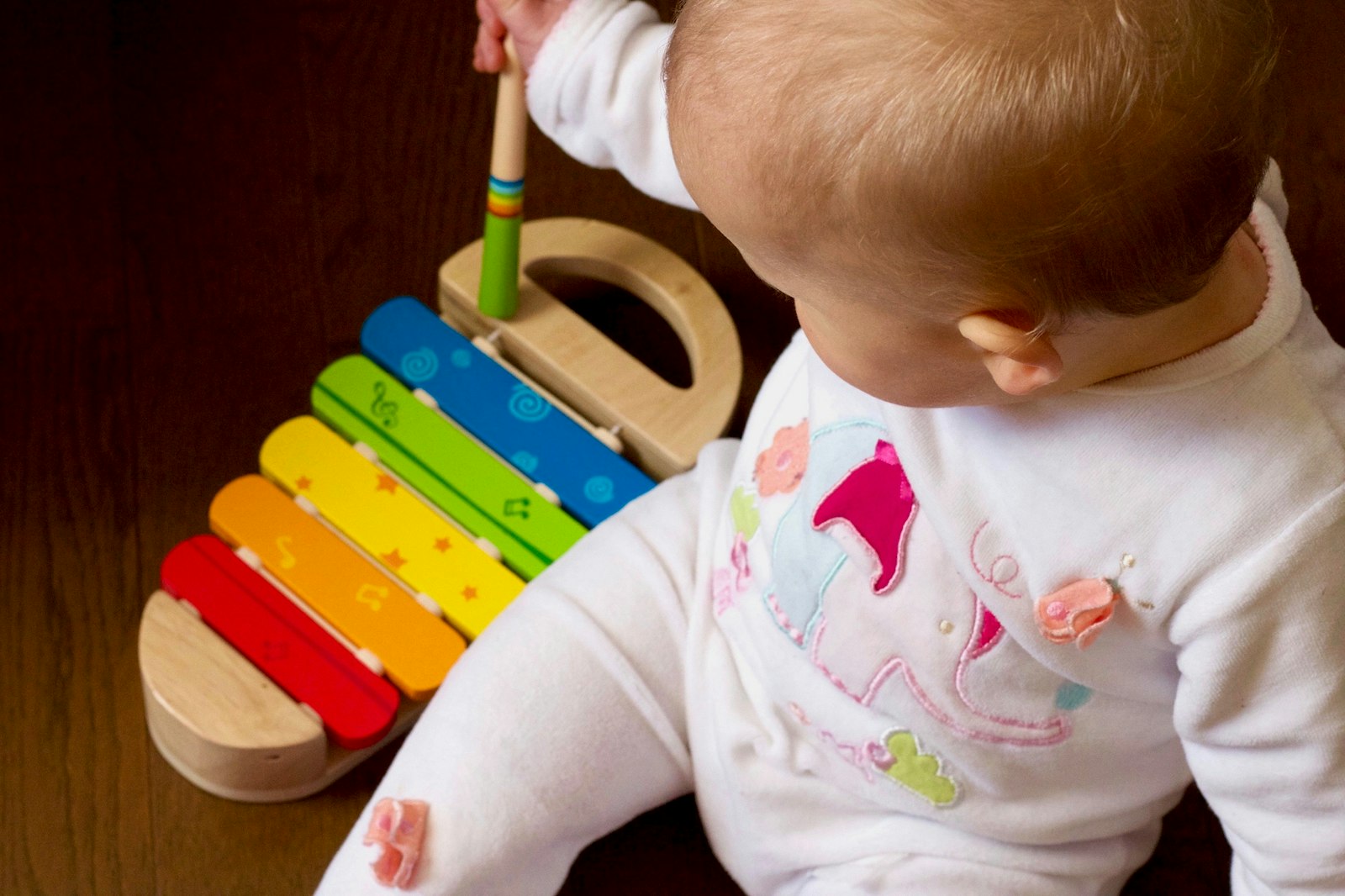
Photo: Unsplash
The first six months bring faster developmental change than almost any other stretch of childhood — from a newborn who can barely focus their eyes to a baby who can grab a rattle, roll over, and start babbling back at you. Toys don't need to be complicated during this window, but matching them to what a baby can actually perceive and do makes a real difference in how much they engage.
0–2 months: vision, contrast, and sound
A newborn's eyesight is quite blurry and most responsive to sharp contrast rather than color or fine detail. This is why high-contrast black-and-white cards and mobiles are so commonly recommended for this stage — they're simply easier for an immature visual system to lock onto than soft, low-contrast pastels.
At this age, look for:
- High-contrast cards or a crib mobile with bold patterns, placed at the recommended distance from a baby's face (usually 8–12 inches, per most manufacturer instructions).
- Soft rattles with a gentle sound — a newborn's hearing is more developed than their vision, so sound-based toys can hold attention even before a baby can track objects visually.
- Textured fabric toys for early tummy time, since touch is one of the most developed senses at birth.
3–4 months: reaching and batting
Around this stage, many babies start to notice their own hands, swipe at objects, and bring things toward their mouth. This is where activity gyms and hanging toys earn their keep — a baby lying on their back can bat at dangling toys, which builds the hand-eye coordination needed for intentional grasping later.
- Play gyms / activity arches with a few different textures and a mirror panel — babies are often drawn to faces, including their own reflection.
- Grip-friendly rattles and rings sized for a small hand to hold without a fully developed pincer grasp.
- Tummy-time toys that light up, crinkle, or squeak to reward lifting the head.
5–6 months: grasping, mouthing, and cause-and-effect
By five or six months, most babies can grab an object and get it to their mouth reliably — mouthing is a normal, healthy way for babies to explore texture and shape at this age, not a sign a toy is being misused. Toys should be sized and built with that in mind.
- Teethers made of food-grade silicone or solid rubber, sized so they can't be swallowed whole or lodge in the throat.
- Simple cause-and-effect toys — press a button, get a sound or light — that reward a baby's growing sense that their actions change the world.
- Soft blocks or stacking rings introduced early, even before a baby can stack them, purely for grasping and mouthing practice.
Understanding safety standards on the label
In the United States, toys sold for children under three are subject to federal small-parts rules enforced through the Consumer Product Safety Commission (CPSC), which set minimum size requirements meant to prevent choking. Many toys also carry an ASTM F963 mark, an industry safety standard covering everything from sharp edges to lead content in paint and plastics. Neither label is a substitute for your own judgment, but seeing them on the box is a reasonable baseline before you check the toy yourself. If a toy has no age grading or safety marking printed anywhere, especially one bought from an unfamiliar online seller, treat that as a reason to look closer rather than assume it's fine.
Battery safety deserves extra attention
Small button-cell batteries, the kind found in light-up rattles and musical toys, are a genuine hazard if swallowed, since they can cause serious internal injury within hours. Before buying anything battery-powered for this age group, check that the compartment requires a screwdriver or a two-step action (push and slide, for example) to open, not just a fingernail. If a toy's battery door ever cracks or the screw goes missing, retire the toy rather than keep using it with a compromised compartment.
What to check before buying, at every stage in this range
- No small parts that fit inside a standard toilet-paper tube or pass a small-parts choke test cylinder.
- No detachable buttons, eyes, or beads that could come loose with mouthing.
- Age grading printed on the box matches your baby's current stage, not just their age in months on paper — some babies reach milestones earlier or later than average.
- Any battery compartment is screw-secured, especially for toys with small button-cell batteries.
- Fabric and plush materials are machine-washable — these toys go in a lot of mouths and get dropped on a lot of floors.
For a full walkthrough of safety standards, labeling, and how to check for recalls, see our toy safety checklist. It's also worth periodically checking the CPSC's recall list directly, since a toy that was safe when purchased can occasionally be recalled later for a defect found after it reached shelves.
Why less is more with newborn toys
It's tempting to fill a nursery with every toy on a registry checklist, but babies under six months genuinely do best with a small, rotating set rather than a large collection available all at once. An overstimulated newborn or young infant — surrounded by too many colors, sounds, and textures at the same time — often responds by looking away or fussing, not by engaging more. Offering one or two toys at a time, and swapping them out every few days rather than every few hours, tends to hold attention better and gives a baby room to actually focus on and study what's in front of them.
Reading your baby's cues during play
Babies this young can't tell you when a toy is too much, but they show it clearly if you watch for it. Turning the head away, arching the back, fussing, or simply going quiet and staring past the toy are all signs a baby has had enough stimulation for the moment, not signs the toy is wrong. Pausing play, offering a break, or switching to quiet face-to-face time usually resets things faster than trying a new toy to recapture attention. On the flip side, wide eyes, kicking legs, and reaching are good signs a baby is engaged and ready for a bit more. Learning to read these cues matters more for enjoyable play than any specific toy choice, and it gets easier with practice over the first few months.
Toy rotation in the first six months
Because development moves so fast in this window, a toy that gets no reaction in month two can suddenly become fascinating in month four, once vision has sharpened or grasping has improved. Rather than buying continuously to chase the next stage, it's worth keeping toys your baby has "outgrown" or hasn't grown into yet in a labeled bin near the changing area, and reintroducing them every couple of weeks. This also means you don't need every category of toy on day one — a newborn genuinely doesn't need teethers yet, and a five-month-old doesn't need much use for a 0–2 month contrast mobile, so timing purchases to the actual stage saves money without any developmental cost.
Budget vs. splurge for newborn toys
Most toys in this age range are simple enough that an expensive version rarely outperforms a budget one in terms of what a baby actually gets from it — a $8 rattle and a $30 rattle serve the same developmental purpose if both are sized and built safely. Where it can be worth spending more is on anything used for extended, unsupervised stretches, like a play gym or activity arch a baby lies under regularly, since sturdier stitching and a stable base matter more with heavy daily use. It's also reasonable to prioritize spending on materials rather than brand name — food-grade silicone teethers and machine-washable fabric toys are worth the extra cost regardless of which company makes them.
Common mistakes parents make with newborn toys
- Buying toys graded for an older stage because they look more impressive on a registry. A toy your baby can't yet use just sits in a bin.
- Hanging toys or mobiles inside the crib once a baby starts pushing up or rolling, which turns a fun toy into a reaching or entanglement hazard.
- Assuming a toy is safe because it's marketed for babies. Marketing copy isn't the same as an age grading or safety mark, and third-party sellers don't always test to the same standard.
- Leaving a baby unsupervised with any toy that has a cord, ribbon, or long strap, even a soft one, since these pose a strangulation risk during independent play.
- Skipping regular toy inspection. Silicone can tear, fabric seams can split, and rattles can crack with repeated mouthing, so a quick check every few weeks catches problems before they become a hazard.
Play, not just toys: what actually builds development
It's worth remembering that toys are one tool among several during this stage, not the main event. Tummy time on a plain blanket, face-to-face talking and singing, and simple back-and-forth games like peekaboo do as much for a baby's development as any purchased product, and cost nothing. If your budget for this stage is tight, a soft blanket, a rattle, and a mirror are genuinely enough; everything else on a typical newborn registry is a nice-to-have rather than a requirement for healthy development. Pediatric guidance from groups like the American Academy of Pediatrics consistently emphasizes interaction over specific products at this age.
Our picks
Each pick below was checked against real order and rating data — not pulled from the top of a search page — so every one genuinely holds a 95%+ rating from a meaningful number of real buyers.
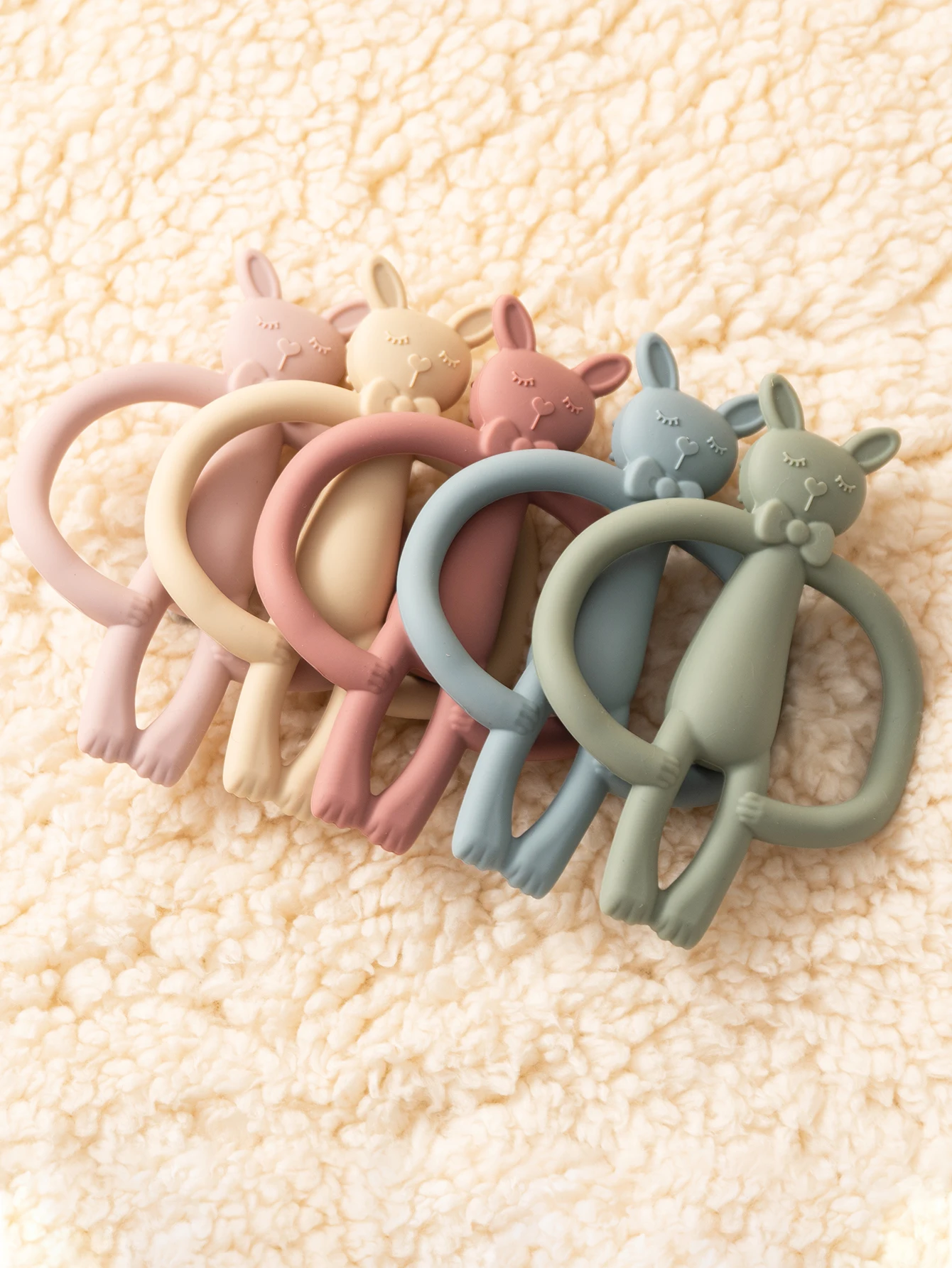
Color Kids 1PCS Silicone Teether Toys Baby Nursing Teether Gifts Newborn Carto…
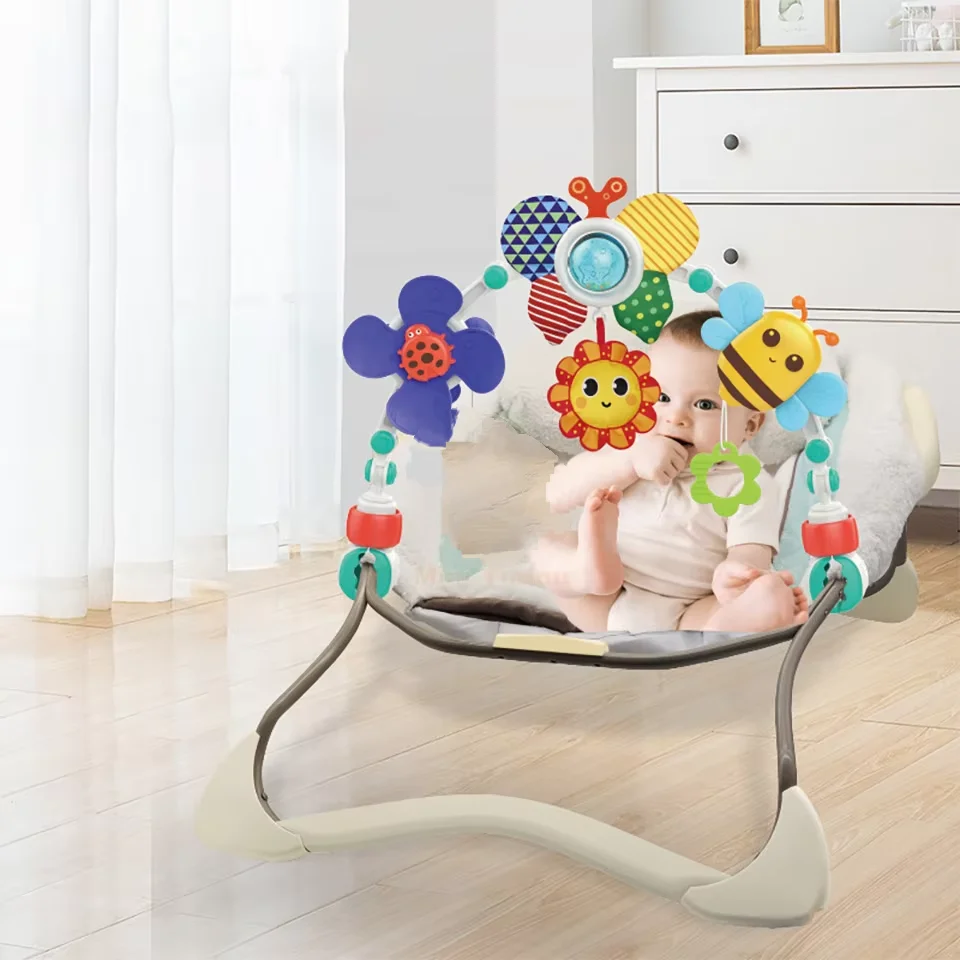
Baby Toy Stroller Arch Musical Rattle Adjustable Clip Crib Mobile Hanging Bed…

PANGDUBE Elephant Baby Lovey Security Blanket Plush Toy with Rattle Teething R…
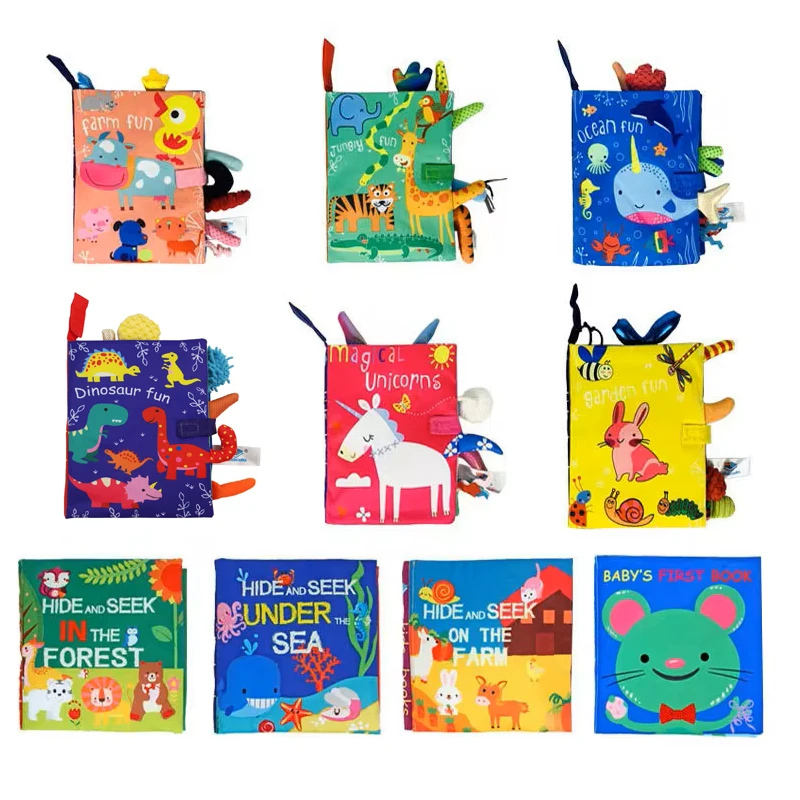
Hot Sale 0-36Month Baby Early Learning Educate Toy Tail Cloth Book Parent-chil…
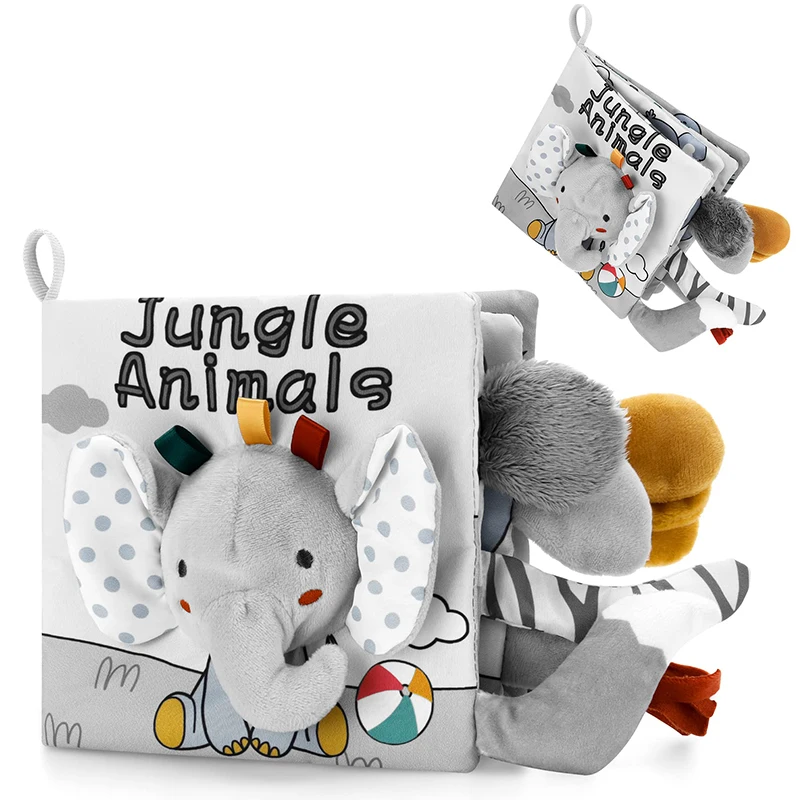
Soft Baby Books 3D Touch Feel High Contrast Cloth Book Sensory Early Learning…
Affiliate links — we may earn a commission at no extra cost to you. Learn more.
Frequently asked questions
Do newborns need toys at all?
Not urgently. In the first few weeks, a newborn's main developmental work happens through faces, voices, and touch rather than toys. Simple high-contrast cards, a rattle, and tummy-time props are enough — you don't need a large toy collection this early.
What colors do young babies see best?
Newborn vision is blurry and most sensitive to high contrast, so black-and-white or bold primary-color patterns are typically easier for very young babies to focus on than soft pastels.
Are crib toys and mobiles safe overnight?
Most crib mobiles are designed to be removed once a baby can push up on hands and knees, and safe-sleep guidance generally recommends keeping cribs free of toys, pillows, and loose items during sleep. Follow the manufacturer's age and usage instructions printed on the product.
How many toys does a newborn actually need?
Far fewer than a typical registry suggests. One or two toys at a time, rotated every few days, is enough to hold attention without overstimulating a young baby. A rattle, a high-contrast card or two, and a few tummy-time props cover most of the first six months.
What should I do if a toy's battery compartment breaks?
Stop using the toy immediately. A cracked or missing battery door exposes small button-cell batteries, which are a serious swallowing hazard. Repair it only if the manufacturer provides a safe way to do so, otherwise dispose of the toy.