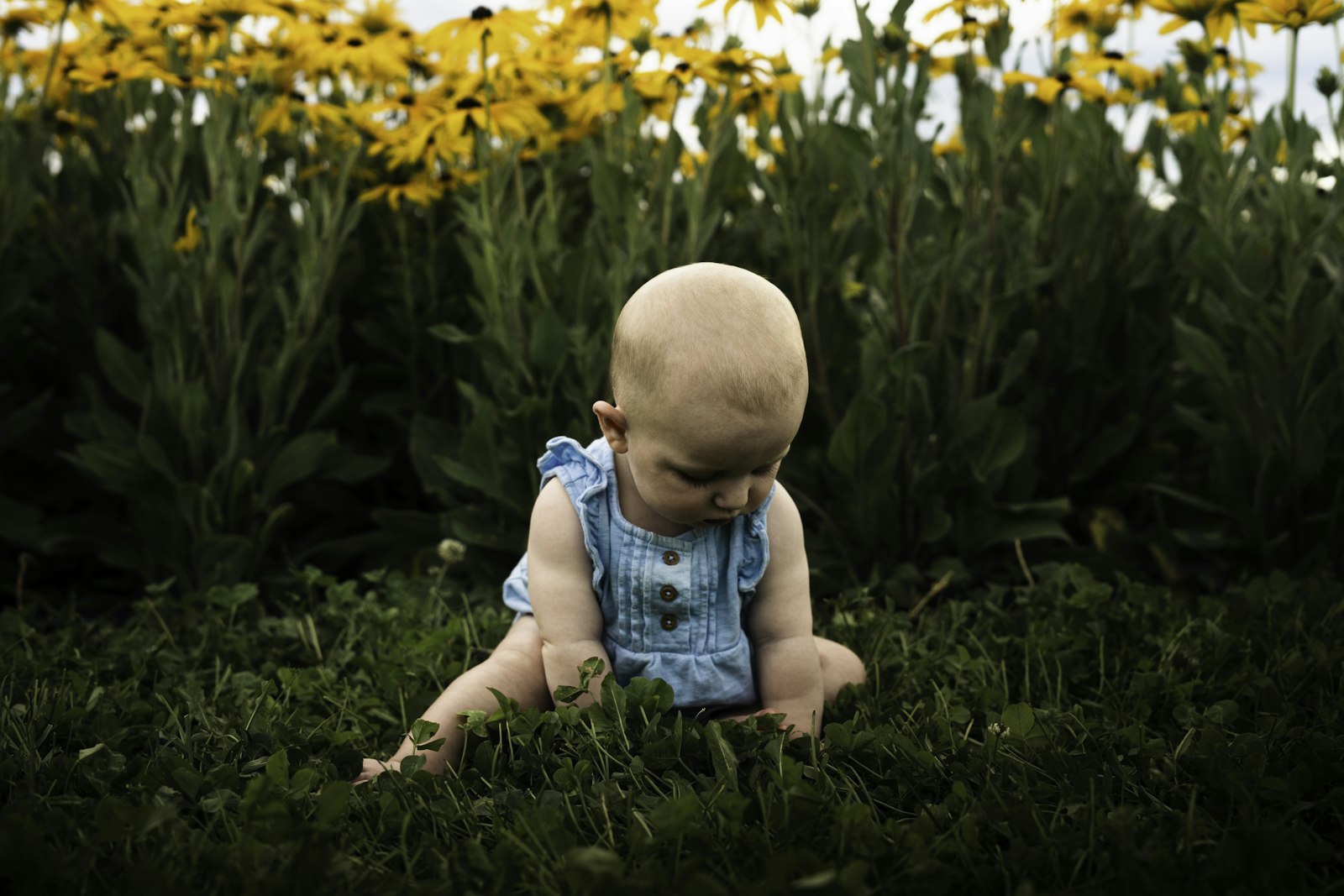
Photo: Unsplash
Nature names have real staying power — they're grounded in something tangible, they tend to age well across a whole lifetime, and they carry an obvious, easy-to-explain meaning. Here's a curated list across a few different natural categories.
Why nature names have such broad appeal
Part of what makes nature names so popular is how naturally they carry meaning without requiring an explanation. A name like Iris or River doesn't need a story attached to feel purposeful, the meaning is right there in the word itself, whether it's beauty, resilience, or motion. That built-in clarity is part of why this category has grown so much over the past two decades, even as specific individual names within it have shifted in and out of fashion.
Flower names
- Lily — purity, renewal
- Iris — also the Greek goddess of the rainbow
- Rose — classic, timeless
- Dahlia — elegance, dignity
- Jasmine — grace, sweetness
- Marigold — passion, warmth
- Fleur — French for "flower"
Tree and plant names
Beyond the most familiar tree and plant names, there is a wide range of options that still carry the same grounded, natural quality while remaining a bit more rare on a class roster.
- Willow — grace, flexibility
- Rowan — the rowan tree, also meaning "little red-haired one" in Gaelic
- Cedar — strength, endurance
- Hazel — the hazel tree; also a warm brown-green eye color
- Olive — peace
- Juniper — protection, in some folk traditions
- Basil — royal, in Greek origin
Weather and sky names
- Skye — open sky
- Aurora — dawn; also the northern lights
- Storm — used for both genders, meaning exactly what it sounds like
- Misty — soft, atmospheric
- Rain — used more often as a middle name, but increasingly common as a first
- Cloud — Cloud is rare as a given name but appears occasionally as a stylistic choice
Celestial and cosmic names
- Luna — moon
- Stella — star
- Orion — the hunter constellation
- Nova — new; also refers to a star suddenly increasing in brightness
- Celeste — heavenly
- Solstice — used occasionally as a distinctive first or middle name
Earth, land, and water names
- River — flowing, used for both genders
- Sierra — mountain range, Spanish origin
- Terra — earth
- Marina — of the sea
- Brook — a small stream
- Reef — used occasionally, evoking the ocean
- Canyon — increasingly used, especially in the U.S.
Animal-adjacent nature names
- Wren — the small songbird
- Robin — used for both genders
- Fawn — a young deer
- Phoenix — the mythical firebird, symbolizing rebirth
- Raven — the bird, also evokes dark hair color
Seasonal names
A season itself, or a word closely associated with one, makes for a name with a built-in story tied to when your child was born or conceived.
- Summer
- Autumn
- Winter
- January (also used as a first name beyond the calendar sense)
- Sorrel (an autumn-toned herb name)
- Wren (also a bird associated with early spring)
Gemstone and mineral names
Related to nature but drawing specifically from what the earth produces underground rather than above it, gemstone and mineral names carry a similar earthy quality with a slightly more polished feel.
- Jasper
- Opal
- Garnet
- Flint
- Amber
- Slate
Less common nature names worth a look
If the most familiar nature names already feel overused to you, a wider search turns up plenty of options that carry the same appeal with far less overlap at the playground.
- Thistle
- Loch
- Vale
- Briar
- Sorrel
- Cove
- Fenn
- Larkspur
Mistakes to avoid with nature names
- Choosing a word purely because it sounds pretty without checking it isn't also a common, unrelated everyday word that could cause confusion in conversation.
- Overlooking how a nature name pairs with your last name, especially if both have a similarly soft, nature-adjacent sound that runs together when said quickly.
- Assuming every nature name is gender-neutral; some, like Luna and Iris, lean more traditionally toward one gender by convention even though they're drawn from the same broad category.
- Picking one of the currently most popular nature names without realizing just how common it has become, if rarity is part of the appeal for you.
Pairing a nature name with a family name
Nature names often work especially well as middle names when the first name is more traditional or family-based, giving a name some of the personality and imagery of a nature name without fully departing from family naming patterns. "Sarah Willow" or "James Rowan" are the kind of pairing many families land on when they want a nature element without making it the headline of the full name.
A note on trendiness
Some of these names (Luna, River, Willow, Aurora) have become significantly more popular in the last decade, which is worth knowing if you're specifically hoping for a less common name. Others — Cedar, Marina, Fawn, Terra — remain genuinely uncommon while still carrying the same nature-rooted meaning, if rarity matters to you.
Where the nature-naming trend came from
Nature names aren't new — Rose, Ivy, and Lily have been common for over a century — but the category expanded dramatically starting in the 2000s and 2010s as parents moved away from more formal, traditional naming conventions toward names that felt earthier and more personal. Part of the appeal is that nature offers an almost limitless supply of options that haven't been "used up" by earlier naming trends the way many classic names have, and part of it reflects a broader cultural interest in the outdoors, sustainability, and simpler living that's shown up in other areas of parenting and lifestyle choices too. Names like Meadow and Wilder, once genuinely unusual, have become common enough that some parents now specifically seek out less-used nature words — Thistle, Loch, Vale — to get a similar feel with more rarity.
Choosing a name that reflects a specific place or memory
Many families draw nature names from a location or moment with real personal meaning — the tree in a childhood backyard, the mountain range where they got engaged, the season their baby was born in. This gives an otherwise generic nature word a specific, private significance that outlives any broader trend the name might also be part of. If a nature name matters to you for this kind of personal reason, it's worth including that story somewhere it won't be lost — a baby book, a letter for your child to read later — since the public-facing name won't carry that context on its own.
Nature names across different climates and landscapes
Most nature-name lists lean heavily on temperate, forest-and-meadow imagery, but plenty of families draw on landscapes that reflect their own environment or heritage instead. Desert-inspired names (Sahara, Sage, Canyon), coastal names (Marina, Shore, Bay), and mountain names (Everest, Summit, Denali) each carry a distinct feel that a generic "nature name" list can undersell. If you live somewhere with a distinctive landscape, or have strong memories tied to a particular kind of terrain, it's worth looking specifically within that category rather than defaulting to the most commonly cited forest and flower names.
How nature names read across a lifetime
A concern some parents raise about nature names is whether a word like Meadow or Wolf will feel appropriate on an adult the way it does on a baby. In practice, most nature names age just as well as any other category, since the words themselves (a season, a landscape feature, a plant) don't carry an inherently youthful or juvenile connotation the way, say, a cutesy invented spelling might. The names that tend to feel less durable are usually ones chosen for a very specific trend-driven reason rather than a lasting personal connection to the word itself, which is true of virtually every naming category, not just this one.
Nature names in different languages
English isn't the only language with a rich vocabulary of nature words worth considering as names. Latin, French, Spanish, Japanese, and many other languages have their own words for light, wind, flowers, and seasons, some of which sound distinctive to English speakers while carrying an entirely ordinary meaning in their language of origin. Sora (Japanese for sky), Estrella (Spanish for star), and Fiore (Italian for flower) are a few examples of nature names that cross language lines. If you have a personal or heritage connection to another language, it's worth checking whether that language's nature vocabulary offers a name that feels more personally meaningful than an English-language equivalent.
Sibling sets with nature names
Nature names pair unusually easily as a sibling set, since the entire category shares a similar tone regardless of which specific element each name draws from — River and Willow, or Sage and Fern, read as a natural pair without any extra coordination needed. Some families extend a nature theme loosely across all their children (one from the sky, one from the land, one from the water) as a quiet unifying thread, while others simply choose favorites independently and find they still end up feeling cohesive, since the category itself does a lot of that work.
How to choose between two nature names you love equally
When two favorites are both nature-rooted, a few practical tiebreakers can help. Consider which one has a more personal story attached, a place you've actually been, a plant a grandparent grew, rather than one you simply like the sound of in the abstract. Check how common each one currently is, since a name that already feels slightly overused might tip you toward the rarer option. And say both out loud with your last name several times in a row; one will often start to feel more natural than the other once you've repeated it enough times to stop hearing it as a "new" word.
Using a nature name as a namesake for a specific person
Some nature names double as a way to honor a specific relative without using their literal name. If a grandmother loved gardening roses, Rose or Briar might carry her memory without being an exact repeat of her name. If a father spent his life near the ocean, Marina or Bay might do something similar. This approach can feel especially meaningful for families who want a tribute name but don't want to directly reuse a name that's already been used elsewhere in the family, or that doesn't feel quite right on its own.
Frequently asked questions
Are nature names gender-specific?
Many are genuinely unisex, River, Rowan, Robin, Storm, and Sage are all used for any gender, while others (Luna, Iris, Cedar) lean more traditionally toward one gender by convention, though naming conventions continue to shift and none of these rules are fixed.
Will a nature name feel out of place if we don't live in a rural or outdoorsy area?
Not particularly. Plenty of nature names are chosen for their sound, meaning, or personal association rather than a family's actual lifestyle, and a name doesn't need to match where or how a family lives to feel right for them.
How can I find a nature name that isn't already common?
Look beyond the most frequently cited flower and tree names toward less familiar words: specific plant varieties, geological features, or nature words borrowed from another language. A local field guide or plant encyclopedia can be a surprisingly good source of options a standard baby-name list won't include.
Which nature names are becoming more popular right now?
Luna, River, Willow, and Aurora have all seen a noticeable rise in popularity over the past decade, which is worth considering if you are specifically looking for a less common option — names like Cedar, Marina, or Fawn remain considerably rarer.
Can a nature name work as a middle name instead of a first name?
Yes, and it is a common approach for families who like the imagery of a nature name but prefer a more traditional or family-connected first name — pairing something like "Rowan" or "Willow" as a middle name is a popular middle ground.