Photo: Unsplash
The second year of life is when "baby toys" start to feel too simple and "big kid toys" are still a bit too complex. Between twelve and twenty-four months, most toddlers go from taking first steps to running, climbing, stacking, and starting simple pretend play — sometimes all within the same few months.
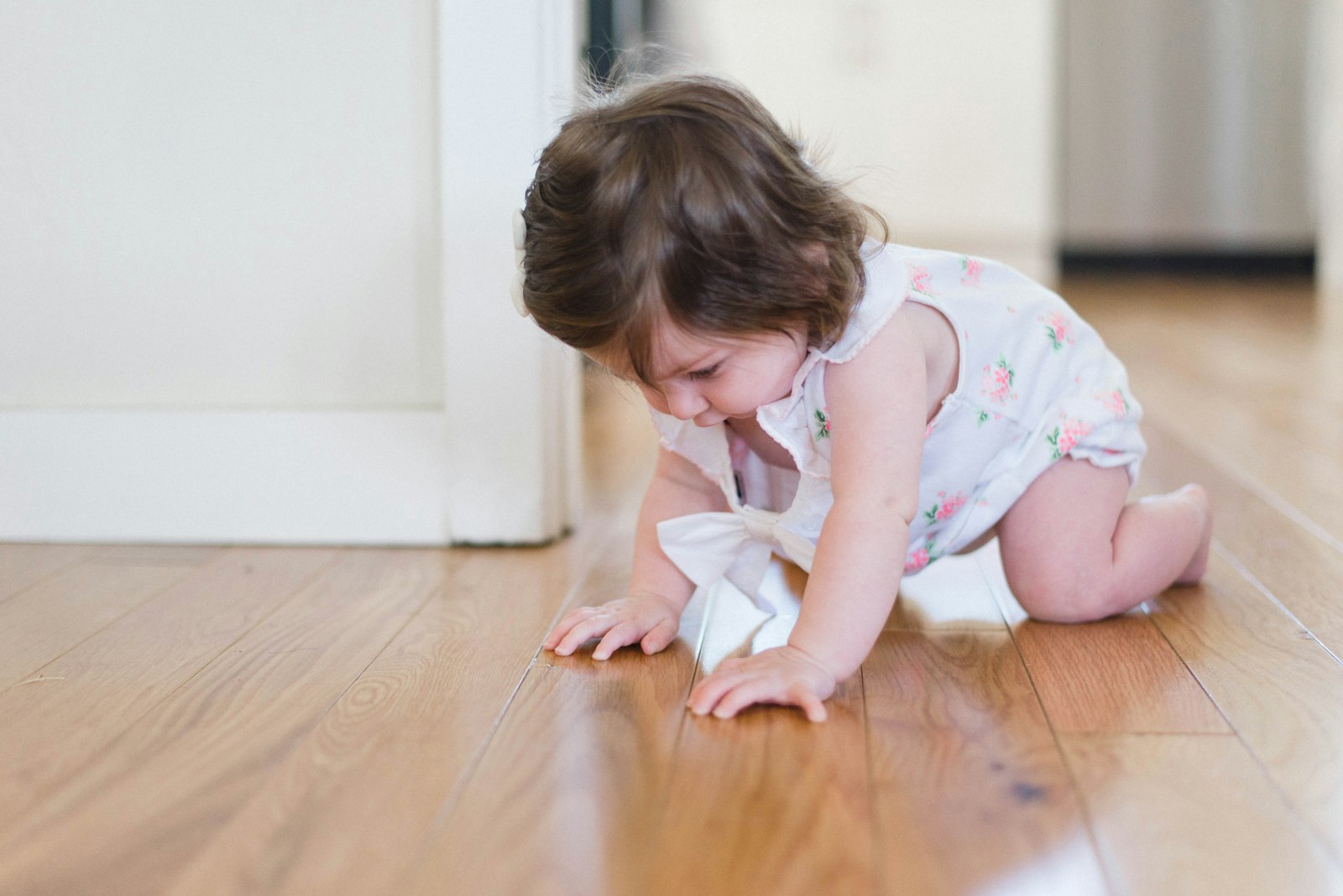
12–15 months: early walking and gross motor play
Balance is still developing, so toys that reward movement without requiring precision tend to land best.
- Ride-on toys that a toddler can push along with their feet before they can pedal.
- Large, soft balls for early throwing and kicking practice.
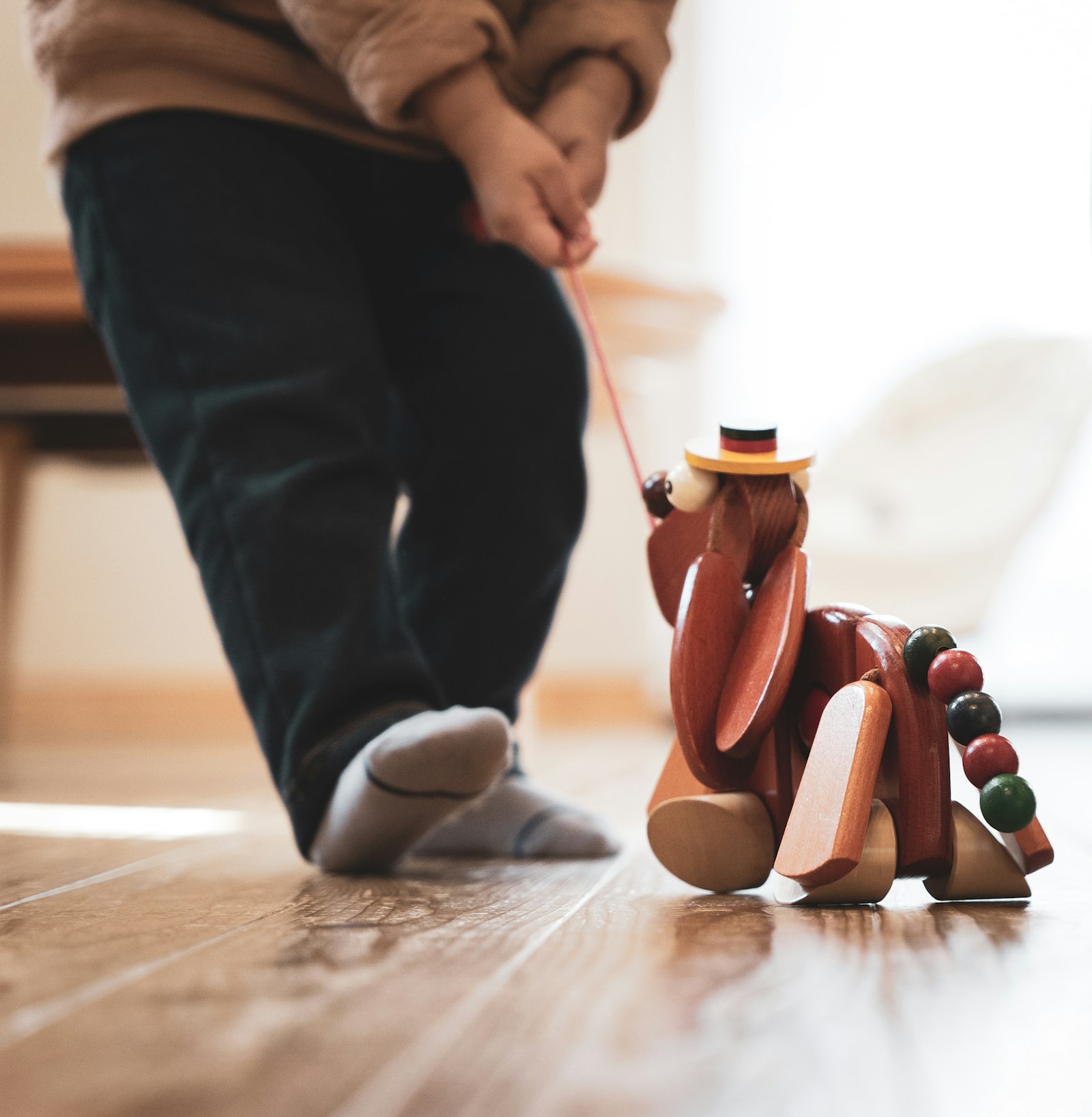
- Simple pull toys that make noise or move in an interesting way when dragged along.
15–18 months: stacking, sorting, and early pretend play
Fine motor control improves enough for real stacking (not just knocking down), and toddlers often start "practicing" adult actions they've observed — feeding a doll, pushing a toy phone to an ear.
- Chunky stacking blocks — look for at least 6–8 pieces so building feels like an actual activity, not a two-second task.
- Shape sorters with more shapes than the simplified 6–10 month versions.
- Simple pretend-play props — a soft doll, a toy phone, a play kitchen piece — introduced without much explanation; toddlers usually figure out the "pretend" on their own.
18–24 months: climbing, problem-solving, and longer attention
Many toddlers can now sustain attention on one activity for several minutes and start solving very simple problems — fitting a shape after a couple of tries rather than needing help every time.
- Simple puzzles with large wooden or chunky plastic pieces, usually 4–9 pieces.
- Ride-on toys with pedals, for toddlers with the coordination to use them (this varies a lot by child).
- Water and sand play toys — cups, scoops, simple pouring tools — for sensory and early cause-and-effect learning outdoors or at bath time.
Choosing for temperament, not just age
Two toddlers at the same age can want very different things from a toy. A cautious toddler may prefer a shape sorter or a stacking set they can master through repetition, building confidence through predictability. A more physical toddler may lose patience with anything that requires sitting still and get far more out of a push toy, a ball, or a low climbing structure. Neither preference is a problem to correct. Age ranges on toy packaging are a starting point, not a rule, and it's worth watching what actually holds your own toddler's attention rather than filling a shelf strictly by the numbers on the box.
Open-ended toys vs. single-purpose toys
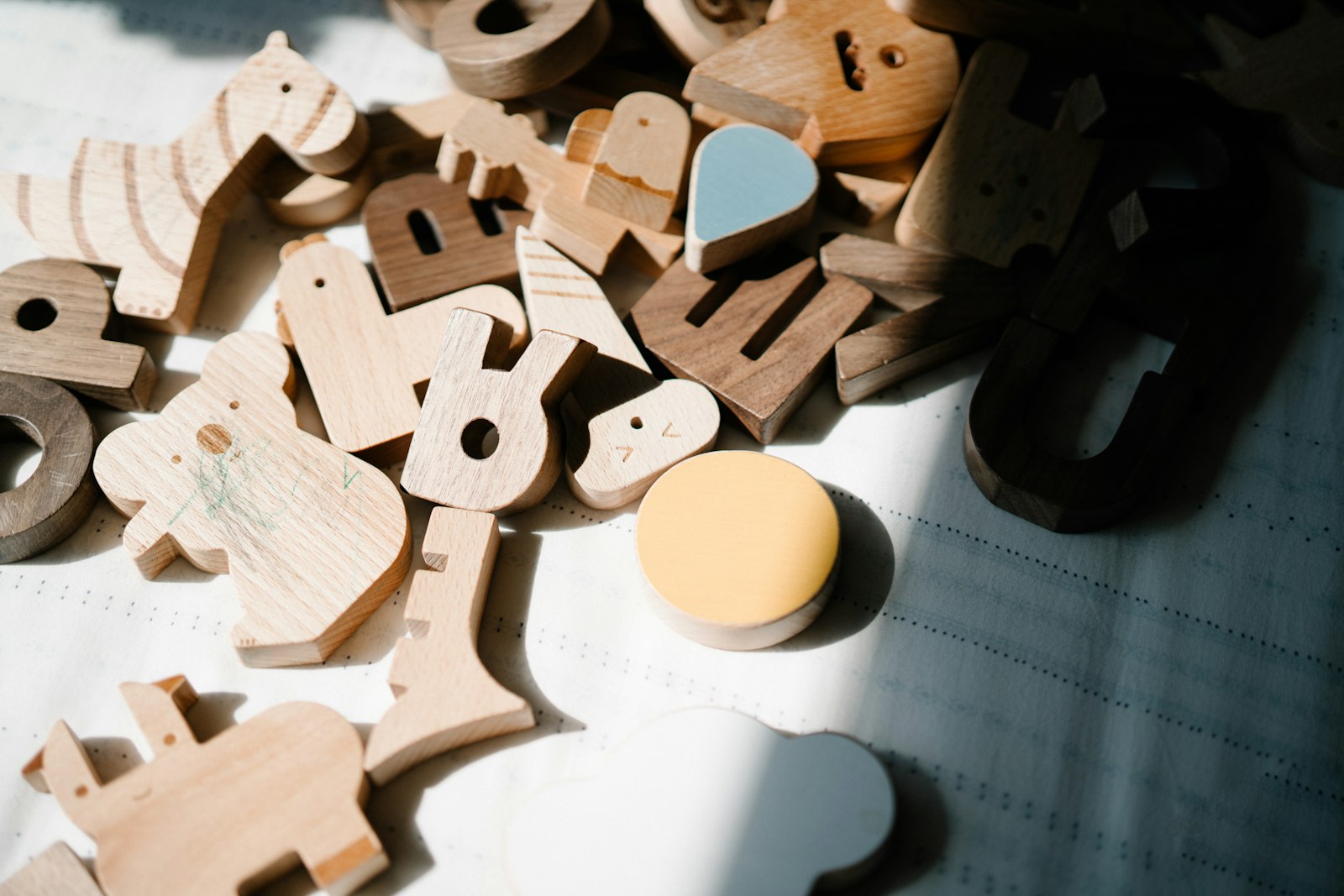
A single-purpose toy does one thing — a shape sorter sorts shapes, a musical toy plays a song when a button is pressed. An open-ended toy can be used many different ways: blocks become a tower, a wall, or a pretend meal; a basket of household objects becomes whatever a toddler decides it is that day. Both have a place at this age, but open-ended toys tend to hold interest longer because they grow with a child's imagination rather than being "solved" once. If your shelves are filling up with single-purpose toys that get a week of interest and then sit untouched, it's worth balancing new purchases toward a few sturdy, open-ended options — plain blocks, a set of stacking cups, a basket of scarves for pretend play — rather than adding another single-function gadget.
Why this stage benefits from toy rotation
Twelve- to twenty-four-month-olds are notorious for both losing interest in a toy within days and rediscovering it with fresh enthusiasm weeks later. Rather than buying continuously to chase novelty, many parents find that keeping two-thirds of the toy collection packed away and swapping a portion back in every couple of weeks recreates that "new toy" excitement without new spending. It also keeps a toddler's play space from becoming visually overwhelming — a smaller, curated set of toys on the floor tends to produce longer, more focused play than a room where every toy is out at once and none holds attention.
Budget toys vs. splurge purchases at this age
This is a good stage to spend selectively rather than evenly. A basic set of wooden blocks, a few board books, and a push-and-pull toy will hold up fine even at a lower price point, since the play value comes from what the toddler does with them, not manufacturing precision. Where it's worth spending more is on anything a toddler will be physically supported by — a ride-on toy with a wider wheelbase and better stability, or a climbing structure with genuinely sturdy joints — since these carry more real safety consequence if the build quality is poor. A useful rule of thumb: spend on stability and safety-critical joints, save on toys that are purely for entertainment value.
What if my toddler seems behind their peers?
Toy preference and skill with specific toys vary a lot between individual toddlers, and a wide range of that variation is completely normal. A toddler who isn't stacking blocks yet at fifteen months isn't necessarily behind; some toddlers focus their energy on gross motor skills like walking and climbing first and catch up on fine motor tasks a bit later, and the reverse happens just as often. What's worth paying attention to isn't whether a toddler matches an average timeline for any one skill, but whether they're making steady progress across skills over a period of months. If you have specific concerns about a skill area, your pediatrician can help sort out normal variation from something worth a closer look, rather than guessing from a toy's age label alone.
What this stage's play is actually building
The skills toddlers practice with these toys carry directly into skills used well beyond the toy itself. Stacking and sorting build the same spatial reasoning used later in early math concepts like "bigger than" and "which one is missing." Pretend play with a toy phone or doll is an early rehearsal of sequencing and cause-and-effect narrative — the building blocks of storytelling. Climbing and balance play build the core strength and proprioception (body awareness) that later supports sitting still and focusing during more structured seated activities, like puzzles or eventually schoolwork. None of this means every toy needs to be "educational" — a toddler figuring out that pressing a button makes noise is doing meaningful cognitive work even when the toy is marketed as pure fun.
Safety standards to look for on the box
Toys sold for this age group in the US should meet federal small-parts rules enforced by the Consumer Product Safety Commission (CPSC), which set minimum size thresholds meant to prevent choking on removable pieces. Many also carry an ASTM F963 mark, an industry-wide standard covering sharp edges, structural strength, and chemical safety in materials and paint. These marks are a reasonable baseline, not a full guarantee, especially for toys bought through third-party online sellers where counterfeit or mislabeled safety marks do occasionally slip through. Checking a toy yourself, in addition to trusting the label, is still worth the extra minute.
Mistakes worth avoiding at this age
- Buying toys a size range ahead "so they'll grow into it." A toddler who can't yet use a toy safely or successfully usually just loses interest, and some 3+ toys carry genuine choking risks for a one-year-old.
- Overfilling the play space. Toddlers this age are easily overwhelmed by too many options at once, which often shows up as flitting from toy to toy without settling into real play.
- Assuming a toy is safe just because it's marketed for toddlers. Marketing language isn't a safety certification, particularly for toys from unfamiliar sellers.
- Skipping supervision on ride-on toys and low climbers because a toddler "seems steady." Balance at this age is still developing and can fail suddenly, especially when a toddler is tired or distracted.
- Ignoring wear and tear on wooden and plastic toys. Cracks, splinters, and loose small parts (like eyes on a stuffed animal) become more likely as toys get more mileage, and toddlers this age still mouth objects sometimes.
Indoor and outdoor play balance
Twelve to twenty-four months is also the age where outdoor, large-muscle play starts mattering as much as tabletop toys. A backyard, a park, or even a hallway for supervised running gives a toddler a chance to burn energy that indoor toys alone can't fully use up, and tired toddlers who've had a chance to move tend to sleep and eat better. You don't need special outdoor toys to make this happen: balls, bubbles, and simple push toys work as well outside as a fully equipped play set. If your toddler seems restless or is having more meltdowns than usual, it's worth checking whether they've had enough active, outdoor time that day before assuming a new toy will fix the mood.
Weather and space limit outdoor time for a lot of families for parts of the year, and that's fine. Indoor alternatives like an obstacle course made from couch cushions, a short dance session, or simply chasing a rolled ball down a hallway cover a lot of the same ground. The goal is movement and a change of pace, not a specific setting.
Our picks
Each pick below was checked against real order and rating data — not pulled from the top of a search page — so every one genuinely holds a 95%+ rating from a meaningful number of real buyers.

1pc Car Steering Wheel Toy Educational Lights Sounds Driving Simulator Toddler…

4-8 Pack 360° Rotating Stunt Car Toys - Friction Powered Toy Cars Push and Go…

Wooden Animal Stacking Block Game Shape Matching Puzzle Balance Toy Montessori…

Wooden Lacing Toy Educational Fruits Threading Activity Puzzles Learning Fine…

Press and Go Car Toys for Toddlers 1-3, Baby Animal Racing Cars, Infant Play V…
Affiliate links — we may earn a commission at no extra cost to you. Learn more.
Safety notes specific to this stage
- Ride-on toys should be weight-rated appropriately and used on flat, supervised surfaces.
- Climbing toys and larger play structures need a soft landing surface and active supervision, not just a nearby adult.
- Small pretend-play accessories (tiny plates, cups, food pieces) are a common choking-hazard blind spot at this age — check sizing carefully.
- Puzzle pieces and shape-sorter shapes should still pass a small-parts choke test at this stage, since mouthing hasn't fully stopped for every toddler.
Full details in our toy safety checklist. The CDC also publishes general child-safety guidance worth a periodic look, especially around choking and product recalls.
Frequently asked questions
My toddler ignores expensive toys but loves boxes and spoons. Is that normal?
Very normal, and not a sign the "real" toys were a waste. Open-ended, everyday objects let a toddler decide what something becomes, which is exactly the kind of imaginative play experts encourage. Keep a few household items in the rotation alongside purchased toys rather than treating it as a problem to fix.
How many toys should be out at once for a toddler this age?
Fewer than it feels like you need. A handful of toys, rotated every week or two, generally produces longer and more focused play than a room where everything is available all at once. If your toddler seems to bounce between toys without settling, try reducing what's accessible rather than adding more.
Are wooden toys safer than plastic ones?
Not automatically. Material matters less than construction quality, size, and lack of small detachable parts. Both wood and plastic toys can be safe or unsafe depending on how they're made; check for smooth edges, secure joints, and appropriate sizing regardless of material.