Photo: Pexels
Toddler milestones between 12 and 36 months span walking, talking, and early problem solving, and they arrive on a wide range rather than a fixed date. The CDC's Learn the Signs, Act Early program defines a milestone as a skill most children, about 75% or more, reach by a certain age. This guide breaks those milestones down by age band, covers gross motor, fine motor, and social-emotional development separately, and explains what to do if your child hasn't reached a particular milestone yet.
Why milestone ranges exist
Every skill on a milestone checklist covers a range of typical ages, not one exact date. A toddler who says their first clear word at 11 months and one who says it at 16 months can both be developing typically. The ranges exist because brain development, motor planning, and even personality all affect timing, and because researchers set the bar at what most children can do, not the earliest a child could possibly do it. Reading a checklist as a strict deadline usually creates more worry than it resolves, and comparing one toddler's timeline directly against a sibling's or a friend's child rarely gives a fair or useful picture of how either child is actually doing.
Milestones at 12 to 15 months
- Takes a few steps without holding on, or walks well if slightly older in this range
- Says one or two words besides "mama" and "dada"
- Points to show you something interesting
- Follows simple one-step directions paired with a gesture, like "give it to me" while you hold out your hand
- Drinks from a cup without a lid, with some spilling
- Copies other people, especially adults and older children
Milestones at 18 months
- Walks without holding onto anything
- Says several single words
- Points to at least one body part when asked
- Scribbles on paper with a crayon
- Drinks from a cup without a lid and may start using a spoon
- Follows one-step directions without a gesture, like "sit down"
Milestones at 24 months
- Kicks a ball and starts to run
- Uses two-word phrases, like "more milk"
- Points to things in a book when asked
- Follows two-step instructions, like "pick up your shoe and give it to me"
- Notices when others are hurt or upset
- Begins simple pretend play, like feeding a stuffed animal
- Sorts shapes and colors, at least in a basic way
Milestones at 30 months
- Uses two- to three-word sentences
- Names at least one color correctly
- Plays alongside other children, even without much direct interaction
- Follows simple routines, like washing and drying hands
- Shows a growing sense of independence, like wanting to choose their own clothes
- Strings items together in play, like stacking more than a few blocks
Milestones at 36 months
- Climbs well and can pedal a tricycle
- Talks in longer sentences and can be understood by people outside the family most of the time
- Follows instructions with two or three steps
- Names most familiar things, like animals in a picture book
- Takes turns in games, at least some of the time
- Shows a wide range of emotions and is beginning to talk about feelings, not just express them physically
Gross motor development across the toddler years
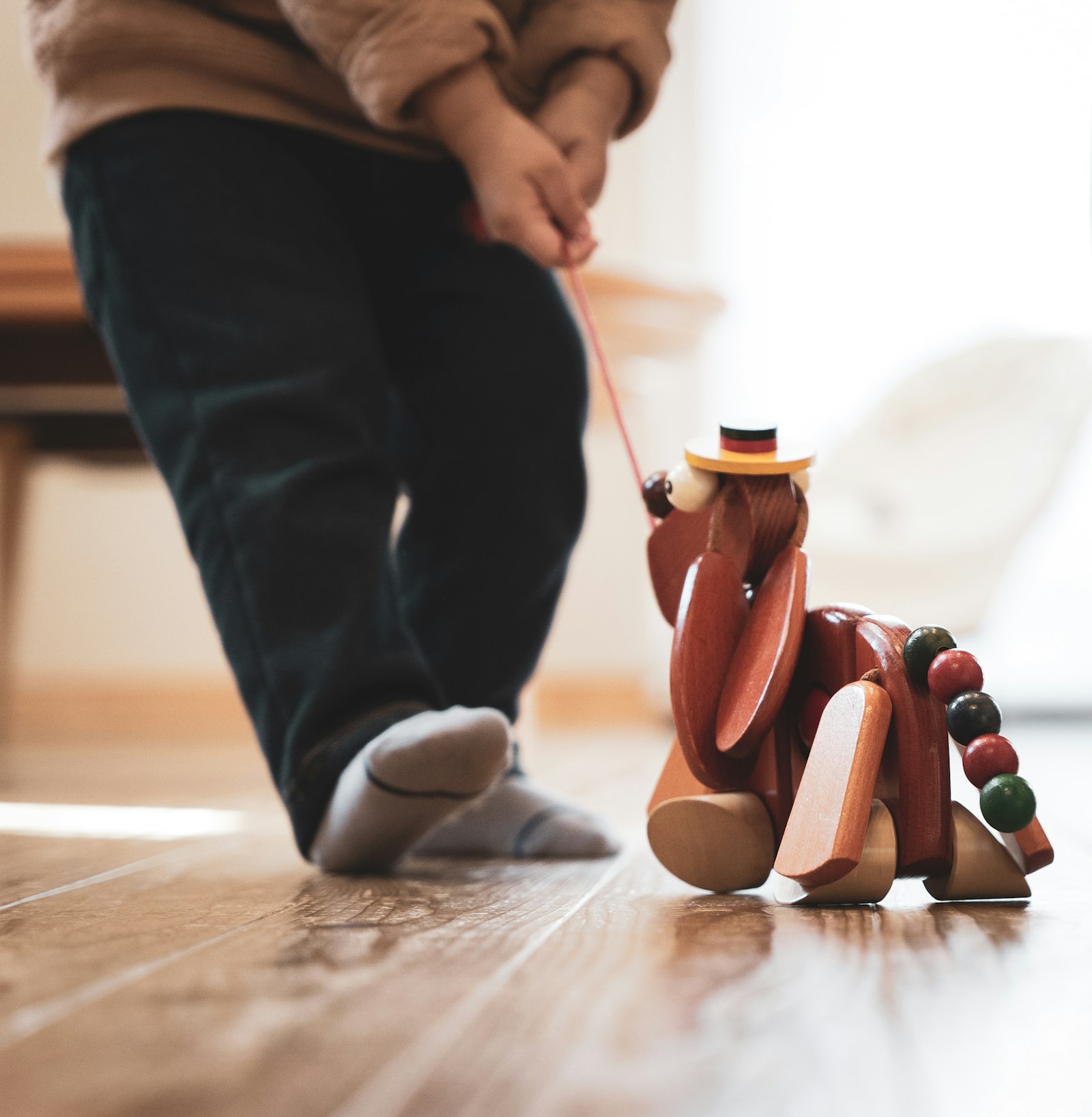
Large muscle movement changes dramatically across this age range, going from unsteady first steps to genuinely athletic coordination. Around 12 to 15 months, most toddlers are working on balance itself, taking a few steps before dropping to sit or grabbing furniture. By 18 months, walking is usually steady enough that a toddler can carry a toy while moving or navigate around furniture without falling constantly. The 2-year mark typically brings running, kicking a ball, and climbing onto furniture with more intention than caution. By 3 years, most toddlers can pedal a tricycle, climb stairs alternating feet rather than placing both feet on each step, and jump with both feet leaving the ground at once, a skill that requires more coordination than it looks like from the outside.
Fine motor development across the toddler years
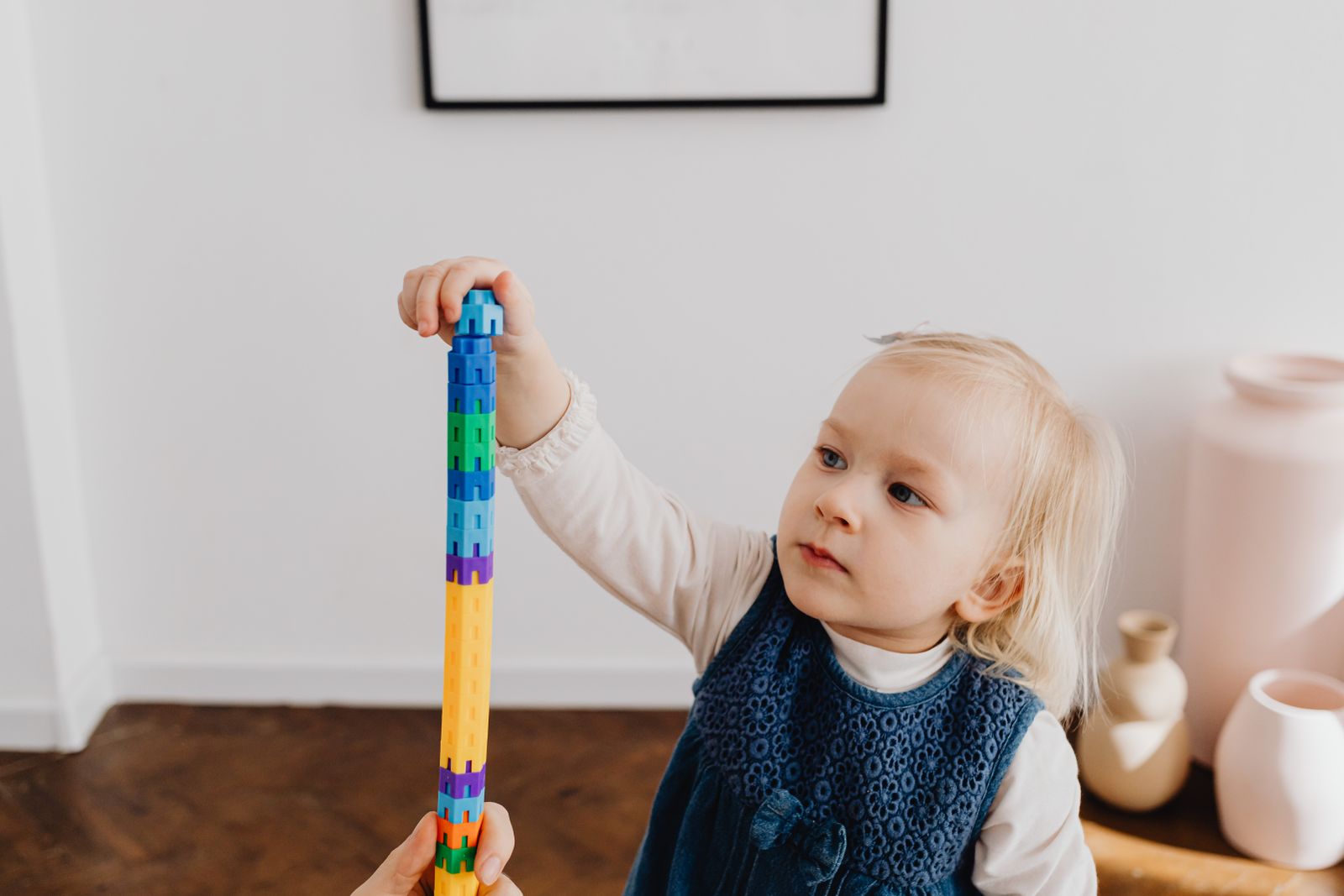
Hand and finger control develops on a parallel but separate track from gross motor skills, which is why a toddler can be an early walker and a later scribbler, or the reverse, without either pattern being unusual. Early in this range, most toddlers use a fist-like grip to hold a crayon and stack just two or three blocks before the tower topples. By 24 months, grip control has usually improved enough to turn pages in a board book one at a time and stack around six blocks. By 3 years, many toddlers can draw a rough circle when shown one, use safety scissors to make a snip in paper (with supervision), and manage buttons or zippers with some adult help. Fine motor skills tend to lag slightly behind gross motor skills for most toddlers, since hand control requires more precise coordination than the larger muscle movements involved in walking or climbing.
Social and emotional milestones
Alongside physical and language skills, this age range brings real shifts in how toddlers relate to people around them. Early on, most toddlers play primarily alongside other children rather than with them, a pattern called parallel play, and this is developmentally appropriate rather than a sign of being unsociable. By around 24 months, brief moments of shared play start to appear, like two toddlers building the same block tower even if they aren't really coordinating with each other. By 3 years, more toddlers can take turns for short stretches, show clear preferences for certain playmates, and begin to use words rather than only physical reactions when they're frustrated, though physical reactions like hitting or grabbing certainly don't disappear overnight. Separation from a parent, comfort-seeking after a fall or fright, and beginning to show empathy when another child is upset are also part of this developmental track, and they tend to develop unevenly rather than in the same tidy order for every child.
Normal variation versus a genuine red flag
Most differences between toddlers fall into normal variation rather than anything concerning. It's useful to know the difference before assuming the worst about a slow start in one area.
- Usually normal variation: walking a few weeks or months later than a sibling did, a smaller vocabulary in a bilingual household, preferring solitary play over group play, being cautious rather than adventurous on playground equipment.
- Worth mentioning at the next visit: not walking independently by 18 months, very few words by 18 months, limited pointing or gesturing to communicate, little interest in interacting with familiar caregivers.
- Worth a call rather than waiting: losing a skill the child previously had, no words at all by 24 months, not responding to their name being called, a sudden and significant change in behavior or ability with no obvious cause.
Developmental screening: what actually happens at checkups
Pediatric guidance from the American Academy of Pediatrics recommends general developmental screening using a standardized tool at the 9, 18, and 30 month well-child visits, along with autism-specific screening at 18 and 24 months. These screenings are usually a short questionnaire a parent fills out in the waiting room or exam room, covering communication, movement, problem solving, and social skills. A screening isn't a diagnosis. It's a structured way to catch patterns that might otherwise get missed in the short time of a single appointment, and most children who screen positive for a concern turn out to be developing typically once evaluated further.
What if my toddler hasn't reached a milestone yet
One missed milestone, especially near the early edge of the typical range, usually isn't cause for alarm on its own. It's worth mentioning at the next well-child visit so it's tracked over time, and worth bringing up sooner if your child is missing several milestones across different areas at once (say, both language and movement), or if they've lost a skill they clearly had before. That second pattern, losing an established skill rather than being slow to gain a new one, is the kind of change pediatricians take most seriously and is worth a call rather than waiting for the next scheduled visit.
Premature birth and adjusted age
For babies born prematurely, pediatricians often use an "adjusted age," which counts from the original due date rather than the actual birth date, when comparing a child to milestone checklists. A toddler born eight weeks early might reasonably reach a 12-month milestone closer to their 14-month actual age, and that gap is expected rather than a sign of delay. Most pediatricians continue adjusting for prematurity through roughly age two, tapering off as the gap becomes less developmentally meaningful.
Bilingual and multilingual households
Toddlers learning two or more languages at home sometimes have a smaller vocabulary in each individual language during the toddler years compared to a monolingual peer, even though their combined vocabulary across both languages is often similar or larger. This is a well documented, normal pattern rather than a sign of delay, and most bilingual children catch up to monolingual peers in each language by early elementary school. Speech and language milestones for bilingual toddlers should generally be evaluated across both languages combined, not against either language alone.
Milestones that involve more than one skill at once
Some of the more telling milestones in this age range combine two abilities rather than testing one skill in isolation. Pointing to something while making eye contact to see if you noticed, for example, blends a physical gesture with an early social skill called joint attention, the ability to share focus on something with another person. Pretend play, like feeding a doll, blends fine motor coordination with imagination and early symbolic thinking. Pediatricians and early interventionists often pay close attention to these combined-skill milestones specifically, since a gap in them can sometimes surface before a gap in a single, more isolated skill would.
Supporting milestones through everyday play
Most toddler milestones develop through ordinary daily interaction rather than structured lessons or flashcards. Narrating what you're doing during routine tasks (folding laundry, making a snack) builds vocabulary passively. Reading the same favorite book repeatedly, even when it feels repetitive to an adult, reinforces language patterns and builds the kind of predictable structure toddlers use to make sense of speech. Simple back and forth games, like rolling a ball or taking turns stacking blocks, build both motor skills and the early social turn-taking that shows up later in cooperative play with other children. None of this requires special toys or planned activities; toddlers pick up most of these skills through repeated, low-key exposure during a normal day, which is part of why pediatricians rarely recommend formal teaching over ordinary interaction at this age.
Frequently asked questions
What are the most important toddler milestones to track?
Walking independently, saying first words, following simple directions, and beginning to use two-word phrases are among the milestones pediatricians watch most closely, since delays in these areas are the most common reason for further evaluation.
What if my toddler hasn't reached a milestone yet?
A single missed milestone rarely means much on its own, since the typical range for most skills spans several months. Mention it at your next well-child visit, and bring it up sooner if your child is missing several milestones at once or losing a skill they previously had.
When are toddlers screened for developmental delays?
The American Academy of Pediatrics recommends general developmental screening at 9, 18, and 30 months, plus autism-specific screening at 18 and 24 months, or at any age if a parent or provider has a concern.
Do milestone checklists apply the same way to every child?
Not exactly. Checklists describe what most children (about 75% or more) can do by a given age, so plenty of typically developing toddlers reach a given skill somewhat earlier or later. Premature birth, bilingual households, and individual temperament can all shift the timing without indicating a problem.