Photo: Pexels
After an uncomplicated vaginal delivery, most people can start gentle activity, like short walks and pelvic floor exercises, within days of giving birth, according to guidance from the American College of Obstetricians and Gynecologists. Returning to a full workout routine typically happens gradually over the following weeks, with most providers clearing moderate exercise around the standard six-week postpartum visit. A C-section or a delivery with complications usually calls for a slower, provider-guided timeline, and no two recoveries look exactly the same even when the delivery type matches.
Why postpartum exercise timing is individual
Two people who both had healthy pregnancies can still need very different recovery timelines, depending on delivery type, tearing or a C-section incision, prior fitness level, and how the body is actually feeling day to day. A general timeline is useful for setting expectations, but it isn't a substitute for individual clearance from a provider, especially since the visible outside of the body often heals faster than the internal muscles, ligaments, and connective tissue that were significantly stretched or altered during pregnancy and delivery. Two people recovering from what looks like the same type of delivery on paper can genuinely be ready for different levels of activity within the same week.
The general timeline
- First few days: gentle pelvic floor exercises (Kegels) and short, easy walks, as tolerated.
- First 1 to 2 weeks: gradually longer walks, continued pelvic floor work, basic breathing and posture exercises.
- 2 to 6 weeks: light strength work and low-impact activity for many people, depending on how recovery is progressing and with attention to any bleeding or pain.
- Around 6 weeks: a standard postpartum checkup where many providers formally clear moderate to vigorous exercise, assuming recovery is on track.
- Beyond 6 weeks: gradual return to pre-pregnancy activity levels, adjusting based on core and pelvic floor strength rather than a fixed calendar date.
Vaginal delivery versus C-section recovery
A straightforward vaginal delivery without significant tearing generally allows for an earlier return to light activity than a C-section, which is major abdominal surgery regardless of how routine it has become. After a C-section, most providers recommend avoiding heavy lifting (often defined as anything heavier than the baby), core-intensive exercise, and high-impact activity until the incision has fully healed and a provider has examined it, usually at or after the six-week mark. Vaginal deliveries involving significant tearing or an episiotomy also warrant a more cautious, individualized timeline rather than following the fastest possible general guidance.
Starting with the pelvic floor, not the abs
Pregnancy and delivery place significant strain on the pelvic floor, the group of muscles supporting the bladder, uterus, and bowel, regardless of delivery method. Rebuilding pelvic floor strength before returning to more demanding exercise helps prevent issues like urinary leaking and can reduce the risk of pelvic organ prolapse later on. Simple Kegel exercises, done correctly (contracting as if stopping the flow of urine, then fully relaxing), are usually the safest and most useful starting point, often before any other postpartum exercise begins in earnest.
Diastasis recti and core exercise
Diastasis recti, a separation of the abdominal muscles along the midline, is extremely common after pregnancy and often improves on its own over the following months. Traditional crunches and sit-ups can worsen the separation in the early postpartum period, which is why they're generally discouraged until the gap has narrowed and a provider or pelvic floor physical therapist has confirmed it's safe to progress. Gentler core activation exercises, like pelvic tilts, transverse abdominis breathing, and modified planks, are typically a safer entry point, with more demanding core work added back gradually.
Breastfeeding and exercise
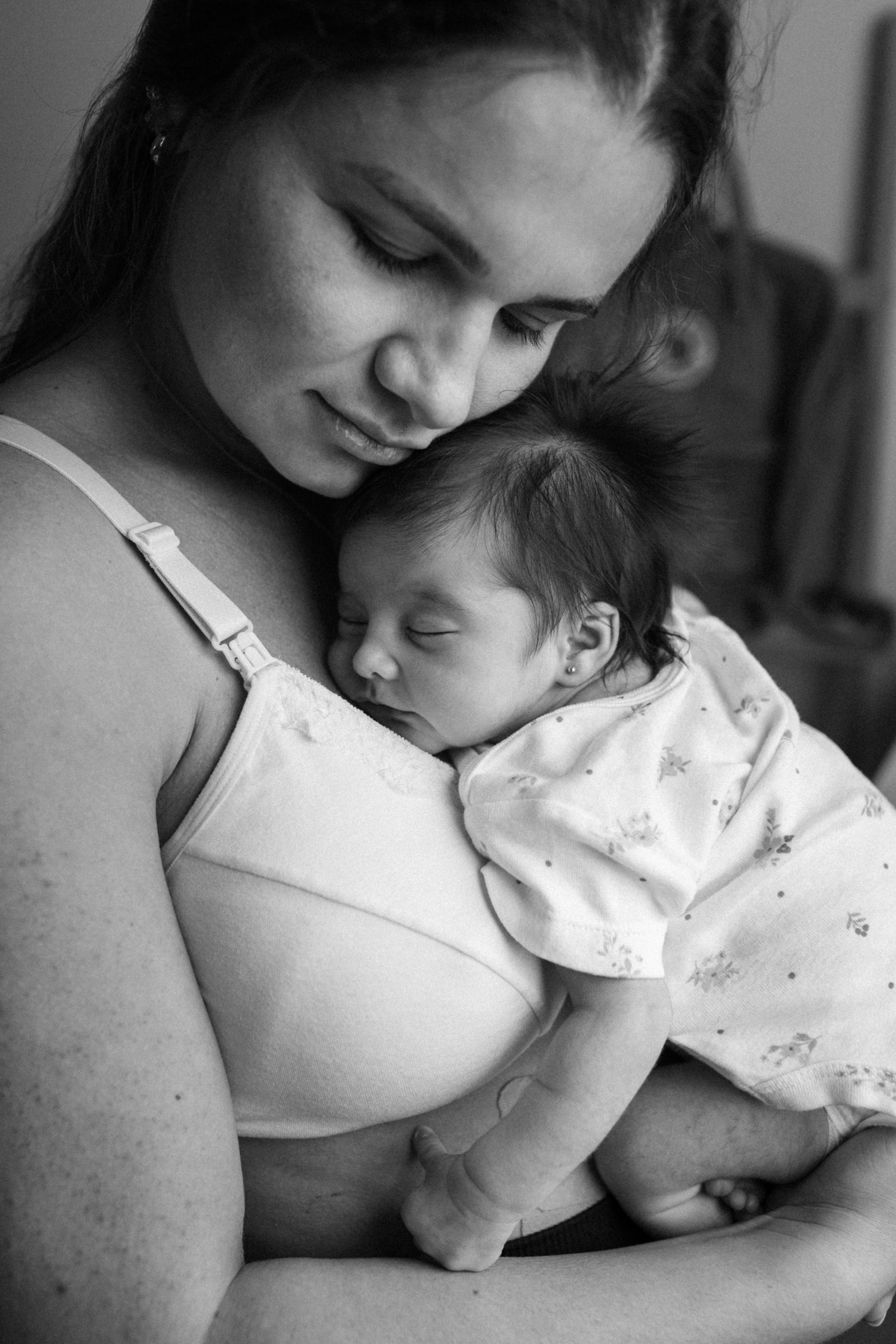
Moderate exercise doesn't reduce milk supply or change milk composition in ways that affect a baby, and there's no medical reason to avoid it while breastfeeding. Some people find nursing or pumping shortly before a workout more comfortable, since breasts are lighter and less full, and a well-fitted, supportive sports bra makes a noticeable difference in comfort. Staying adequately hydrated matters more during this period, since both breastfeeding and exercise increase fluid needs, and it's worth eating enough overall too, since breastfeeding itself already carries meaningful additional calorie and nutrient demands before exercise is added on top.
Sleep deprivation and realistic expectations
Postpartum exercise recommendations are often written as though sleep and time are unlimited, which rarely matches the reality of caring for a newborn. It's reasonable, and common, for exercise to look different for months: shorter sessions, less consistency, more walks with a stroller than structured workouts. Building any kind of movement into a heavily disrupted, exhausting stretch of life is a real accomplishment on its own, and it doesn't need to look like a pre-pregnancy fitness routine to count as meaningful progress.
Warning signs to stop and check with a provider
- Increased vaginal bleeding or a return of bright red bleeding after it had slowed
- Any pain, pulling, or a bulging sensation at a C-section incision
- Pelvic pain, pressure, or a feeling of heaviness in the vaginal area
- Leaking urine that is new, worsening, or happening with everyday movement rather than just intense activity
- Dizziness, unusual shortness of breath, or chest pain during activity
Any of these warrant slowing down and checking in with a provider rather than pushing through, since they can signal that the body isn't ready for the current level of activity yet. None of them are a reason to abandon exercise altogether, just to pause the current intensity and get evaluated before continuing.
Simple exercises that work well early on
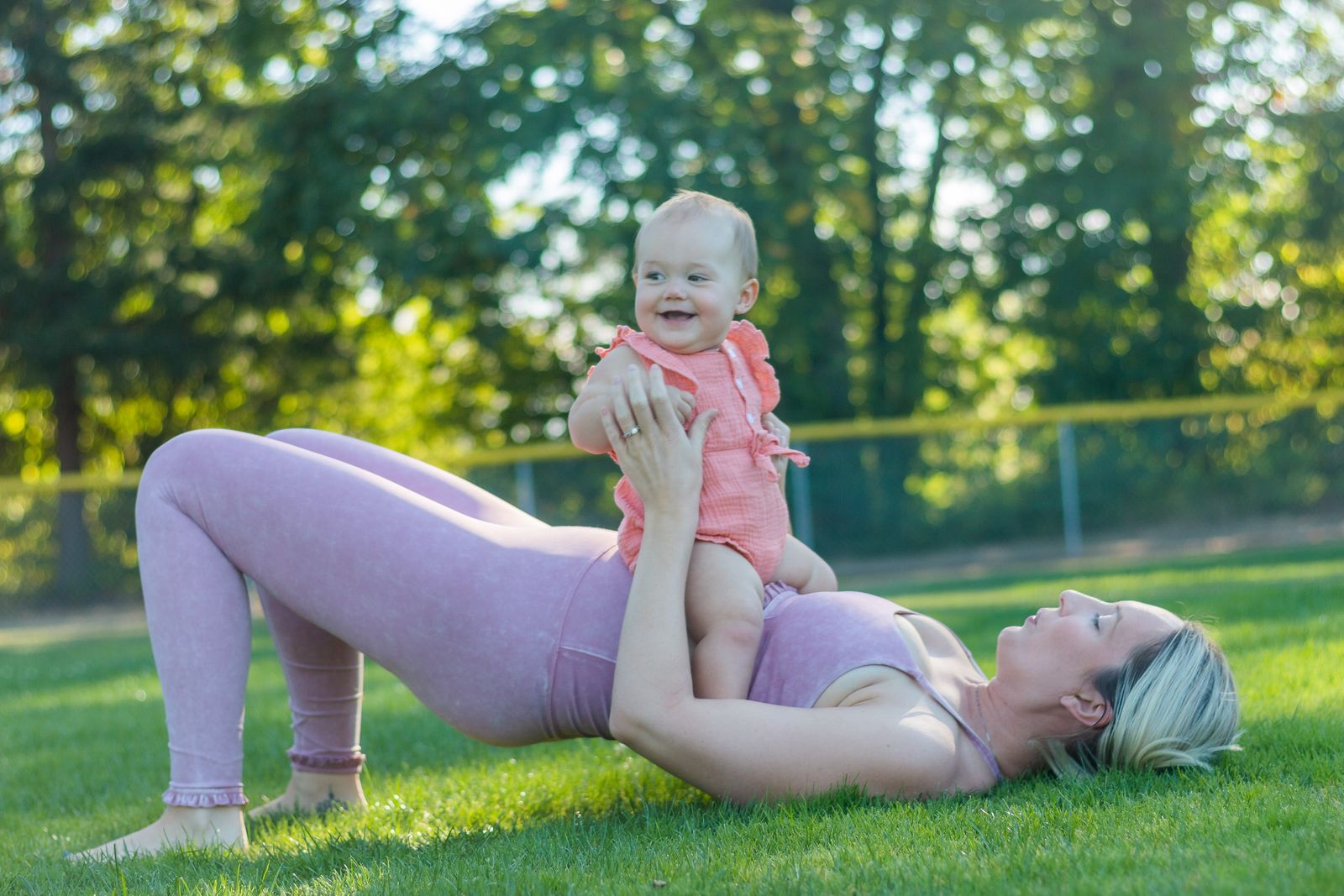
A few low-risk options give many people a reasonable starting point once they've been cleared for light activity: walking at a comfortable pace, gradually increasing distance or duration; pelvic tilts, done lying down or standing, to gently engage the core without strain; and modified glute bridges, which build lower body and core strength without putting direct pressure on a healing pelvic floor or abdominal incision. Adding a baby carrier to a walk, once cleared, is a practical way to combine light cardio with time spent with a newborn, though it's worth checking that the carrier itself is a good ergonomic fit for both parent and baby.
Beyond these basics, gentle bodyweight movements like standing wall push-ups, seated marches, and supported side-lying leg lifts can round out an early routine without requiring equipment or a gym membership. The common thread across all of these options is low impact and controlled movement: nothing that involves jumping, sudden direction changes, or heavy loading through the core in the first several weeks, regardless of delivery type.
Postpartum depression, anxiety, and movement
Exercise isn't a treatment for postpartum depression or anxiety on its own, and it shouldn't replace proper screening and care when those conditions are present. That said, regular movement, even a short daily walk, is associated with modest improvements in mood and energy for many postpartum people, likely through a mix of physical activity itself, the mental break it provides, and often the simple change of scenery that comes with stepping outside. If you're not sure whether what you're feeling is ordinary exhaustion or something that warrants more support, a screening conversation with your provider is worth having regardless of your exercise habits, since postpartum mood disorders are common and treatable.
Finding time to exercise with a newborn
Realistically, unstructured newborn schedules make consistent, dedicated workout time hard to come by for most new parents. A few practical approaches tend to work better than trying to protect a full uninterrupted session: exercising during a predictable nap window, even a short one, rather than waiting for a longer stretch that may not come; splitting movement into several short bouts across the day (a 10-minute walk in the morning, another after a feed) rather than one long session; and involving the baby directly through babywearing walks, stroller walks, or floor-based exercises done next to the baby during awake time. None of these require a gym or childcare, which matters in the early months when both are often in short supply.
Pelvic floor physical therapy: when it's worth seeking out
Pelvic floor physical therapy has become a more mainstream postpartum recommendation in recent years, and for good reason: a specialist can assess pelvic floor strength and coordination directly, rather than relying on generic exercise advice that may not fit an individual body's specific needs. It's worth actively seeking out, rather than waiting to be offered it, if you're experiencing ongoing urinary or bowel leaking, pelvic pain, pain during sex months after clearance to resume, or a persistent sense of pelvic heaviness or bulging. Some countries and health systems routinely refer every postpartum patient to pelvic floor therapy regardless of symptoms; in places where that isn't standard, asking your provider for a referral directly is a reasonable and increasingly common thing to do.
Setting realistic goals for the first year
Framing postpartum fitness around returning to a specific pre-pregnancy weight or appearance tends to set up frustration, since the body that carried and delivered a baby has gone through real, sometimes permanent changes that exercise alone won't reverse, and doesn't need to for health and function to return. Goals centered on capability, like walking a certain distance comfortably, returning to a favorite activity, or simply having more energy for the demands of caring for a newborn, tend to hold up better over the unpredictable first year than goals centered on appearance, and they're a more accurate reflection of what exercise is actually doing for the body during this period. A goal that survives a rough week of no sleep is a more useful goal than one that only works on a good day.
Rebuilding fitness after a long break from exercise
Even people who exercised regularly before and throughout pregnancy often lose a meaningful amount of conditioning by the time they're cleared to return, simply from months of reduced activity, disrupted sleep, and the physical demands of late pregnancy and early postpartum life. Starting back at pre-pregnancy intensity levels is a common way to get injured or discouraged. A more sustainable approach treats the first few weeks back as genuinely new training, at a noticeably lower intensity and volume than before pregnancy, with the expectation of building back gradually over a couple of months rather than a couple of sessions. Tracking effort by how a session feels, rather than by pace or weight lifted compared to a pre-pregnancy benchmark, tends to keep this period from feeling like a discouraging step backward.
Frequently asked questions
How soon after birth can I start exercising?
After an uncomplicated vaginal delivery, gentle activity like short walks and pelvic floor exercises can often start within days, as soon as it feels comfortable. After a C-section or a delivery with complications, check with your provider first, since recovery timelines vary more.
When can I return to my regular pre-pregnancy workout routine?
Many providers clear moderate to vigorous exercise around 6 weeks postpartum at the standard postpartum checkup, though the right timeline depends on your delivery, any complications, and how your body feels. Some people with straightforward vaginal deliveries and a strong pre-pregnancy fitness base return sooner with their provider's approval.
Is it normal to leak urine when exercising postpartum?
It's common but not something to just accept indefinitely. Mild, temporary leaking during the early postpartum weeks often improves with pelvic floor exercises. Leaking that persists, worsens, or happens with normal daily activity is worth mentioning to your provider or a pelvic floor physical therapist.
Can I do abdominal exercises right after having a baby?
Traditional crunches and sit-ups are generally discouraged in the early postpartum period, especially if you have diastasis recti (abdominal muscle separation). Gentle core activation exercises, like pelvic tilts and deep breathing work, are usually a safer starting point, with a provider or pelvic floor specialist guiding when to progress.