Photo: Unsplash
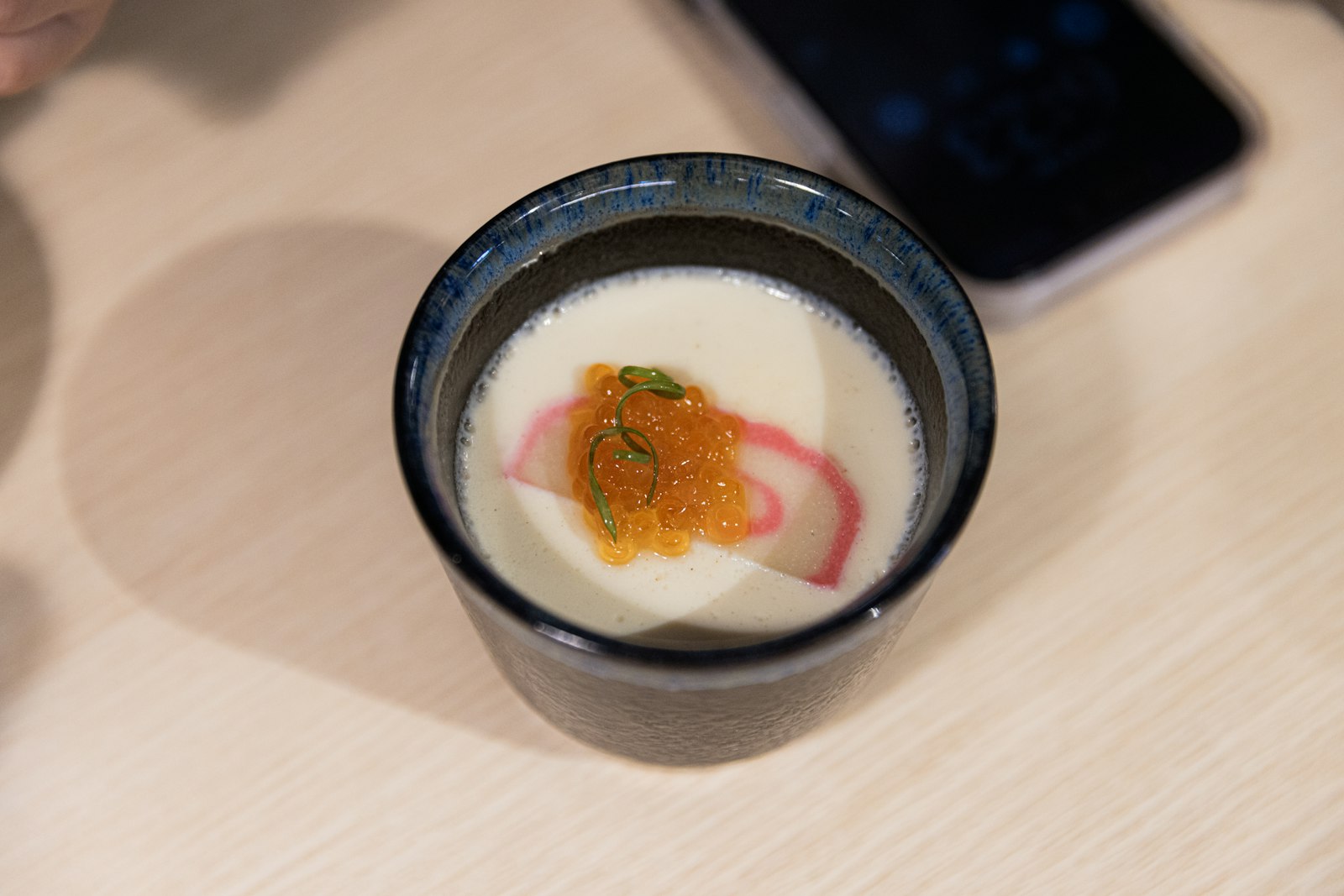
Steamed egg custard — known as chawanmushi in Japan and popular across many other East Asian kitchens — is silky, mild, and naturally soft, making it an easy way to offer egg as a protein source to babies and toddlers.
Beyond being a good baby and toddler food, it is also a genuinely pleasant dish for the whole family, quick to put together, gentle on the stomach, and easy to dress up with different additions once everyone is used to the base version. Many families that start making this for a baby end up keeping it in the regular dinner rotation long after the baby has grown into a toddler eating everything else at the family table without any special preparation.
Ingredients
- 2 eggs
- 1 cup low-sodium chicken or vegetable broth (cooled)
- A pinch of finely chopped soft vegetables, optional
Instructions
- Whisk the eggs gently, trying not to create too many bubbles.
- Slowly whisk in the cooled broth until well combined.
- Strain the mixture through a fine sieve for the smoothest texture.
- Pour into small heatproof cups or a shallow dish.
- Cover loosely and steam over simmering water for 12-15 minutes, until just set with a gentle jiggle in the center.
- Cool until safe to eat, then serve as-is or with finely chopped soft vegetables stirred in.
Getting the silky texture
Two things make the biggest difference: whisking gently to avoid air bubbles, and straining the mixture before steaming — both steps help avoid a rubbery or overly bubbly texture.
Regional variations worth knowing
Steamed egg custard appears across several East Asian cuisines with small differences worth knowing if you want to explore beyond the basic version. Japanese chawanmushi is traditionally served in a small lidded cup and often includes a piece of chicken, shrimp, or ginkgo nut for adults, though these can simply be left out for a baby-friendly version. Chinese steamed egg (zheng dan) is typically made in a wider shallow dish and sometimes topped with a small drizzle of soy sauce and sesame oil once it is done, appropriate for older toddlers who have already had both ingredients. Korean gyeranjjim is often steamed in an earthenware pot and can be slightly more savory, with scallion and sometimes a bit of shrimp folded in. All three share the same core method described here, just with different broths, toppings, and serving vessels.
Equipment that helps
A steamer basket set over a pot of simmering water works fine, but a few tools make the process smoother. Small heatproof ramekins or teacups give you individual, toddler-sized portions that are easy to cool and serve directly. A fine-mesh sieve is worth having specifically for straining the egg mixture, since this step matters more here than in almost any other egg dish. If your steamer lid tends to drip condensation onto the custard as it cooks, wrapping the lid in a clean kitchen towel before covering the pot absorbs the moisture and helps prevent small pockmarks on the surface.
A note on introducing egg
Egg is a common allergen, so if this is one of the first times your child is trying it, introduce it on its own in a small amount first and watch for any reaction before offering a mixed dish like this one. For more background on introducing egg and other common allergens safely, the HealthyChildren.org allergy and asthma section from the American Academy of Pediatrics is a reliable reference to read alongside your pediatrician's guidance.
Choosing the right broth
A mild, low-sodium broth keeps the flavor gentle and appropriate for a young child's palate — homemade unsalted stock is ideal if you have it, but a store-bought low-sodium version works fine too, since egg custard doesn't need much seasoning to taste good. Avoid regular broths and bouillon cubes, which are often quite high in sodium; babies and toddlers need far less salt than adults, and their kidneys can't process excess sodium as efficiently. If you'd rather skip broth entirely, plain water works as a substitute, though the flavor will be noticeably milder.
Add-ins once the base is well tolerated
Once your child has had plain steamed egg custard a few times without issue, small additions can add nutrition and interest. Finely diced soft mushroom, a spoonful of cooked shrimp cut very small, or shredded soft-cooked chicken are traditional additions in many East Asian versions of this dish. Keep any new ingredient introduced on its own first, and cut everything small enough that it disappears easily into a spoonful of the custard rather than requiring much chewing or extra effort from a young eater.
Serving by age
For babies around 10 to 12 months, serve the plain custard mashed slightly with a spoon and offer it in small amounts, since the texture is new even though it is soft. For toddlers 18 months and up, small cubes cut with a butter knife can be picked up with fingers or a fork, which is good practice for self-feeding a soft, wobbly texture without much risk. Older toddlers and preschoolers can usually handle the dish with light add-ins like finely diced mushroom or shredded chicken mixed in, and by this age it works well as a simple side dish alongside rice and vegetables rather than needing to be a standalone meal on its own plate.
Food safety with eggs
Because this dish is not fully firm the way a hard-boiled or well-scrambled egg is, it is worth making sure it reaches a fully set, cooked consistency rather than serving it while still runny or liquid in the center, since undercooked egg carries a risk of foodborne illness separate from any allergy concern. Use pasteurized eggs if you have any concern about egg safety in your area, and always cook to the full recommended time rather than under-steaming to preserve a jigglier texture. Leftovers should go into the refrigerator within about two hours of cooking, the same rule that applies to other egg-based dishes.
Nutrition notes
Eggs are a complete protein and a good source of choline, an important nutrient for early brain development that many young children don't get enough of. The broth adds a small amount of extra flavor and nutrients without adding significant calories, and the smooth, soft texture makes this one of the easier ways to get a meaningful amount of protein into a baby or toddler who is still building up their eating skills. Because the dish is naturally low in added sugar and, when made with low-sodium broth, low in sodium as well, it fits easily into a broader pattern of minimally seasoned early foods.
Troubleshooting common issues
If your custard comes out with small holes or a bubbly, uneven surface, the steaming temperature was likely too high — keep the water at a gentle simmer rather than a rolling boil, and cover the cups loosely (or with foil) to prevent condensation from dripping onto the surface as it cooks. A custard that seems runny even after the full cooking time may need a few more minutes; check by gently shaking the cup rather than poking it, since poking can deflate the delicate set. If it turns out rubbery, it was likely overcooked or whisked too vigorously, incorporating too much air.
If the custard tastes bland even after cooking, the issue is usually the broth rather than the egg itself; a broth with a bit more depth (simmered longer, or with a few aromatics like ginger or scallion strained out before use) makes a noticeable difference without needing any added salt. If different cups in the same batch cook unevenly, check that they are the same size and depth and placed with even spacing in the steamer, since crowding or uneven cup sizes can cause some portions to finish before others.
Storage
Steamed egg custard is best enjoyed fresh, since the texture is at its silkiest right after cooking, but leftovers can be refrigerated in an airtight container for up to 2 days. Reheat gently — a brief re-steam or a few short bursts in the microwave at low power works better than high heat, which can quickly turn the delicate custard rubbery and unpleasant. This recipe does not freeze well, as the texture breaks down significantly once thawed.
Common mistakes to avoid
- Whisking too vigorously: a gentle hand keeps air bubbles out of the mixture, which is the main thing standing between a silky custard and a bubbly, uneven one.
- Skipping the strain: even a careful whisk leaves some undissolved bits of egg white; straining is a quick step that makes a noticeable difference in the final texture.
- Steaming at too high a heat: a rolling boil cooks the surface faster than the center, leading to holes and a rubbery texture rather than an even, gentle set.
- Using hot broth in the mixture: hot liquid can partially cook the egg before it even reaches the steamer, resulting in small curds instead of a smooth custard; always cool the broth first.
- Not covering the dish while steaming: an uncovered custard is more prone to condensation dripping onto the surface, which creates small dents and an uneven top.
Myths about egg and babies
- Myth: egg should be delayed until after the first birthday. Current guidance generally supports introducing well-cooked egg as early as 6 months, since early, regular exposure appears to reduce the risk of developing an egg allergy rather than increase it.
- Myth: egg yolk and egg white need to be introduced separately. Most current guidance treats whole egg as the standard approach for healthy babies without a known risk factor; separating yolk and white is not generally necessary.
- Myth: a runny or soft-boiled egg is fine for a baby. Undercooked egg carries a foodborne illness risk unrelated to allergy status, so egg served to babies and young children should always be cooked until fully set.
A real-life scenario: the reluctant egg eater
Scrambled egg is a common first way to introduce egg, but not every baby takes to its slightly rubbery, crumbly texture right away. Steamed egg custard often works as a helpful alternative for exactly this reason: its silky, almost pudding-like consistency is closer to foods babies already accept well, like yogurt or a smooth puree, which can make it an easier entry point for a baby who has previously turned away from drier, chunkier forms of egg. Some families introduce egg through custard first and move to scrambled or hard-boiled egg later on, once their baby is more comfortable and confident with a wider range of textures generally.
Frequently asked questions
At what age can babies have egg?
Many current guidelines support introducing well-cooked egg as early as 6 months as part of starting solids, since early exposure may help reduce the risk of egg allergy — check with your pediatrician about timing for your child.
Why strain the egg mixture?
Straining removes any remaining bits of egg white that did not fully whisk in, which is what gives steamed egg custard its signature ultra-smooth, silky texture rather than a bumpier scrambled-egg consistency.
How do I know when the custard is done steaming?
It should look just set with a slight jiggle in the very center — similar to a soft-set gelatin. Overcooking tends to make it rubbery and can cause small holes or bubbles to form.
Can I make this dish without a steamer?
Yes — a metal colander or a heatproof plate set inside a large pot with a couple of inches of simmering water works as an improvised steamer. Cover the pot with a lid and check for doneness the same way as with a dedicated steamer basket.
Does this recipe freeze well?
No — steamed egg custard's texture breaks down significantly once frozen and thawed, so it is best made fresh or kept refrigerated for up to about 2 days.