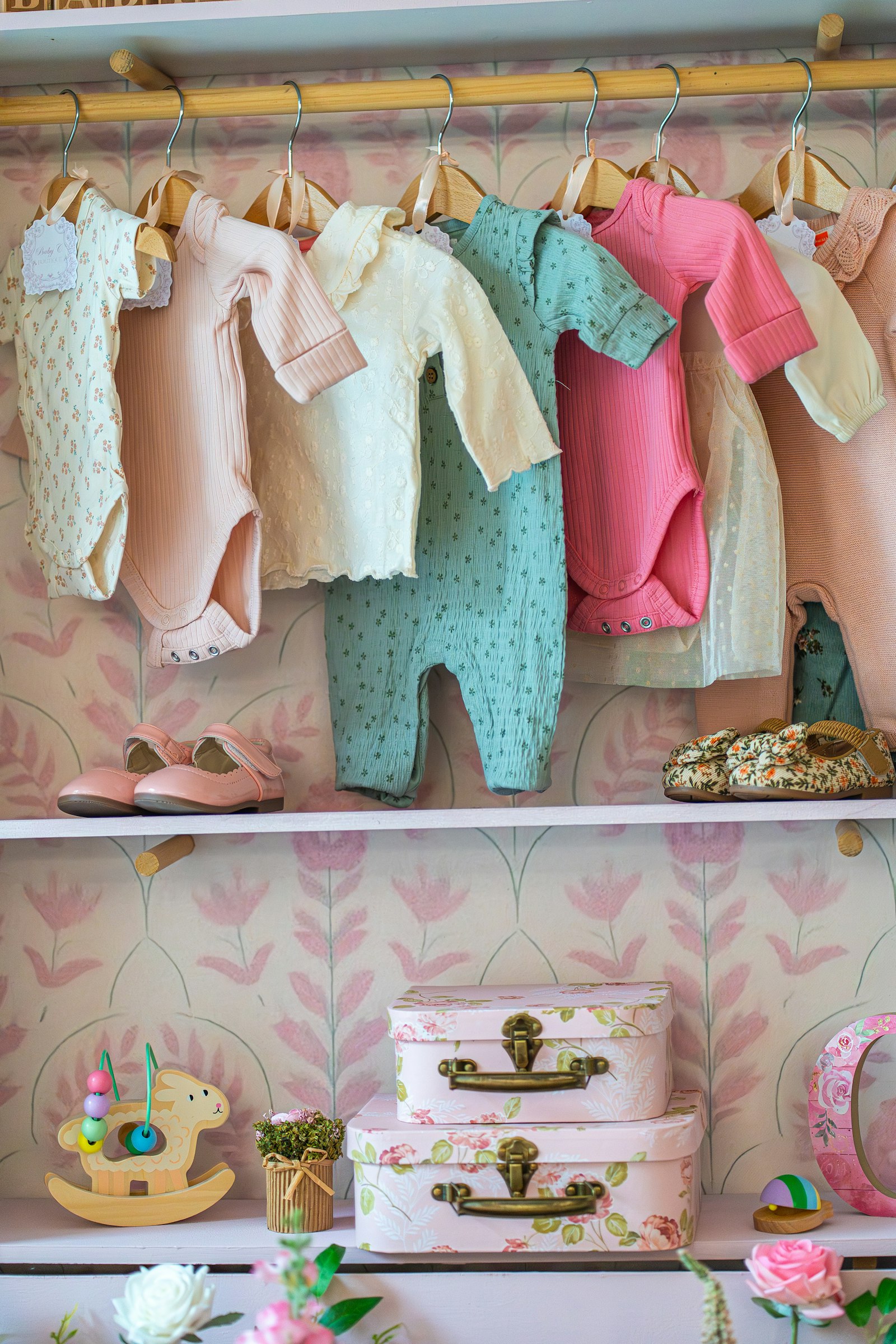
Photo: Unsplash
Cost estimates for a baby's first year vary widely depending on where you live, whether you buy new or secondhand, and choices like childcare — but breaking the categories down helps you budget realistically rather than guessing.
Major cost categories
- Gear — crib, car seat, stroller, and other one-time purchases.
- Diapers and wipes — an ongoing, recurring cost for a couple of years.
- Feeding — formula, bottles, or breastfeeding supplies.
- Clothing — babies outgrow sizes quickly, so this adds up in small purchases.
- Childcare — often the single largest cost for working parents, and varies enormously by area.
- Healthcare — deductibles, copays, and any costs insurance doesn't cover.
Where secondhand makes sense
Clothes, some toys, and many types of gear (that meet current safety standards and aren't recalled) are commonly bought secondhand without much downside. Car seats are the exception many experts recommend buying new, since crash history and expiration dates aren't always verifiable secondhand.
Ways to reduce first-year costs
- Ask about hand-me-downs from friends or family before buying new.
- Register for practical essentials rather than only "wish list" items.
- Compare diaper and formula prices across stores and buy in bulk where it makes sense.
- Hold off on gear that isn't needed right away (some toys, later-stage items).
- Check if your employer or insurance offers any parental benefits you haven't used.
Building a realistic first-year budget
Rather than pulling a single national average figure and hoping it applies, it helps to build your own estimate category by category, using your actual local prices. Start with the recurring costs — diapers, wipes, formula if you're using it — since those add up fastest and are easiest to price out from a store visit or a quick online check. Then layer in the one-time gear purchases, remembering that you rarely need everything at once; a newborn doesn't need a highchair or convertible car seat on day one. Finally, set aside a buffer for the unexpected: a growth spurt that blows through a clothing size in weeks, an ear infection copay, or gear that turns out not to work for your baby and needs replacing. A buffer of even 10-15% on top of your line-item estimate makes the budget far less stressful to live with.
Costs that catch new parents off guard
Some of the biggest surprises in a baby's first year aren't the obvious big-ticket items but the smaller, recurring costs that don't show up on typical checklists. Laundry costs rise noticeably with a baby in the house — more loads, and often specific detergents. Health insurance premiums may increase once a baby is added to a plan, which is worth checking before the birth rather than discovering it on the first post-birth paycheck. Parents also frequently underestimate how much gear gets replaced in the first year — not from waste, but because babies' needs change fast, and something that worked at two months may not work at seven. Finally, the cost of parents' own convenience — takeout on exhausted nights, a cleaning service during recovery — is real spending that's easy to leave out of a "baby budget" even though it's directly caused by the transition.
Using tax credits and employer benefits
Many parents leave real money on the table simply by not checking what's available to them. Depending on where you live, there may be child tax credits, a dependent care flexible spending account through an employer, or reimbursement programs for childcare or medical costs that reduce your effective first-year spending significantly. It's worth checking with an employer's HR department specifically about parental leave pay, health savings account rules, and any baby-related discount programs some employers offer through third-party benefit platforms. Because these benefits often require enrollment during specific windows — open enrollment, or within a set number of days after the birth — looking into them before the baby arrives, rather than after, avoids missing a deadline for something that could meaningfully offset costs.
Planning ahead for childcare
Childcare costs and availability vary enormously by location, and many daycares have waitlists — researching options and costs during pregnancy, rather than after the baby arrives, gives you more time to plan and budget realistically.
A simple way to start
Rather than trying to estimate a full year at once, budgeting month by month for the first few months — when costs and routines are still settling — tends to feel more manageable and gives you real numbers to work from for the months ahead.
Feeding costs: formula vs. breastfeeding vs. combination
Feeding is one of the categories where costs vary the most between families, and it's worth planning for whichever path (or combination) actually fits your situation rather than assuming one is automatically cheaper. Formula has a fairly predictable, ongoing monthly cost that rises as a baby eats more, and buying store-brand formula, which meets the same FDA nutritional standards as name brands, can meaningfully cut this cost without any nutritional downside. Exclusive breastfeeding has a lower direct cost but isn't free: nursing bras, a pump if you're returning to work, storage bags, and replacement parts add up, and the time and physical toll are real costs even if they don't show up on a receipt. Combination feeding, common for many families, blends both cost profiles. None of these paths is inherently more "responsible" financially; what matters is planning around the one that's realistic for your body, your return-to-work timeline, and your household.
Registry strategy that actually saves money
- Prioritize the true essentials first: a safe sleep space, a car seat, diapers, and basic feeding supplies.
- Register at more than one store to catch each retailer's welcome-box or completion discount on unpurchased items.
- Add a range of price points so guests with different budgets have options, rather than only higher-cost items.
- Skip newborn-size clothing in bulk. Many babies grow out of it within weeks, and it's one of the most commonly wasted registry categories.
- Hold off on registering for later-stage items (a highchair, larger toys) until closer to when they're actually needed, since needs and preferences often shift.
Saving before the baby arrives
If a pregnancy timeline allows for it, building even a small dedicated savings buffer before the birth takes pressure off those first chaotic months. Redirecting money that will disappear anyway, prenatal vitamins once no longer needed, a subscription paused during a busy season, or a portion of a work bonus, into a baby fund adds up faster than it seems. It's also worth pricing out your specific parental leave situation ahead of time: how much of your income will actually continue during leave, for how long, and what gap (if any) you'll need to cover with savings. Knowing that number months in advance, rather than discovering it mid-leave, changes how much cushion you actually need going in.
A sample monthly budget breakdown
Every family's numbers will differ by location and choices, but a rough monthly breakdown for a baby's first months might include: diapers and wipes, formula or breastfeeding supplies if applicable, a portion of increased laundry and utility costs, a small clothing allowance for fast-growing sizes, and any recurring healthcare copays. Rather than treating these as fixed numbers pulled from an average, spend one week pricing out your specific local options for each category. Then add a genuine buffer, closer to 15-20% for the first couple of months while routines and needs are still shifting, since first-month spending is almost always higher than the ongoing steady-state cost once things settle.
Balancing insurance choices around a new baby
Adding a baby to a health insurance plan is a decision with a deadline, most plans require enrollment within a set window after birth, often 30 to 60 days, so it's worth understanding your specific plan's rules before the birth rather than scrambling afterward. If both parents have insurance through separate employers, compare the actual out-of-pocket costs of adding the baby to each plan rather than assuming one employer's coverage is automatically better; deductibles, copay structures, and network coverage for pediatricians can differ enough to matter. It's also worth asking your OB or midwife's office in advance which insurance the hospital and any specialists (like a pediatrician who sees the baby immediately after birth) are in-network with, since an out-of-network bill from the delivery itself is one of the more common financial surprises new parents report.
When two incomes become one, even temporarily
Many families experience a real, if temporary, income dip around a birth, whether from unpaid leave, reduced pay during leave, or one parent stepping back from work for a period. Modeling this scenario on paper before the baby arrives, rather than discovering the gap in real time, makes a meaningful difference. This might mean trimming a few discretionary expenses a couple of months ahead of the due date to build a bigger cushion, or simply having a clear, agreed-upon plan with a partner for which bills get prioritized if money is tighter than expected during leave. Couples who've talked through this scenario together tend to handle the actual stretch with far less conflict than those who hadn't discussed it in advance, since the numbers stop being an abstract worry and become a shared, concrete plan instead.
Common budgeting mistakes new parents make
- Buying everything on a "complete newborn checklist" at once instead of spacing purchases out as actual needs become clear.
- Underestimating how quickly babies outgrow gear and clothing sizes, leading to repeat purchases within the same few months.
- Not checking childcare costs and waitlists early enough, then scrambling to afford whatever option is left.
- Forgetting to account for the "convenience spending" that naturally rises during a sleep-deprived stretch: takeout, delivery, paid help.
- Skipping a review of insurance and benefits changes until after the baby is born, missing enrollment windows that could have reduced costs.
A realistic scenario
A couple expecting their first child sits down during the second trimester to build a rough budget. They price out diapers and wipes locally, decide on a mix of secondhand and new gear (buying the car seat new but accepting a hand-me-down crib and stroller from a friend), and check with their employer about parental leave pay, learning it covers only 60% of one parent's income for eight weeks. Using that number, they set a savings goal to cover the income gap and set it aside monthly leading up to the birth. After the baby arrives, they track actual spending for the first two months and find laundry and takeout costs were higher than expected, while clothing costs were lower thanks to hand-me-downs from three different friends. They adjust the ongoing budget based on those real numbers rather than the original estimate, which turns out to be more useful than trying to get the first guess exactly right.
Myths about baby costs
- Myth: you need to buy everything brand new for safety. Reality: most clothing, toys, and non-car-seat gear are commonly and safely bought secondhand.
- Myth: store-brand formula is lower quality than name brands. Reality: in the US, all infant formula must meet the same FDA nutritional standards regardless of brand.
- Myth: a bigger nursery and more gear makes for a better start. Reality: newborns need very little in the way of stuff; most of what matters is safe sleep, feeding, and a caregiver's attention.
Frequently asked questions
What's usually the biggest baby-related expense?
For many families, childcare ends up being the largest ongoing cost, especially in the first few years before school age — it varies enormously by location and type of care.
Is it okay to buy baby gear secondhand?
For many items — clothes, some toys, and gear that's still within safety standards — yes. Car seats are a common exception many experts recommend buying new, since crash history and expiration are not always verifiable secondhand.
How can I reduce costs in the first year?
Accepting hand-me-downs, comparing prices on recurring costs like diapers and formula, registering for practical essentials, and researching childcare options early are all practical ways to manage first-year spending.