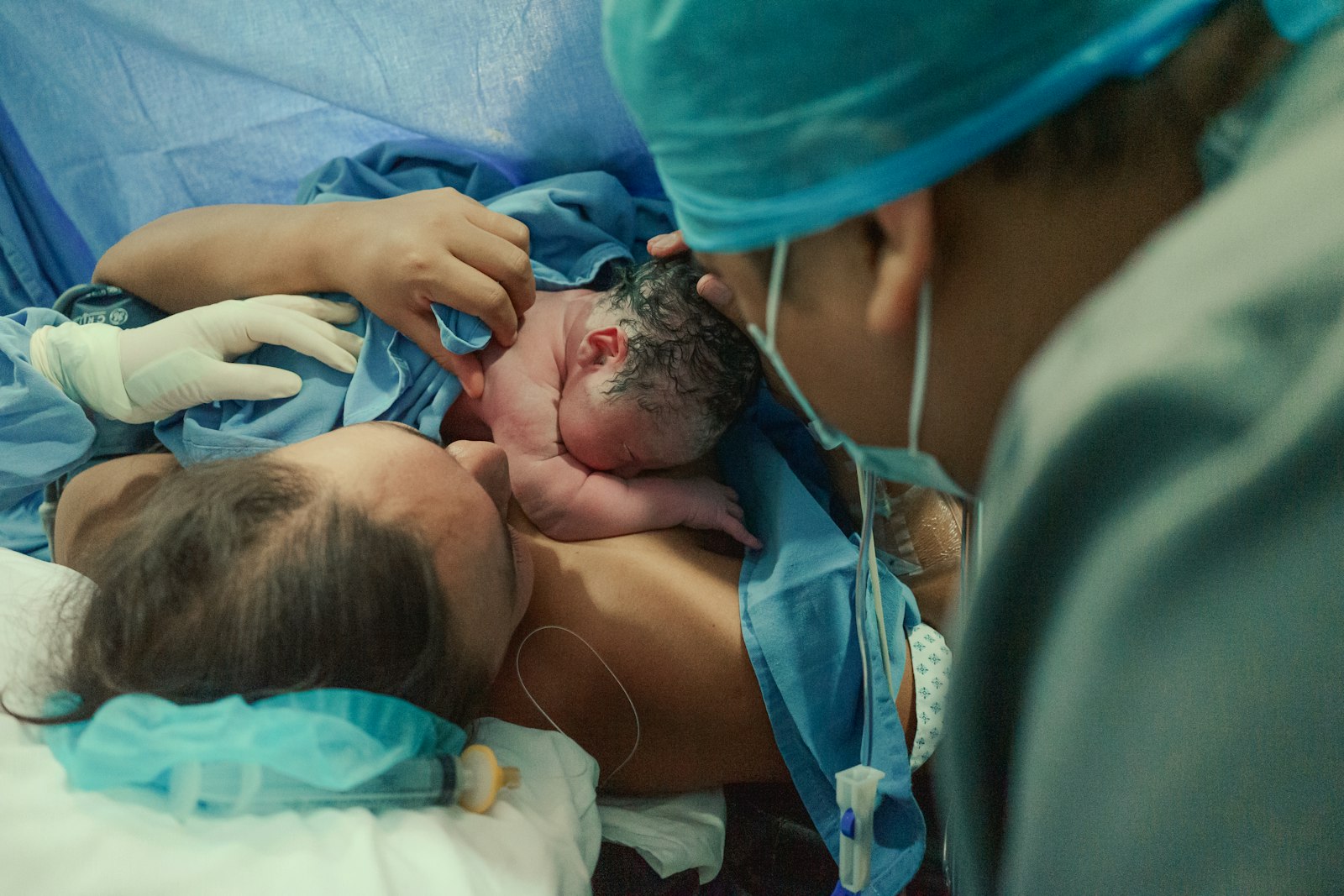
Photo: Unsplash
The third trimester — roughly week 28 to birth — is when pregnancy starts to feel physically demanding in new ways, and preparation for labor and a newborn becomes much more concrete. Here's a realistic breakdown of what typically happens as this final stretch progresses.
Weeks 28-31: the shift begins
This is often when third-trimester discomforts first become noticeable: back pain, mild shortness of breath as the growing uterus presses on the diaphragm, and more frequent urination as the bladder has less room. Prenatal visits typically shift to every two weeks starting around this point, and Braxton Hicks contractions — irregular, usually painless tightening — often become more noticeable, though they're different from real labor contractions.
Sleep changes in the third trimester
Sleep tends to get harder in this trimester for several overlapping reasons: physical discomfort finding a good position, more frequent bathroom trips, heartburn that worsens lying flat, and sometimes vivid dreams or general anxiety about labor. Sleeping on your side, generally the left side though either side is considered fine, is commonly recommended in the later part of pregnancy, since lying flat on your back can put pressure on a major blood vessel and reduce blood flow. A pregnancy pillow or a few regular pillows tucked between the knees and under the belly can make side-sleeping meaningfully more comfortable. If insomnia or restlessness becomes severe, it's worth mentioning to your provider rather than assuming it's something to just push through, since there are safe strategies that can help.
Weeks 32-35: preparing in earnest
Many people use this window to pack a hospital bag, finalize a birth plan, and set up basic newborn essentials at home — practical tasks that also help with the psychological shift toward delivery. The baby is typically settling into a head-down position during this stretch, though some babies wait until closer to 36-37 weeks to do so. A Group B strep test, usually done around 36 weeks, checks for a common bacteria that's harmless to the mother but can affect a newborn if not treated with antibiotics during labor.
Nutrition and weight gain in the home stretch
Calorie needs increase somewhat in the third trimester as the baby grows quickly, though "eating for two" is a misleading way to think about it: most guidance points to roughly an extra 450 calories a day rather than doubling intake. Protein, iron, calcium, and DHA (an omega-3 fat important for the baby's brain development) are commonly emphasized nutrients during this stretch, and a prenatal vitamin continues to be a reasonable safety net alongside meals. Total weight gain over the pregnancy varies by starting weight and is something your provider will track and discuss individually rather than measuring against a single universal number; steady gain in the third trimester is expected and healthy, and it's not a period to try to slow it down through restriction.
Weeks 36-40+: the final approach
Appointments typically become weekly during this stretch, checking cervical changes, fetal position, and overall wellbeing more closely as delivery approaches. Many people experience "lightening" — the sensation of the baby dropping lower into the pelvis — which can ease breathing somewhat while increasing pelvic pressure and bathroom trips. It's worth remembering that only about 5% of babies arrive exactly on their due date; a range of a couple weeks on either side is entirely normal.
Appointments become more frequent
- Visits shift to every 2 weeks around 28-36 weeks, then weekly until delivery.
- A Group B strep test, usually around 36 weeks, involving a simple swab.
- Continued monitoring of blood pressure and urine at every visit, screening for preeclampsia.
- Cervical checks in the final weeks, tracking dilation and effacement as labor approaches, though these don't reliably predict exactly when labor will start.
Fetal movement: what's normal and what's not
Movement patterns in the third trimester tend to become more distinct as the baby has less room to shift positions dramatically, meaning you'll likely notice more focused kicks, rolls, and stretches rather than the sweeping movements common in the second trimester. Many providers recommend getting familiar with your own baby's typical pattern rather than counting against a fixed number, since patterns vary between babies and even between times of day for the same baby (many babies are more active in the evening). A useful approach some providers suggest is a kick count: lying on your side and timing how long it takes to feel ten distinct movements, which is often a reasonable window rather than a strict test, though your provider's specific guidance should take priority. A noticeable, sustained decrease in movement compared to what's typical for your baby is worth calling about the same day, not waiting to see if it changes on its own; providers would much rather do a quick check than have a real change go unreported.
What the baby is doing
Weight gain accelerates significantly during this trimester, with most of it happening in the final weeks as the baby builds fat stores that help with temperature regulation after birth. The lungs continue maturing throughout this stage, with surfactant production reaching levels considered relatively mature by around 34-36 weeks — one reason babies born even a few weeks early often do quite well with modern care. By full term, sensory systems (hearing, and functional though limited vision) are ready for the outside world.
Common third-trimester discomforts
- Braxton Hicks contractions — irregular "practice" tightening, usually not painful, that can increase in frequency as labor approaches.
- Swelling in the feet and ankles, especially by end of day, driven by increased fluid retention.
- Difficulty sleeping comfortably as the belly grows, often needing extra pillows for support.
- Increased fatigue as the body works harder to support both mother and baby, along with disrupted sleep from frequent bathroom trips.
- Heartburn, as the growing uterus puts pressure on the stomach.
- Pelvic pressure and occasional sharp pains as the baby settles lower and ligaments stretch further.
Getting ready for labor
Many people use this window to pack a hospital bag, finalize a birth plan, and set up basic newborn essentials at home — practical tasks that also help with the psychological shift toward delivery. It's also a reasonable time to line up help for the early postpartum weeks, install a car seat correctly, and discuss with your provider what signs should prompt a call versus a trip to labor and delivery.
Signs labor may be approaching
Losing the mucus plug, a burst of nesting energy, looser joints from relaxin hormone, and more frequent, though still irregular, Braxton Hicks contractions can all signal that labor is getting closer — though none of these reliably predict an exact timeline, and some people experience none of them before labor starts. Regular, increasingly intense contractions that don't stop with rest and position changes, your water breaking, or a significant decrease in fetal movement are the signs that actually warrant calling your provider or heading to labor and delivery.
Managing the physical demands of this stage
Elevating the feet when possible, wearing supportive shoes, and staying well hydrated can meaningfully ease the swelling that tends to build up by the end of the day in the third trimester. For back pain, a maternity support belt, a firm mattress topper, and sleeping with a pillow between the knees are commonly recommended, low-effort adjustments. Short, gentle walks throughout the day tend to help with circulation and general comfort more than either total rest or strenuous activity during this final stretch.
Warning signs that need prompt medical attention
- Severe or persistent headache, especially combined with vision changes (blurring, spots, or flashing lights) — possible signs of preeclampsia.
- Sudden swelling in the face or hands, distinct from the gradual, end-of-day swelling in feet and ankles that's typical in this trimester.
- Upper abdominal pain, particularly under the ribs on the right side, another possible preeclampsia sign.
- Vaginal bleeding that's more than light spotting.
- Fever, chills, or a burning sensation with urination, which could indicate an infection needing treatment.
- A noticeable decrease in fetal movement, as described above.
None of these are meant to cause alarm on their own; they're the specific, well-established reasons providers ask to be called promptly, rather than waiting for a scheduled appointment. Guidance from organizations like the NHS covers these warning signs in more depth if you want additional detail beyond what's summarized here.
Common myths about the third trimester
A few persistent ideas are worth addressing directly. The claim that a certain shape or position of the belly reliably predicts the baby's sex has no real basis; that's determined at conception, not by how you're carrying. The idea that exercise late in pregnancy is risky is also generally outdated for a typical, low-risk pregnancy; most providers actively encourage continued gentle movement unless there's a specific reason for restriction. And the notion that labor always starts exactly the way it's portrayed in movies, with a dramatic gush of water, oversimplifies a process that more often starts gradually with contractions, sometimes over many hours.
Emotional preparation alongside physical preparation
It's common to feel a mix of impatience, anxiety about labor, and genuine excitement in the final weeks, sometimes shifting between all three within the same day. Talking through specific fears with your provider — rather than only researching worst-case scenarios online — tends to be more reassuring, since a provider can address concerns in the context of your actual pregnancy rather than general statistics. Many people also find it helpful to keep expectations flexible around exactly how labor and delivery will unfold, since even a detailed birth plan sometimes needs to adapt on the day itself.
Preparing your other children, if you have them
When there's already a child at home, the third trimester is often a natural time to start age-appropriate conversations about the baby's arrival, especially since visible changes to your body and household routines make the coming change harder to explain away. Reading books about becoming a sibling, involving an older child in simple preparations like picking out a stuffed animal for the baby, and keeping some individual one-on-one time protected in the weeks after birth are all commonly recommended. It's also reasonable to prepare a plan for who will care for other children during labor and the immediate postpartum stay, ideally someone the child already knows well, since a familiar caregiver eases what can otherwise be a confusing, disruptive stretch for a young child.
Frequently asked questions
Is it normal to feel short of breath in the third trimester?
Yes, mild shortness of breath is common as the growing uterus reduces lung capacity slightly. Sudden, severe shortness of breath is different and should be checked promptly.
When should I pack my hospital bag?
Many people aim to have it ready by around 36 weeks, since labor can start earlier than the due date. There's no strict rule — just a reasonable buffer before your estimated due date.
How do I know if what I'm feeling is real labor or Braxton Hicks?
Real labor contractions tend to become progressively longer, stronger, and closer together over time, and don't ease up with rest or a position change, unlike Braxton Hicks, which are typically irregular and often fade with movement or hydration.
Is it normal to go past my due date?
Yes — only a small percentage of babies are born exactly on their due date, and going up to a week or two past it without other complications is generally considered within a normal range, though your provider will typically discuss induction if you go significantly past 40-41 weeks.
How much should fetal movement change in the third trimester?
The style of movement often changes as space gets tighter, shifting from big rolls to more distinct kicks and jabs, but the overall frequency shouldn't drop off noticeably. Getting familiar with your baby's typical pattern is more useful than comparing to a generic number, and any sustained decrease from that pattern is worth calling about promptly.