Photo: Unsplash
Labor is typically described in three stages, each with a distinct purpose and feel — knowing the general shape can make the process less disorienting.
Stage one: early and active labor
This stage covers cervical dilation from the start of labor to full dilation (10 cm), and is usually the longest part. Early labor tends to be more manageable, with active labor bringing stronger, more frequent contractions.
What's actually happening to the cervix
Two things happen to the cervix during stage one: effacement, meaning it thins out from its normal thickness down to essentially paper-thin, and dilation, meaning the opening widens from fully closed to about 10 centimeters. These two processes often happen together but not always at the same pace: it's common for a first-time parent's cervix to efface almost completely before dilation really picks up, while in later pregnancies the two often progress more in tandem. Neither process is something you can feel directly or control; a cervical check by your provider is the only way to know exactly where things stand, and even that is just a snapshot, not a prediction of how quickly things will continue.
Early labor in more detail
Early labor generally covers dilation from 0 to about 6 cm and can last anywhere from several hours to a couple of days, especially with a first baby. Contractions are typically mild to moderate, irregular at first, and gradually settle into a more consistent pattern. Most providers recommend staying home during early labor — resting, eating light snacks, staying hydrated, and moving around as comfort allows — rather than heading to the hospital right away.
Active labor and transition
Active labor, roughly 6 to 10 cm, brings longer, stronger, and more frequent contractions, usually two to three minutes apart and lasting 45 to 90 seconds. This is generally when people head to the hospital or birth center, and when many choose pain management options if they're planning to use them. The final part of this stage, called transition (about 8 to 10 cm), is often the shortest but most intense phase — contractions come close together with little rest between them, and it's common to feel shaky, nauseated, or emotionally overwhelmed right before the urge to push begins.
Coping strategies during early and active labor
- Movement: walking, swaying, or rocking on a birthing ball tends to help contractions do their work more efficiently than lying still.
- Breathing techniques: slow, deliberate breathing through each contraction, rather than holding your breath, helps manage pain and keeps oxygen flowing well to the baby.
- Water: a warm shower or tub, where available, is one of the most consistently reported forms of relief during active labor.
- Counterpressure: firm pressure on the lower back from a partner or doula can meaningfully ease back-focused contraction pain.
- Pain management options: if you're considering an epidural or other medication, discussing timing and options with your provider well before labor starts makes the decision easier in the moment.
How providers monitor progress through stage one
Progress is generally tracked through a combination of cervical checks (assessing dilation and effacement), the pattern and strength of contractions, and how the baby is tolerating labor, often through intermittent or continuous fetal heart rate monitoring depending on the birth setting and any risk factors. Providers are watching less for a specific number on a clock and more for a consistent trend: is the cervix continuing to change over time, are contractions continuing to strengthen, and is the baby responding well throughout. When progress stalls for a meaningful stretch despite strong contractions, providers may discuss options like breaking the water if it hasn't happened on its own, or occasionally augmenting labor with medication, always weighed against the specific situation rather than applied automatically.
Stage two: pushing and delivery
Once fully dilated, this stage covers pushing and the actual birth of the baby. Duration varies enormously — from minutes to a few hours — influenced by factors like whether it's a first birth and the baby's position.
Pushing positions and techniques
Pushing doesn't have to mean lying flat on your back — many hospitals and birth centers support upright positions like squatting, side-lying, hands and knees, or using a birthing bar, which can work with gravity and may feel more effective for some people. Your nurse or midwife will typically guide you on when and how hard to push based on contractions and your baby's progress, and it's common to try a few different positions if one isn't working well. An epidural can limit which positions are practical, since it affects how much you can feel and move your lower body.
What actually happens during pushing, step by step
- Full dilation is confirmed, usually through a cervical check, before active pushing typically begins.
- Contractions continue, and your nurse or midwife helps you time your pushing efforts to coincide with each one, since pushing works with the contraction rather than against it.
- The baby's head gradually moves down and becomes visible at the vaginal opening, a moment often called "crowning," which can bring an intense stretching or burning sensation.
- With guidance from your care team, pushing is often slowed or paused briefly at this point to let the tissue stretch gradually and reduce the chance of tearing.
- The head is born, followed shortly by the shoulders and the rest of the body, usually within one or two more contractions.
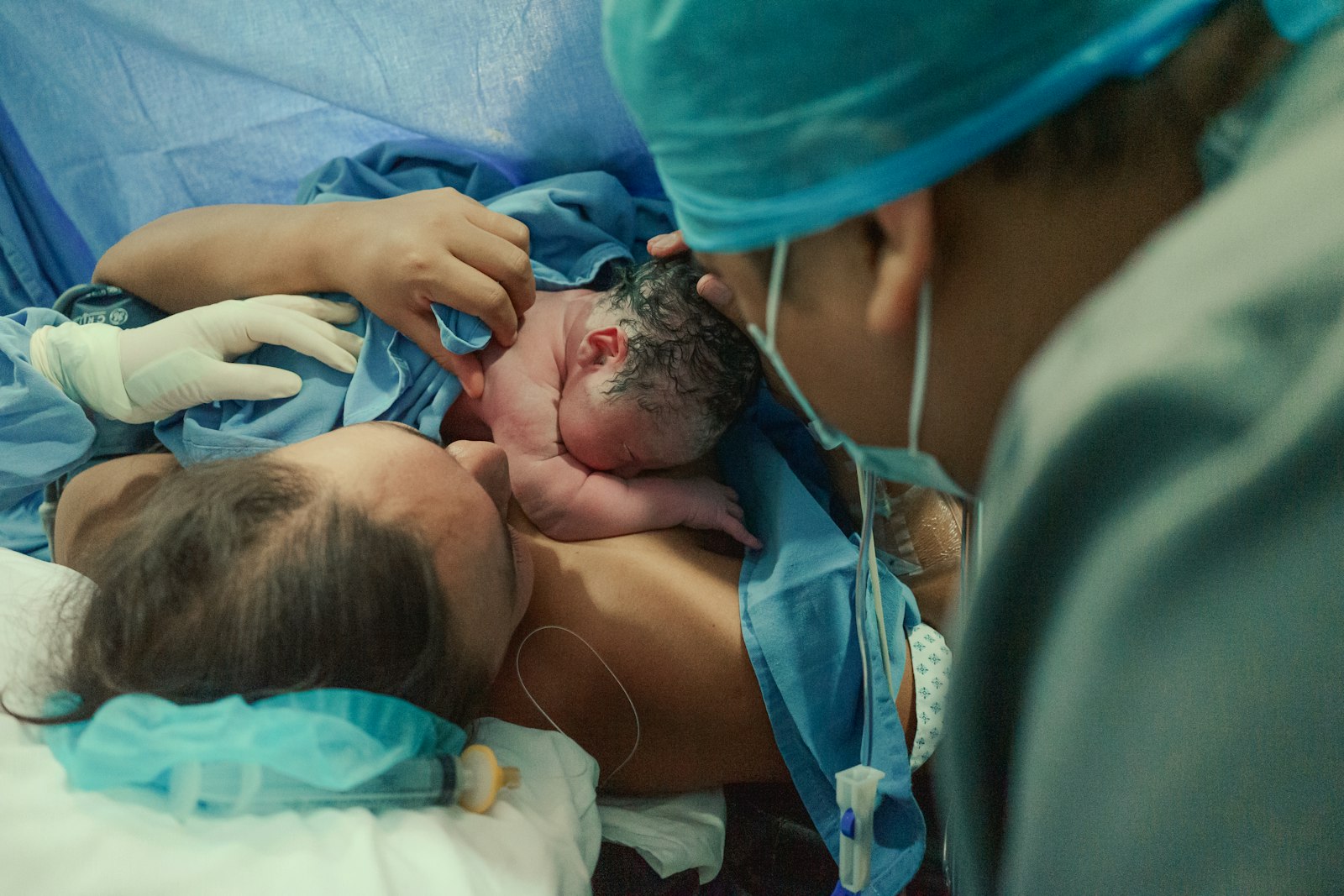
- The baby is placed on your chest, if that's your plan and there are no immediate concerns, while the cord is clamped, usually after a short delay to allow extra blood flow to the baby.
If pushing takes longer than expected
A long pushing stage isn't automatically a problem. Providers weigh how the baby is tolerating labor against how pushing is progressing, and as long as the baby's heart rate looks reassuring and progress, even slow, continues, many providers are comfortable letting the process continue longer than older guidelines once suggested. When pushing stalls without progress and the baby is showing signs of distress, options like an assisted vaginal delivery (using a vacuum or forceps) or a C-section come into the conversation, always explained and, outside of true emergencies, discussed with you rather than decided unilaterally.
The "fourth stage": the first hours after birth
Some providers describe a fourth stage of labor covering roughly the first one to two hours after delivery, sometimes called the "golden hour." This is when uninterrupted skin-to-skin contact and a first breastfeeding attempt (if that's your plan) often happen, while your care team monitors you for bleeding and checks that your uterus is contracting back down as expected. It's also when many of the newborn procedures discussed in a birth plan — like the vitamin K shot or first weigh-in — typically take place, sometimes delayed slightly to protect that early bonding window if you request it.
Stage three: delivering the placenta
Often overlooked in popular descriptions of birth, this final stage — delivering the placenta — typically happens within 5 to 30 minutes after the baby is born, usually with mild contractions.
What providers do to manage stage three
Many providers offer or routinely use what's called active management, which usually includes a shot of a medication called oxytocin right after birth to help the uterus contract firmly, gentle traction on the cord, and monitoring of blood loss. This approach is associated with a meaningfully lower risk of significant bleeding after birth compared to letting the process happen with no intervention, which is one reason it's widely recommended by major medical organizations, including guidance published by the World Health Organization. Your provider should check that the placenta has come out whole, since retained fragments can lead to bleeding or infection if left unaddressed, and will also check that the uterus is firming up as expected in the minutes and hours afterward.
Why some labors don't follow this pattern
Not every birth moves cleanly through three tidy stages. A scheduled or emergency C-section skips stages one and two as described here, going straight to surgical delivery, though the body may still go through some early labor beforehand if labor started naturally first. Precipitous labor, where the whole process happens unusually fast, sometimes in under a few hours total, compresses these stages dramatically and can feel disorienting precisely because there's so little time to adjust. On the other end, a labor that stalls for a long stretch despite consistent effort may lead to interventions like medication to strengthen contractions or, eventually, a C-section if vaginal delivery doesn't look achievable. None of these variations mean something went wrong with your body; birth simply doesn't always follow the average timeline described in a general overview like this one.
Common misconceptions about the stages of labor
- "Once you're in active labor, it moves quickly from there." Active labor can still take many hours, and transition, while usually shorter, can feel like the longest part.
- "Pushing always takes just a few minutes." Pushing can take anywhere from a few minutes to a few hours, especially with a first baby or certain positions of the baby.
- "The placenta stage is basically over as soon as the baby is born." It's a distinct stage with its own process, monitoring, and occasional complications, not just an afterthought.
- "Every contraction in stage one feels the same." Contractions change considerably in intensity, length, and spacing as labor moves from early to active to transition.
How support people fit into each stage
A partner, doula, or other support person plays a different role at each stage. During early and active labor, that often means helping with position changes, timing contractions, offering water or snacks, and simply providing calm company during a long stretch that can otherwise feel isolating. During transition and pushing, the role often shifts toward more hands-on comfort measures, like counterpressure or helping hold a leg during pushing, along with communicating with the care team on your behalf if speaking through contractions becomes difficult. After birth, a support person's presence often matters most for practical tasks: taking photos if wanted, helping arrange skin-to-skin, and stepping in if you need something while your hands are full. Talking through these roles ahead of time, even loosely, tends to make the day feel more like a team effort rather than something everyone is improvising under pressure.
What varies a lot between people
Total labor length, pain experience, and how each stage feels vary enormously — comparing your labor to someone else's account isn't a reliable expectation-setter. Your care team is the best source for what's happening in your specific labor, and asking questions throughout, rather than saving them for after, tends to make the whole process feel less like something happening to you and more like something you're actively part of.
Frequently asked questions
How long does labor usually take?
It varies enormously — first labors are often longer than subsequent ones, but total time can range from a few hours to well over a day. Your care team monitors progress throughout rather than relying on a fixed timeline.
Is the placenta delivery stage painful?
It's typically much milder than the contractions of active labor and pushing — often described as mild cramping rather than significant pain.
Can labor skip straight to pushing without a clear transition?
It's uncommon but possible, particularly with very fast (precipitous) labors or in later pregnancies where stage one can move quickly. It can feel disorienting since there's less time to prepare mentally, but your care team can still guide you through it in the moment.
Does a C-section still involve these three stages?
Not in the same way. A C-section replaces stages one and two with a surgical delivery, though labor may have started naturally before the decision was made. The placenta is removed during the surgery rather than delivered as a separate stage afterward.